
MEP Design Plans for Residential Buildings: Comprehensive Guide
MEP Design Essentials for Residential Buildings

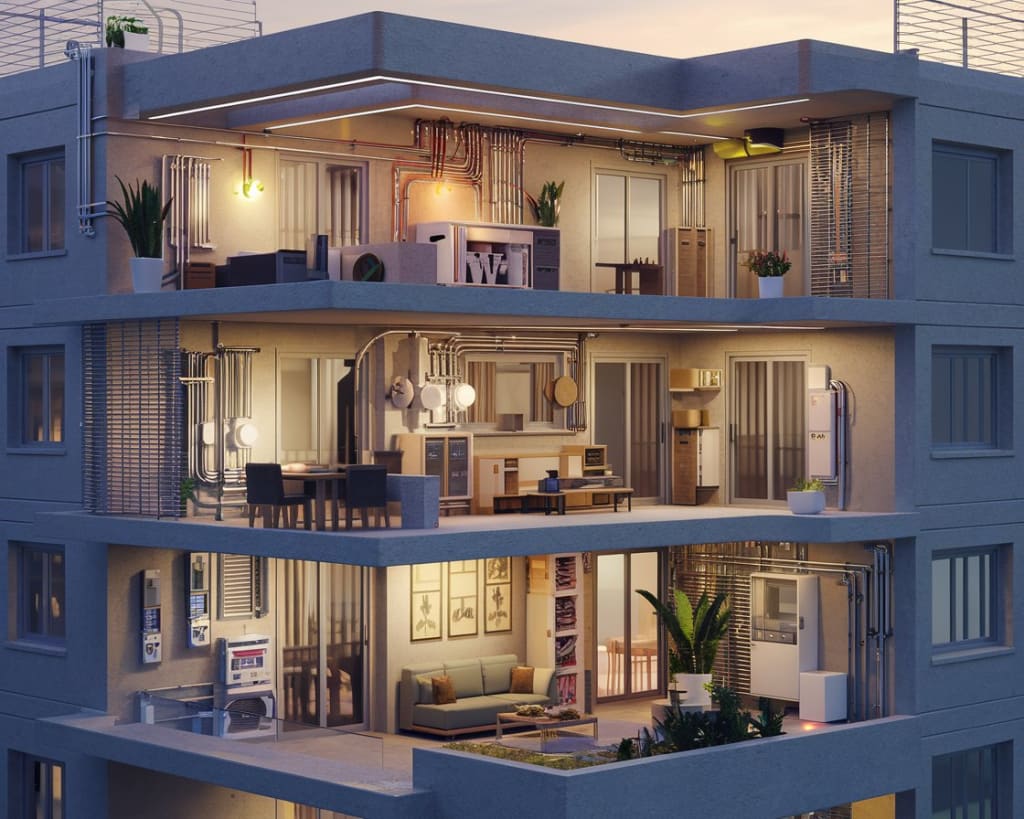
When designing residential buildings, Mechanical, Electrical, and Plumbing (MEP) systems play a vital role in ensuring the functionality, safety, and comfort of a building’s occupants. Properly designed MEP systems not only enhance the quality of life for residents but also improve energy efficiency and reduce long-term operational costs.
In this guide, we'll explore the basics of MEP design for residential buildings, key considerations, and the role of advanced technologies in MEP plans construction.
What is MEP Design?
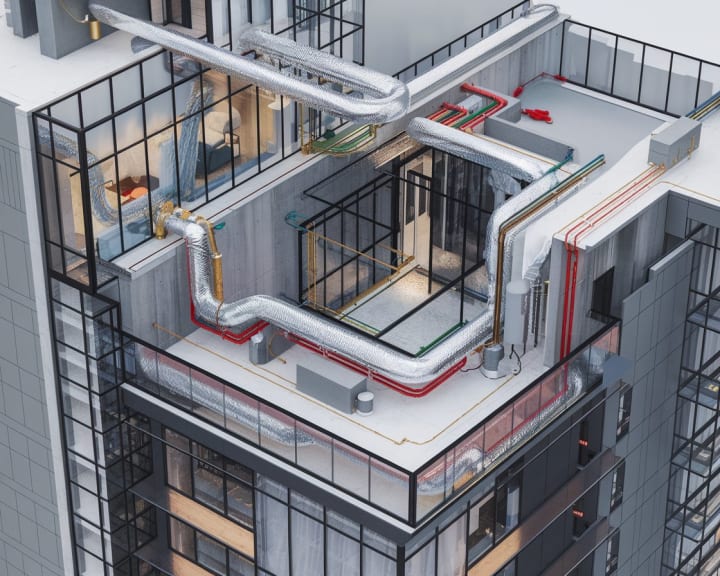
MEP design encompasses three core systems in a building:
Mechanical Systems: This includes heating, ventilation, and air conditioning (HVAC). It ensures a comfortable indoor climate, good air quality, and adequate ventilation.
Electrical Systems: This deals with the distribution of power throughout the building, lighting systems, and wiring for appliances, as well as backup power systems.
Plumbing Systems: This covers water supply, sewage systems, drainage, and gas lines.
Together, these systems ensure a building is safe, comfortable, and habitable. Effective MEP design incorporates energy-efficient equipment, sustainable practices, and smart technologies to provide a cost-effective solution for the building's life cycle.
Also Read - MEP BIM for Clash Detection and Resolution
Key Components of MEP Design in Residential Buildings
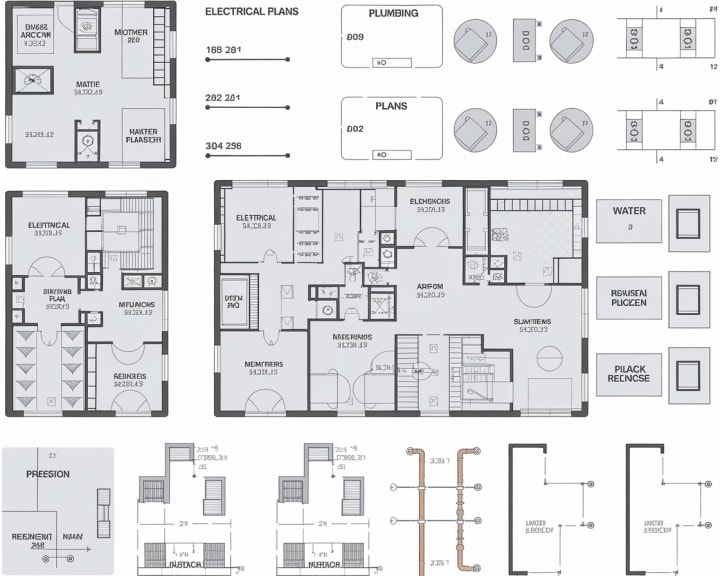
1. Mechanical Systems (HVAC)
Heating and Cooling: Proper sizing of heating and cooling units is crucial to provide efficient temperature regulation without excessive energy use.
Ventilation: Proper ventilation is necessary to maintain indoor air quality. This includes exhaust systems in bathrooms, kitchens, and laundry rooms to remove moisture, odors, and contaminants.
Energy Efficiency: Selecting energy-efficient HVAC units can significantly reduce electricity bills and carbon emissions. Additionally, zoning systems that regulate heating and cooling in different areas of the home can optimize comfort and efficiency.
2. Electrical Systems
Power Distribution: Residential buildings require well-organized power distribution to support lighting, household appliances, and other electronics.
Lighting Design: A mix of ambient, task, and accent lighting provides visual comfort while meeting the needs of residents. Energy-efficient lighting solutions, such as LED fixtures, are commonly used in modern MEP designs.
Backup Power: For larger residential buildings, standby generators or battery storage systems may be included in the design for backup power in case of grid outages.
Smart Home Integration: Many new residential buildings incorporate smart systems for automated lighting, security, and climate control, requiring careful planning in MEP designs.
3. Plumbing Systems
Water Supply: The plumbing design needs to ensure a constant and adequate supply of hot and cold water to all faucets, showers, and appliances.
Drainage Systems: Proper drainage design is essential for the efficient removal of wastewater from sinks, toilets, and showers, while also preventing sewer gases from entering the home.
Energy-Efficient Fixtures: Low-flow faucets, dual-flush toilets, and energy-efficient water heaters are popular choices for improving water conservation in residential buildings.
Best Practices in MEP Design for Residential Buildings
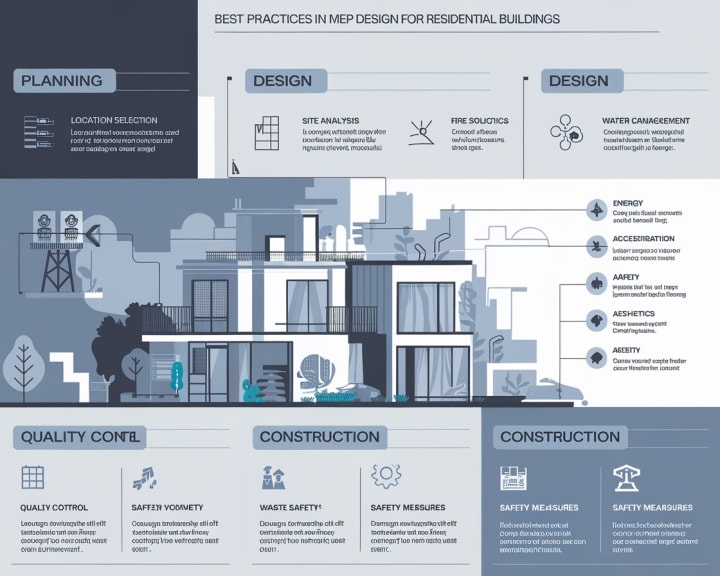
Load Calculations: Accurate load calculations for HVAC and electrical systems ensure proper sizing of equipment, reducing operational costs and preventing energy waste.
Building Information Modeling (BIM): BIM technology allows designers to create 3D models of buildings that include detailed MEP plans, facilitating more accurate planning, coordination, and problem-solving before construction begins.
Sustainability: Incorporating energy-efficient appliances, renewable energy systems (like solar panels), and water-saving plumbing fixtures is essential to creating sustainable, eco-friendly homes.
Code Compliance: MEP systems must adhere to local building codes, which often have stringent requirements for safety, energy efficiency, and environmental impact.
Challenges in MEP Design for Residential Buildings

Space Constraints: In residential buildings, especially multi-family units, space for MEP systems is often limited, requiring creative and compact solutions for HVAC, electrical, and plumbing components.
Coordination Between Trades: MEP systems are interconnected, and any change to one system often affects the others. Close coordination between architects, MEP engineers, and construction teams is essential to avoid conflicts during installation.
Cost vs. Efficiency: Achieving a balance between upfront costs and long-term energy savings can be challenging. Clients may need to be educated on the benefits of investing in energy-efficient systems.
Also Read - How are Shop Drawings Used in Bridge Construction?
Future Trends in MEP Design
Smart Systems: The rise of smart home technologies means MEP designs increasingly incorporate IoT (Internet of Things) devices, offering residents greater control over lighting, temperature, and security.
Sustainability: Green building certifications like LEED (Leadership in Energy and Environmental Design) are becoming more popular, and MEP designers are incorporating renewable energy sources, energy storage systems, and water recycling technologies.
Energy Storage: With the increase in renewable energy integration, designing for on-site energy storage, such as batteries, is becoming more common to manage energy demand and usage efficiently.
Conclusion
MEP design is a critical aspect of residential building design that directly affects the safety, comfort, and efficiency of a home. By incorporating smart technologies, energy-efficient systems, and sustainable practices, MEP engineers can design residential buildings that meet modern standards for comfort and environmental responsibility.
Coordination between MEP engineers, architects, and builders ensures that the systems are integrated seamlessly, providing a long-lasting and efficient residential environment.
Authentic Sources:
ASHRAE (American Society of Heating, Refrigerating, and Air-Conditioning Engineers)
Provides guidelines and standards for HVAC system design and energy efficiency.
Website: https://www.ashrae.org
- NFPA (National Fire Protection Association)
- Sets standards for electrical systems and fire safety in buildings.
Website: https://www.nfpa.org
International Association of Plumbing and Mechanical Officials (IAPMO)
Provides plumbing codes and guidelines.
Website: https://www.iapmo.org
U.S. Department of Energy - Energy Efficiency & Renewable Energy
Offers insights into sustainable practices for HVAC, electrical, and plumbing systems.
Website: https://www.energy.gov/eere
About the Creator
Matt Sharon
A professional content writer. Having years of experience in Technology, health, finance, and construction and real estate field. Writing is my passion and I love to play with words Confidently.
Keep reading
More stories from Matt Sharon and writers in Education and other communities.
Next-Gen 3D Scanning: Tejjy Inc. Leverages Leica RTC360 & BLK
Tejjy Inc. Takes the Next Big Leap in the AEC Industry with Next-Gen 3D Scanners: Leica RTC360 and Leica BLK Maryland, USA- September 2024- Tejjy Inc. Is a leading name for BIM (Building Information Modeling) and VDC (Virtual Design and Construction) providers in the USA, specializing in 3D laser scanning technology.
By Matt Sharonabout a year ago in Education
Real Estate vs. Stock Market Investing: Which Path Builds More Wealth?
Real estate vs. stock market investing is a common debate for anyone who wants to grow wealth. Many people ask which option is safer, which earns more money, and which fits their lifestyle. The truth is that both choices can build wealth over time. However, they work in very different ways. You need to understand the strengths and risks of each before you decide.
By Manny Khoshbin6 days ago in Education
The Reality of doing it all before graduation
Many kids hear from their parents that they should try to live life to the fullest and do as much as they can before it’s too late. None of them is wrong in that regard, but putting it into practice is a little harder than it sounds.
By Aydn Young6 days ago in Education


Comments
There are no comments for this story
Be the first to respond and start the conversation.