
3D Laser Scanning Technology for Building Surveys
Revolutionizing the way we capture and analyze building data for informed decision-making.


As technology is evolving so is the construction sector. With the digitization and integration of technologies within the construction services, this industry is facing a fast-paced revolution.
This revolutionized AEC industry demands three prominent factors that are non-negotiable when it comes to AEC service implementation.
- Accuracy
- Efficiency
- Precision
Technologies that can meet these demands become the industry favorite. 3D laser scanning technology comes under this category. Laser scanning technology offers numerous benefits to the construction process with its precision and efficiency.
This technology utilizes laser beams to capture the physical assets of a construction site or an environment. The spatial data captured during the scan is then transformed into an accurate representation of the existing site.
What is 3D Laser Scanning in Surveying?
3D laser scanning services in surveying are used to get reality captures of on-site data. 3D laser scanning is a non-intrusive process and with its advanced technology captures highly precise 3D data of objects, buildings or building components on a construction site.
It emits laser beams that bounce off surfaces and return to the scanner, gathering on-site data. This data is known as a point cloud, which is composed of millions of points. These points provide detailed data about the surveyed site's geometry.
Once the point cloud data is acquired it is processed using advanced software like Autodesk Revit, ArchiCAD, etc. This software will then clean up the data, removing any outliers or noise to create a seamless as-built representation of the surveyed site.
This data can be used by architects, facility managers and engineers for different purposes like mapping, 3D modeling, as built documentation, etc.
What is a Building Survey?
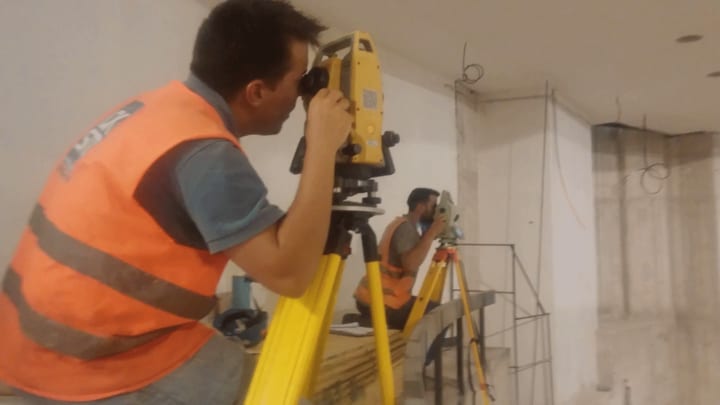
Building surveys is a service which provides a comprehensive inspection and assessment of a property's existing conditions. The aim of this survey is to provide the property owner or project stakeholders with an in-depth understanding of the property's built characteristics like-
- Structural integrity
- Potential defects
- Overall condition analysis
This analysis helps the building owners, home buyers or investors to develop the appropriate maintenance plans for their building.
Building surveys are done by chartered surveyors, who, after the survey, submit a comprehensive report of all the assessments done with an appropriate remedial remark, if any defects or faults are found.
- Building surveys are usually carried out on-
- Listed buildings.
- Older buildings (usually 50 years old or more).
- Buildings facing redevelopment.
- Buildings that have already been renovated.
What are the benefits of laser scanning in building surveys?
3D Laser scanning with its high speed and accuracy, offers a wide range of benefits in building surveys. Some of them have been listed below,
High Precision:
Laser scanning in building surveys captures precise measurements and placements of the building structure and all its components. These include architectural components, structural members, intricate architectural details, etc.
Advanced laser scanners like Leica RTC 360 capture as built data with up to 1mm precision. This level of precision ensures that the resulting documentation in the form of 2D drawings and 3D models accurately represents the real-world built environment.
Comprehensive Data Capture
Laser scanning captures millions of data points per second, which creates a pretty detailed point cloud data that accurately represents the geometry of the building's interior and exterior features. This comprehensive data capture allows for thorough analysis and visualization of the building's condition. This facilitates effective renovation planning and structural assessments for checking regulatory compliance for homeowners, buyers and real estate agents.
Efficiency and Time Savings:
Traditionally, surveying methods involved manual measurements and data collection, which did not ensure as much precision as laser scanning does. In comparison with the traditional surveying methods, laser scanning prominently reduces surveying time and labor costs.
A single scan can capture a vast amount of data in a fraction of the time as compared conventional methods. This enables surveyors to manage projects more efficiently without hindering the timeline.
Remote Data Collection:
One of the major benefits of laser scanning technology is its remote access. Laser scanning technology offers surveyors an opportunity to capture data remotely. This minimizes the need for physical access into spaces that are compact or hazardous to reach. Due to the remote nature of this technology, safety is enhanced during the surveying process.
It reduces the risk of accidents and injuries associated with on-site data collection, while also improving accessibility to complex building components such as confined spaces, high ceilings and rooftops.
Application of laser scanning in building surveying
Laser scanning technology has many applications in building surveying. Here is a detailed review of the applications of laser scanning:
As Built Documentation
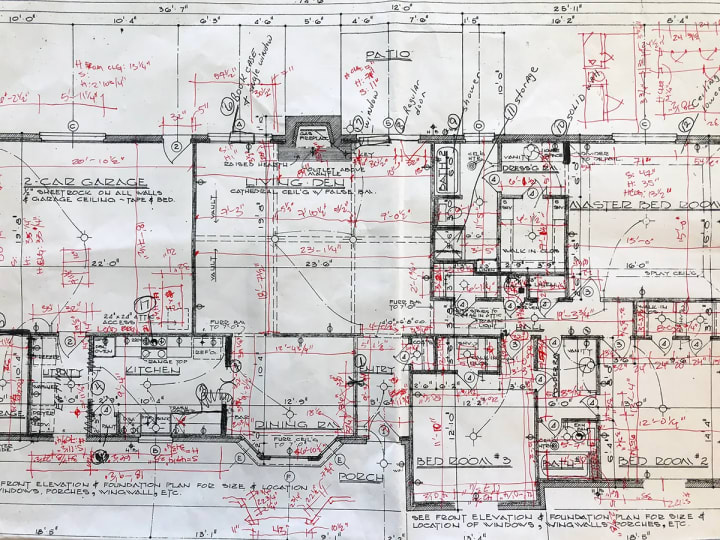
Laser scanning is widely used to create accurate as-built documentation of existing building structures. By capturing accurate on site data and reality captures of the building, which includes interior as well as exterior features, laser scanning provides a comprehensive raw point cloud data of the building's current state.
This data is then transformed into comprehensive digital replicas of the building facility. This as built documentation serves as a valuable reference for future endeavors of the building like renovations, expansions or maintenance projects, ensuring that new designs align precisely with the existing building geometry.
Structural Analysis and Assessment

Laser scanning allows the surveyors to capture precise measurements and analysis of structural components of a building like beams, columns, foundations, walls, etc. By comparing scanned data with structural drawings or models, architects, engineers can assess the structural integrity of the existing building.
This can help identify potential safety hazards, deformations or damage.
Renovation and Retrofitting
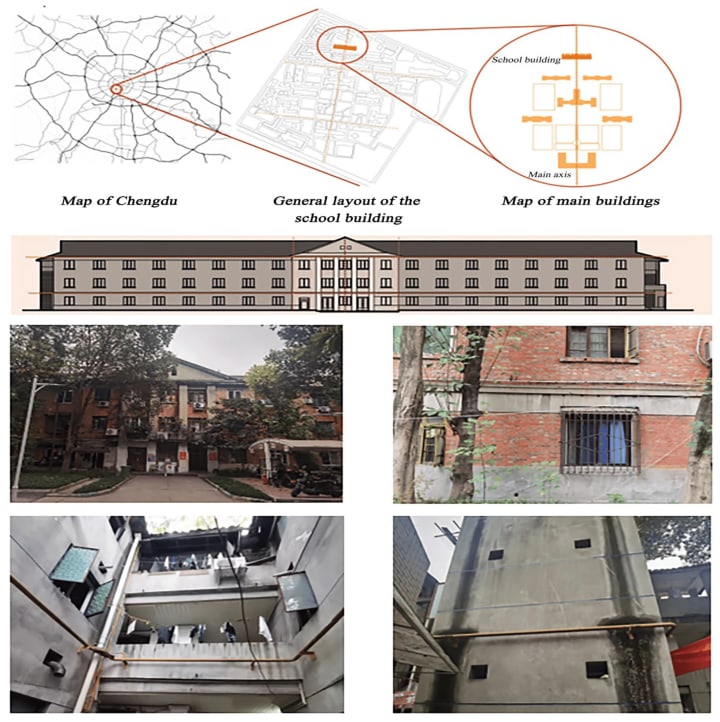
Laser scanning provides detailed as-built documentation and accurate measurements of existing building components. This helps in renovations and retrofitting projects. Architects and designers can use this data to craft renovation plans, visualize design concepts, and assess the feasibility of proposed changes.
It also aids in detecting conflicts and clashes between new and existing elements, allowing for adjustments to be made early in the design process to avoid costly rework during construction.
Historical Preservation

Laser scanning plays the most important and pivotal role in heritage preservation and preservation of historical buildings and monuments. It crafts the digital replicas of these architectural heritage sites.
These enable architects, conservationists, historians, etc to analyze, document and monitor the condition of these heritage buildings in real-time. This helps in heritage preservation and cultural preservation for future generations.
Facilities Management
Laser scanning supports effective facilities management by providing accurate and up-to-date information about building assets and infrastructure. Facility managers utilize this data to create detailed inventories of equipment, utilities, building systems, etc.
This enables efficient maintenance, regular repairs and asset tracking. As laser scanners also provide accurate measurements of floor areas, space planning and optimization is also facilitated.
Construction Monitoring and quality control
Construction monitoring and quality control can be achieved with the help of laser scanning. Conducting periodic scans of the construction site offers project managers an insight into comparison of as built condition with design intent.
It also helps them in identifying deviations and making sure that the construction activities are aligning with the specification. It also helps detect errors in an early phase of a construction process which minimizes rework and ensures project quality and efficiency.
Challenges and Limitations
Laser scanning has revolutionized the building surveying process with its precision and efficiency. But it comes with its own set of challenges and limitations. Understanding these challenges is important for maximizing the potential of laser scanning services. Some of the challenges are listed below:
Cost of equipment and expertise: Obtaining laser scanning equipment and its maintenance can be a prominent investment for surveying firms. Also, one needs expertise to operate it, which makes it necessary to provide additional training and resources.
Complexity of data processing: Data processing can be a tricky task, especially if the point cloud data obtained is in large volumes. This requires specialized software and skilled expert which can be time-consuming.
Limited accuracy in adverse conditions: Factors such as weather conditions, surface reflectivity, and obstructions can affect the accuracy of scan data, requiring precautions to ensure reliability.
Line–of-sight limitations: Objects that are not in the scans view may not be captured accurately which results in multiple scan setups or using other mode of surveying.
Cost-benefit analysis
Cost- benefit analysis of laser scanning in building surveys makes for a compelling case in the favor of laser scanning for building surveys. It consists of the following factors-
Initial Investments: While there's an upfront cost for equipment, software, and training, it is an investment and gains long-term benefits.
Time and Labor Savings: Laser scanning streamlines data collection, which reduces the need for manual methods and rework, thus saving time and labor costs.
Accuracy and Error Reductions: High precision offer by laser scanning minimizes errors, leading to enhanced project outcomes.
Decision making support: Detailed as-built documentation helps in better decision-making as clarity is enhanced within the detailed models. This enhances efficiency and cost-effectiveness.
Choosing a laser scanning services provider
Selecting a laser scanning services provider is critical for precise spatial data capture. Following are the considerations to ensure alignment with project needs
- Evaluate the service provider's expertise and experiences in laser scanning specifically in the building surveying sector.
- Ensure that the laser scanning service provider utilizes the latest technology and advanced equipment for optimal results.
- Review past projects and client references for quality assessment. Check out past portfolio and references.
- While selecting a service provider, check their ability to deliver required outputs and data processing like point clouds and 3D models.
- Inquire about quality control measures to ensure quality assurance and data accuracy.
- Examine and enquire their project management and communication practices for transparency and timelines.
Conclusion
By leveraging the latest developments in laser scanning technology and selecting experienced service providers, construction professionals can revolutionize their building survey workflows. Adopting laser scanning technology is a strategic investment in the present and the future of construction project management and development.
Further Reading
- Point Clouds From 3D Scanning to 3D Models
- How 3D Laser Scanning Improves Construction Efficiency?
- Laser Scanning in Construction Across All Stages - Complete Guide
- Scan to BIM for Construction Projects | Benefits & Application
About the Creator
Matt Sharon
A professional content writer. Having years of experience in Technology, health, finance, and construction and real estate field. Writing is my passion and I love to play with words Confidently.
Keep reading
More stories from Matt Sharon and writers in Education and other communities.
Education Finance Software Market to Reach USD 12.04 Billion by 2035
Education Finance Software Market The Global Education Finance Software Market is projected to reach approximately USD 12.04 billion by 2035, rising from USD 5.63 billion in 2025, and registering a CAGR of 7.9% during the forecast period from 2025 to 2035. This growth reflects increasing digital transformation across educational institutions, particularly in financial administration and compliance management. Schools, universities, and training institutions are modernizing budgeting, accounting, payroll, and procurement systems to improve transparency and operational efficiency.
By Roberto Crumabout 23 hours ago in Education




Comments
There are no comments for this story
Be the first to respond and start the conversation.