
Albert Einstein
A brief biography and overview of the life and contributions of Albert Einstein, the German-born physicist who revolutionized our understanding of space, time, and gravity with his theory of relativity, and made important contributions to the development of quantum mechanics, cosmology, and the study of atoms and molecules. Einstein was also known for his humanitarianism, political activism, and his legacy continues to inspire new generations of scientists and thinkers.

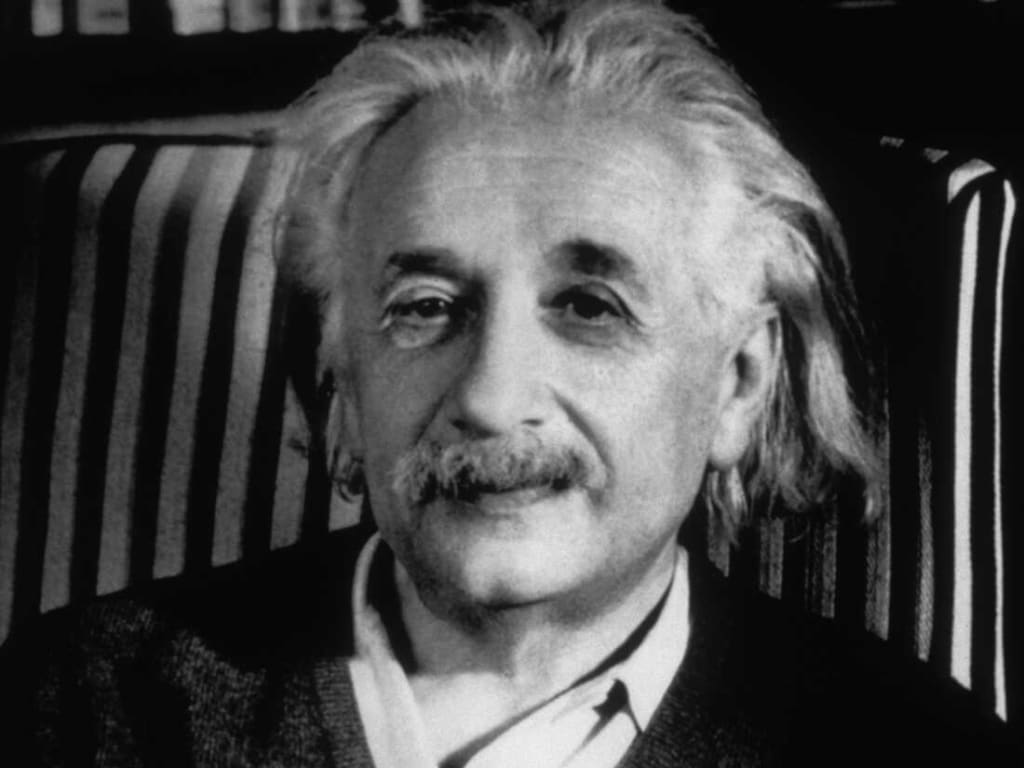
Albert Einstein (1879-1955) was a German-born physicist who is widely regarded as one of the most influential scientists of the 20th century. He is best known for his theory of relativity, which revolutionized our understanding of space, time, and gravity, and his famous equation E=mc², which relates mass and energy.
Einstein was born in Ulm, Germany, and grew up in Munich. He showed an early interest in mathematics and physics and went on to study at the Swiss Federal Institute of Technology in Zurich. After graduation, he worked as a patent clerk in Bern, Switzerland, and it was during this time that he developed his groundbreaking theories of relativity.
In 1915, Einstein published his theory of general relativity, which described gravity as a curvature in space-time caused by massive objects. This theory was confirmed by observations during a solar eclipse in 1919 and made Einstein an international celebrity.
Einstein fled Nazi Germany in 1933 and settled in the United States, where he continued his research and became a professor at Princeton University. He was a vocal advocate for peace and social justice and was involved in the development of nuclear weapons during World War II.
Einstein's contributions to physics earned him numerous awards and honors, including the Nobel Prize in Physics in 1921. He died in Princeton, New Jersey, in 1955 at the age of 76. His work continues to influence modern physics and his name remains synonymous with genius and scientific discovery.
In addition to his work on relativity, Einstein also made important contributions to the development of quantum mechanics, the study of the behavior of matter and energy at the atomic and subatomic level. He proposed the idea of wave-particle duality, which suggests that matter can exhibit both wave-like and particle-like behavior.
Einstein was also a strong advocate for the principles of determinism and causality in physics, and famously disagreed with some of the implications of quantum mechanics, such as the idea of indeterminacy or uncertainty in the behavior of subatomic particles.
Outside of his scientific work, Einstein was known for his humanitarianism and political activism. He was a pacifist and spoke out against war and nuclear weapons. He was also a vocal supporter of civil rights and worked with civil rights activists, including W.E.B. Du Bois, to fight against racism and discrimination.
Einstein's personal life was also marked by drama and controversy. He had two marriages and several affairs, and his relationship with his children was often strained. However, his scientific and humanitarian contributions continue to inspire people around the world.
Some other notable contributions of Einstein include his theory of Brownian motion, which explained the random motion of particles in a fluid and provided experimental evidence for the existence of atoms and molecules, and his work on the photoelectric effect, which showed that light can act as both a wave and a particle and helped establish the foundations of quantum mechanics.
Einstein also made important contributions to the development of cosmology, the study of the universe as a whole. He proposed a model of the universe in which space-time is curved and dynamic, and which predicted the existence of black holes and gravitational waves.
Throughout his life, Einstein was recognized as one of the most brilliant minds of his time and beyond. He was awarded numerous honorary degrees, was a member of the Royal Society of London, and served as president of the German Physical Society and the International Union of Pure and Applied Physics. In 1999, Time magazine named him "Person of the Century" for his contributions to science and his impact on history.
Today, Einstein's legacy continues to inspire new generations of scientists and thinkers. His work on relativity, quantum mechanics, and cosmology has helped shape our understanding of the universe and our place in it, and his humanitarianism and advocacy for peace continue to serve as a powerful example to people around the world.
About the Creator
Traphall Romance
Traphall Romance: The Global Love Sound Quietly Redefining Modern Music Genres rarely announce themselves. They show up gradually — in playlists, in late-night listens, in songs people can’t stop replaying but struggle to describe. Traphall Romance is one of those sounds. It isn’t a trend pushed by labels or an algorithmic invention. It’s a feeling that’s been building across continents, shaped by artists who live between cultures and write about love the way it actually feels now — complicated, intense, intoxicating, and often unresolved.
By K.y.e Dynasty Recordsabout 11 hours ago in Education
Earning Money Online Through Freelancing
Earning Money Online Through Freelancing In today’s digital world, earning money online has become easier than ever before. One of the most popular and trusted ways to make money online is through freelancing. Freelancing allows people to work independently, use their skills, and earn income without being tied to a traditional office job. With just a computer, an internet connection, and useful skills, anyone can start freelancing from anywhere in the world.
By Bilal Mohammadi5 days ago in Education


Comments
There are no comments for this story
Be the first to respond and start the conversation.