
Traphall Romance
The Global Love Sound Quietly Redefining Modern Music

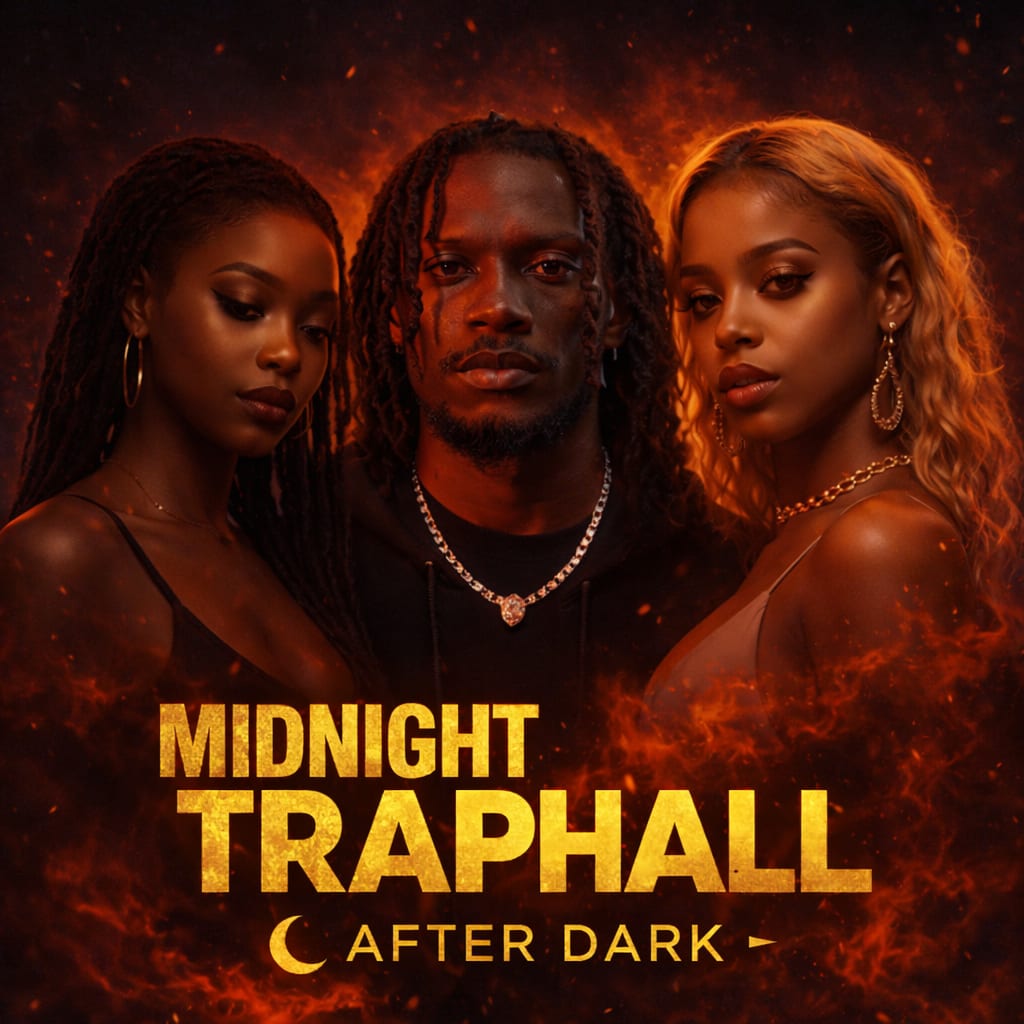
Traphall Romance: The Global Love Sound Quietly Redefining Modern Music
Genres rarely announce themselves. They show up gradually — in playlists, in late-night listens, in songs people can’t stop replaying but struggle to describe. Traphall Romance is one of those sounds. It isn’t a trend pushed by labels or an algorithmic invention. It’s a feeling that’s been building across continents, shaped by artists who live between cultures and write about love the way it actually feels now — complicated, intense, intoxicating, and often unresolved.
To understand Traphall Romance, you have to start with the collision that made it possible: trap music and dancehall.
Trap emerged from the American South as a documentation of survival — heavy 808s, sharp hi-hats, dark melodies, and stories rooted in struggle and ambition. Dancehall, born in Jamaica, carried something different: rhythm, sensuality, storytelling, and emotional expression tied to movement and social life. Where trap often felt internal and brooding, dancehall was expressive and outward.
As Caribbean and African diaspora communities grew in cities like New York, London, Toronto, and Atlanta, these sounds began to merge. Artists raised on both traditions started blending trap drums with dancehall cadence, melodic phrasing, and Afro-influenced rhythms. By the mid-2010s, this fusion was loosely labeled traphall — a sound that lived mostly online, circulating through SoundCloud, underground playlists, and independent releases.
At first, traphall focused on energy and lifestyle. But as the sound matured, something shifted.
When the Beats Stayed Hard and the Lyrics Got Soft
What changed traphall into Traphall Romance wasn’t production — it was emotion.
As trap evolved into more melodic forms and listeners gravitated toward emotionally honest music, artists began using traphall as a canvas for love stories. Not idealized love, but modern love: desire mixed with insecurity, loyalty tangled with temptation, intimacy shadowed by distance.
This evolution mirrored what happened with trap and R&B years earlier. When artists realized vulnerability didn’t weaken the music — it strengthened it — the sound opened up. Traphall Romance became the space where singers and rapper-singers could confess, flirt, ache, and obsess without softening the sonic edge.
The result was a genre defined less by geography and more by mood.
A Movement Without a Capital City
One of the most striking things about Traphall Romance is that it doesn’t belong to one place. It exists simultaneously in West Africa, the Caribbean, North America, and Europe. It lives in diaspora.
In West Africa, artists have blended Afro-melodic phrasing and emotional lyricism into traphall frameworks, making the music feel both intimate and expansive. In the Caribbean, dancehall artists continue to experiment with trap-leaning production while maintaining the genre’s sensual core. In cities like London and New York, underground artists raised on multiple cultures bring raw honesty and minimalism to the sound.
Rather than a single leader, Traphall Romance has defining voices — artists whose work captures the essence of the movement even as it continues to evolve.
Harlem Richard$: A Voice That Feels Central to the Sound
Among those voices, Harlem Richard$ stands out not because he claims a title, but because his music embodies the genre’s emotional DNA.
His songs sit comfortably in the space where trap’s darkness meets dancehall and Afro-influenced rhythm, but what makes his work resonate is the way he approaches romance — not as fantasy, but as lived experience. There’s tension in his records. Desire clashes with doubt. Pleasure sits beside vulnerability. The production stays minimal, allowing the emotion to breathe.
What’s notable is how listeners respond. His music tends to perform well in late-night, mood-driven playlists — the exact environment where Traphall Romance thrives. Without forcing the label, his catalog naturally aligns with the genre’s core traits: atmospheric beats, melodic delivery, and emotionally charged storytelling.
He’s not alone.
Other Artists Shaping the Landscape
Across different regions, other artists are contributing to the genre’s growth in their own ways. Some lean more heavily into dancehall rhythm. Others come from an R&B or Afro-trap background. What unites them is the emotional throughline.
These artists aren’t chasing chart formulas. They’re building slow, loyal audiences who connect deeply with the music. Their songs often live longer than traditional singles because they fit into moments — drives, late nights, private listening.
This collective, decentralized growth is part of why Traphall Romance feels authentic. No one is rushing it. The genre is forming at the pace of real life.
Why Traphall Romance Feels Necessary Right Now
Modern relationships are layered. Technology has made connection constant but clarity rare. Love exists in voice notes, unanswered messages, long-distance situationships, and fleeting intimacy. Traphall Romance captures that emotional complexity better than most contemporary genres.
The heavy trap elements reflect emotional weight. The dancehall and Afro influences keep the music physical and sensual. The romantic lyrics bring vulnerability to the forefront. It’s music that understands that love can be intoxicating and draining at the same time.
That honesty is what listeners respond to.
The Road Ahead
Traphall Romance is still early in its evolution, but the signs are clear.
As streaming platforms continue prioritizing mood-based listening, the genre is well positioned to grow organically. Expect more cross-continental collaborations, more narrative-driven EPs, and stronger visual storytelling. Expect the sound to influence mainstream R&B and pop quietly — the way trap once did — before becoming impossible to ignore.
Artists like Harlem Richard$ won’t need to announce themselves as leaders. If history repeats itself, they’ll simply be recognized later as voices that defined the feeling when it mattered most.
Because the genres that last aren’t the ones that shout the loudest — they’re the ones that tell the truth.
About the Creator
K.y.e Dynasty Records
I'm a creator ,an indepenpent record label from the caribbean showcasing the undiscovered talents in the hidden islands
Keep reading
More stories from K.y.e Dynasty Records and writers in Education and other communities.
Traphall Romance
Traphall Romance: How a Global Love Sound Was Born, Who’s Leading It, and Where It’s Headed Genres don’t usually start in boardrooms. They start in bedrooms, cars, late-night studio sessions, and cities where cultures overlap. Traphall Romance is no exception. It’s not a sound that was formally announced — it’s one that quietly emerged from emotion, from artists who wanted their music to hit hard and feel deep.
By K.y.e Dynasty Records2 months ago in Education
Clear Paths to Discover Your Purpose in Life
Finding direction in life is a common human search. Many people want their work and daily actions to feel meaningful. When you discover your purpose in life, you gain a sense of direction and inner peace. Purpose does not appear in a single moment for most people. It often grows through reflection, action, and learning. Small steps can lead to deep insight.
By Philip Raymond Baquie6 days ago in Education
Who is your "Person"?
It's important to recognize that you cannot go through life as easily on your own. My name is Elizabeth and I'm a survivor of child abuse and horrific trauma. Healing from trauma is not a quick fix and recognizing that it will take time, is part of the struggle.
By Elizabeth Woods7 days ago in Psyche


Comments
There are no comments for this story
Be the first to respond and start the conversation.