
AI Vocal Removers: The New DJ’s Secret Weapon
How Creators Are Using AI to Strip Vocals and Remix the Music Scene

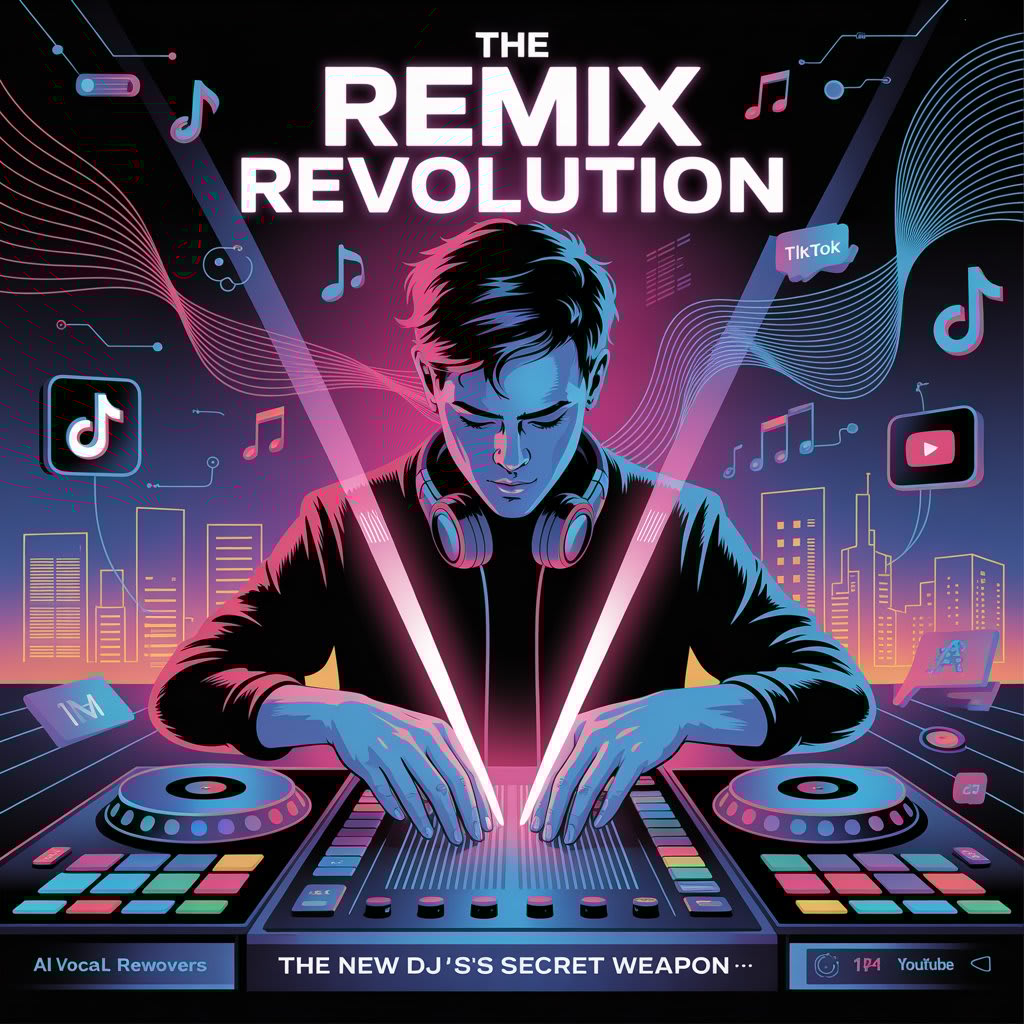
Imagine you're at a party. The music is thumping, people are dancing, and suddenly, you hear a remix of your favorite song — but it sounds brand new. The beat is familiar, but the vocals are gone, replaced by a mash-up or a surprise verse from another artist. That’s not just talent. That’s technology — and it's changing everything.
Welcome to the world of AI vocal removers, the secret weapon that DJs, remixers, and even bedroom creators are now using to bend music to their will.
What Is an AI Vocal Remover?
In simple words, an AI vocal remover is a tool that uses artificial intelligence to separate a song’s vocals from its instruments. Think of it like peeling the voice off a song and leaving just the music behind — or the other way around. This wasn’t easy to do a few years ago. Removing vocals used to leave weird echoes or ruined audio. But now, with AI, it’s almost magic.
Tools like LALAL.AI, Moises.ai, and Spleeter (created by music giant Deezer) can separate music layers in seconds. You upload a song, and in moments, you have clean vocals and instrumentals to work with. No studio. No expensive software. Just AI and creativity.
A New Playground for DJs
DJs used to hunt for acapellas (vocal-only tracks) or instrumentals (music-only tracks) to mix songs together. Finding them was hard. Sometimes they’d get lucky, sometimes they’d make do with low-quality versions. Now, with AI vocal removers, every song is a potential remix project.
Want to mix Taylor Swift's voice over an Afrobeat rhythm? Easy. Want to take Eminem’s rap and lay it over a lo-fi chill beat? Done. DJs can now pull apart any song and put it back together in their own style — instantly.
“This tool has changed everything,” says Karan, a 24-year-old DJ from Mumbai. “I used to spend hours trying to isolate vocals. Now I just upload a track, and the AI does it in minutes. I can focus on being creative instead of technical stuff.”
TikTok, YouTube & the Rise of AI Mashups
You’ve probably seen or heard AI-powered remixes on TikTok, Instagram Reels, or YouTube Shorts — even if you didn’t realize it.
That slow, dreamy remix of Justin Bieber? AI made it possible. That viral mashup of Olivia Rodrigo’s lyrics over a retro synth beat? Also AI. Content creators are using these tools to stand out, go viral, and build audiences.
One viral example was when a TikTok user used AI to strip Adele’s vocals and pair them with a trap beat. The mix exploded online. It wasn’t just a remix. It was a reinvention.
Creators now don’t need to wait for official remixes. They make their own. And sometimes, their versions become even more popular than the original.
Good News for Indie Artists
It’s not just about remixing famous songs. Indie musicians are using AI vocal removers in smart ways too.
Let’s say you’re a singer who found a cool beat online, but it has someone else's vocals. You can use AI to remove those vocals and make your own version. Or maybe you want to practice your vocals on a clean instrumental — again, AI helps.
Some artists are even using it to study music better. By isolating instruments and vocals, they learn how songs are built. It’s like opening up a car engine to see how it works.
Not Just for Fun: A Game-Changer for Music Education
Music teachers are starting to use vocal removers to help students. Want to sing along to a song without the original voice in the way? Just remove the vocals. Want to study only the bassline of a jazz track? Strip out the rest.
AI is making music education more hands-on and more exciting.
“I used to give students karaoke tracks,” says Lauren, a high school music teacher in Canada. “Now we create our own using AI. It makes the learning experience way more personal.”
But What About Copyright?
Ah yes, the big question. Can you legally remix songs with AI?
The short answer: it depends. If you’re using these tools for private fun or learning, you're probably okay. But if you're posting remixes online, especially on platforms like YouTube or Spotify, you need to be careful.
Some platforms allow it under fair use or remix culture. Others may take your track down. The music industry is still figuring this out. Some artists love the remixes. Others want more control. So always check the rules, and when in doubt, use royalty-free music or get permission.
The Future: AI as a Music Partner
We’re only at the beginning. Soon, AI won’t just remove vocals — it will generate them. It already does in some places. AI singers, AI rappers, even AI choirs — they’re here.
But right now, AI vocal removers are giving power to everyday creators. No studio? No problem. No producer? No worries. You can now remix, reimagine, and reinvent music in your bedroom — and maybe go viral doing it.
In a way, AI isn’t replacing creativity. It’s becoming part of it.
As Karan the DJ says, “AI doesn’t make the remix. It just gives me the tools. The real magic still comes from me.”
🎧 Final Beat
AI vocal removers are no longer just a tool for techies or sound engineers. They’re the paintbrushes of a new generation of music artists, remixers, and content creators.
So next time you hear a remix that gives you chills, remember: somewhere, someone stripped it down with AI — and built something beautiful from the silence.
About the Creator
ETS_Story
About Me
Storyteller at heart | Explorer of imagination | Writing “ETS_Story” one tale at a time.
From everyday life to fantasy realms, I weave stories that spark thought, emotion, and connection.
The Energy Pivot The State of Russia’s Oil and Gas in 2026
For decades, this was the "world's gas station": Russia's pipeline network to Europe was the veins of the world economy. By 2026, that aura is dull and those veins are rerouted out of Europe. Since the collapse of the Soviet Union, the Russian oil and gas sector is facing the largest structural change.
By Neeraj kumar3 days ago in Education
What’s the best position to sleep in?
In the 1970s, psychoanalyst Samuel Dunkell proposed a curious, albeit almost completely unsubstantiated, theory that the position you sleep in reflects your personality. For example, preferring to snooze in the so-called royal position indicated self-confidence, while sleeping semi-fetal meant you’re sensible and well adjusted. While Dunkell’s ideas lack any definitive proof, how we sleep can impact our health. So, what’s the best position to sleep in? Sleep positions go by countless creative names—
By Munesh Yadava day ago in Education


Comments
There are no comments for this story
Be the first to respond and start the conversation.