
AI in Drug Development: Speeding Up or Cutting Corners?
The Ethics of Tech-Driven Medicine in 2025

Introduction
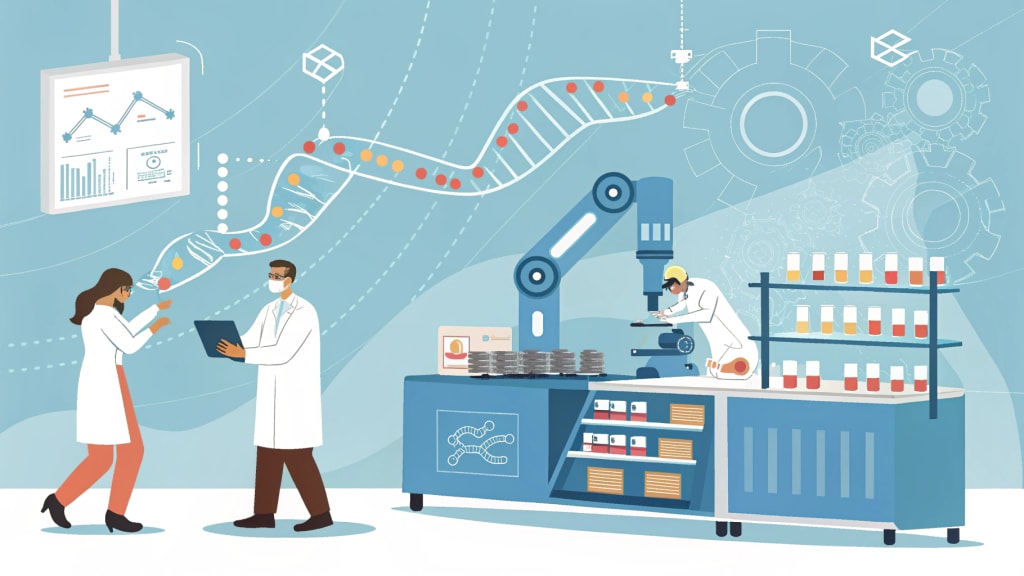
The integration of artificial intelligence (AI) into drug development has the potential to revolutionize the pharmaceutical industry by significantly accelerating the timeline from lab to market。However, this rapid advancement also raises critical ethical questions about data privacy, algorithmic transparency, and the potential for unintended consequences。This article explores the role of AI in drug development, its potential benefits, and the challenges it presents in the context of global market trends.
AI's Role in Accelerating Drug Development
Enhanced Efficiency and Accuracy
AI-driven drug discovery is transforming the traditional, time-consuming process of identifying viable drug candidates。Machine learning algorithms can analyze vast datasets to predict molecular interactions and simulate biological activity, significantly reducing the time and cost associated with preclinical testing。For example, AI can simulate how compounds interact with biological targets, allowing researchers to prioritize the most promising candidates for further testing。
Predictive Modeling and Clinical Trials
AI not only accelerates drug discovery but also plays a crucial role in clinical trials. Predictive models can forecast how a new drug will behave in human trials, reducing the need for extensive and expensive testing。Additionally, AI can identify patient populations most likely to respond well to the treatment, lowering trial failure rates。This approach not only improves the chances of trial success but also aligns with the broader trend towards precision medicine。
Challenges and Ethical Considerations
Data Privacy and Security
The use of AI in drug development requires the collection and processing of vast amounts of sensitive patient data。Ensuring the privacy and security of this data is crucial to maintaining patient trust and compliance with regulatory requirements。Pharmaceutical companies and regulators must work together to develop robust frameworks that protect user data while allowing for innovation。
Algorithmic Bias and Fairness
AI algorithms are only as good as the data they are trained on. If the training data is biased, the resulting AI models can perpetuate or even exacerbate existing inequalities。Ensuring fairness and transparency in AI decision-making processes is essential to prevent discrimination。
Regulatory Hurdles
The rapid integration of AI into drug development presents significant regulatory challenges. Traditional regulatory bodies are not yet fully equipped to evaluate AI-derived data, necessitating the development of new frameworks for approval。Ensuring that AI innovations are introduced safely and ethically requires collaboration between pharmaceutical companies, tech firms, and regulatory agencies。
Future Outlook
Integration with Emerging Technologies
The future of AI in drug development lies in its integration with emerging technologies such as quantum computing and CRISPR。These advancements will enhance the capabilities of AI-driven platforms, making them more connected and data-driven。
Policy and Implementation Frameworks
As AI continues to evolve, robust regulatory frameworks and ethical guidelines are essential to protect user privacy and ensure data security。Policymakers must work with healthcare providers and technology companies to create an ecosystem that fosters innovation while safeguarding against potential risks。
Conclusion
AI-driven drug development holds the promise of significantly accelerating the discovery and approval of new treatments, potentially saving billions of dollars and years of research。However, addressing challenges related to data privacy, algorithmic bias, and regulatory compliance is crucial to ensuring that these technologies benefit patients without compromising their safety。By fostering collaboration between stakeholders and implementing robust regulatory frameworks, we can harness the full potential of AI to create a more efficient and effective pharmaceutical industry。
Recommended books
Genesis: Artificial Intelligence, Hope, and the Human Spirit
As Artificial Intelligence (AI) becomes more dynamic and ubiquitous, it is dramatically empowering people in all walks of life while also giving rise to urgent questions about the future of humanity—a historic challenge whose contours and consequences are revealed by three eminent thinkers in Genesis.
About the Author: With over a decade of experience as an internet product architect, I’ve spent my career crafting innovative application solutions that bridge technology and real-world needs. Now, as a passionate advocate for artificial intelligence, I focus on exploring its transformative applications. I’m committed to pushing the boundaries of AI to empower lives and shape a smarter future. Join me on this exciting journey as we uncover the endless possibilities of intelligent technology.
About the Creator
roc chiang
I'm a tech enthusiast and entrepreneur based in Vancouver. I share original articles on technology, business and other related topics on social media to showcase my passion and insights.
Editor-in-Chief:fengtou.ca
Keep reading
More stories from roc chiang and writers in Education and other communities.
AI and Wearable Tech: Health Monitor or Data Trap?
Introduction The rapid advancement of AI and wearable technology has transformed health monitoring, offering real-time insights and personalized health recommendations. However, these technologies also raise significant concerns about data privacy and security. As smart devices become more integrated into daily life, the question of whether they are truly beneficial for health or pose a hidden risk becomes increasingly relevant。
By roc chiang8 months ago in Education
What’s the best position to sleep in?
In the 1970s, psychoanalyst Samuel Dunkell proposed a curious, albeit almost completely unsubstantiated, theory that the position you sleep in reflects your personality. For example, preferring to snooze in the so-called royal position indicated self-confidence, while sleeping semi-fetal meant you’re sensible and well adjusted. While Dunkell’s ideas lack any definitive proof, how we sleep can impact our health. So, what’s the best position to sleep in? Sleep positions go by countless creative names—
By Munesh Yadav2 days ago in Education
Dr. Richard Kannwischer on Christian Community in a Digital Age: Koinonia and the Ethics of Belonging
Dr. Richard Kannwischer is Senior Pastor of Peachtree Presbyterian Church and has served more than 25 years in pastoral ministry. He earned a Master of Divinity from Princeton Theological Seminary and a Doctor of Ministry from Fuller Theological Seminary. A gifted communicator, he is passionate about helping people see how the story of God speaks with clarity, depth, and relevance to everyday life. His preaching and writing blend theological rigor with storytelling, making complex truths accessible and engaging. Whether in the pulpit, on the page, or in conversation, he invites audiences into practical, life-giving Christian faith for seekers and believers.
By Scott Douglas Jacobsenabout 15 hours ago in Education




Comments
There are no comments for this story
Be the first to respond and start the conversation.