
AI in Cancer Detection: A New Era
How Technology Saves Lives Through Early Diagnosis

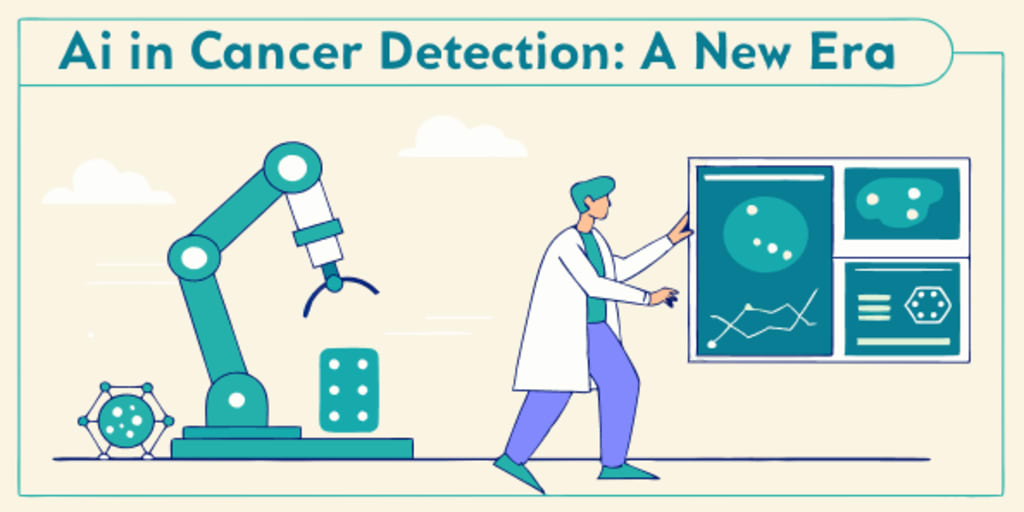
Introduction
Cancer remains a leading cause of death worldwide, but early detection offers the best hope for improving outcomes. Recent advances in artificial intelligence (AI) are transforming cancer diagnosis, enabling earlier and more accurate detection than ever before. This shift is particularly significant because early-stage cancers are often more treatable, and timely intervention can drastically improve patient survival rates and quality of life.
AI-Powered Imaging Analysis
AI algorithms have revolutionized medical imaging analysis, offering unprecedented precision in detecting subtle abnormalities. In radiology, systems like Vara MG have demonstrated the ability to identify early signs of cancer that might be missed by human radiologists. For example, a 2025 study published in Nature found that AI-assisted screening increased breast cancer detection rates by 17.6% compared to traditional methods, with one additional cancer detected per 1,000 screenings. This improvement is particularly notable in cases where cancers are small or difficult to visualize, such as in early-stage breast or lung cancers.
Deep learning models, such as Convolutional Neural Networks (CNNs), are at the core of these advancements. CNNs excel at analyzing radiological images, including X-rays, CT scans, and MRIs, to classify lesions and predict malignancy. For instance, the EfficientNet architecture has been successfully applied to diagnosing breast cancer (AUC 0.95), lung cancer (AUC 0.93), and brain cancer (accuracy 98%), outperforming traditional models in classification tasks.
Personalized Risk Assessment
AI extends its capabilities beyond imaging to personalized risk assessment. By integrating genetic information, lifestyle factors, and medical history, AI models can predict individual cancer risk with increasing accuracy. For example, AI algorithms can analyze genetic markers associated with hereditary cancers, such as BRCA mutations, and combine this data with environmental factors like smoking or diet to generate personalized risk profiles. This approach allows for more targeted screening protocols, ensuring high-risk patients receive closer monitoring and earlier intervention.
Liquid Biopsy Innovation
AI is driving innovation in liquid biopsies, a non-invasive method of detecting cancer biomarkers in blood samples. Machine learning algorithms can identify trace amounts of circulating tumor DNA (ctDNA), enabling early detection of cancers even before symptoms manifest. Recent research has shown promising results in identifying multiple cancer types in asymptomatic patients, including pancreatic and ovarian cancers, which are often detected at advanced stages. This technology holds the potential to transform screening for high-risk populations and reduce mortality rates.
Reducing Diagnostic Disparities
AI has the potential to address healthcare disparities by democratizing access to advanced diagnostic tools. Cloud-based AI systems can assist healthcare providers in regions with limited specialist resources, ensuring consistent and accurate cancer detection. For instance, AI-powered telemedicine platforms can analyze medical images remotely, reducing the burden on overworked radiologists in underserved areas. This democratization of diagnostic capabilities is particularly critical in low-resource settings where cancer screening infrastructure is often lacking.
Conclusion
The integration of AI in cancer detection represents a monumental shift in healthcare. By enabling earlier diagnosis and personalized risk assessment, AI technologies are saving lives and improving outcomes for cancer patients. As these systems continue to evolve, they promise to make cancer detection more accessible, accurate, and efficient. The future of cancer diagnosis lies in the synergy between AI and human expertise, creating a more proactive and patient-centered approach to confronting one of medicine's greatest challenges.
Recommended books
Genesis: Artificial Intelligence, Hope, and the Human Spirit
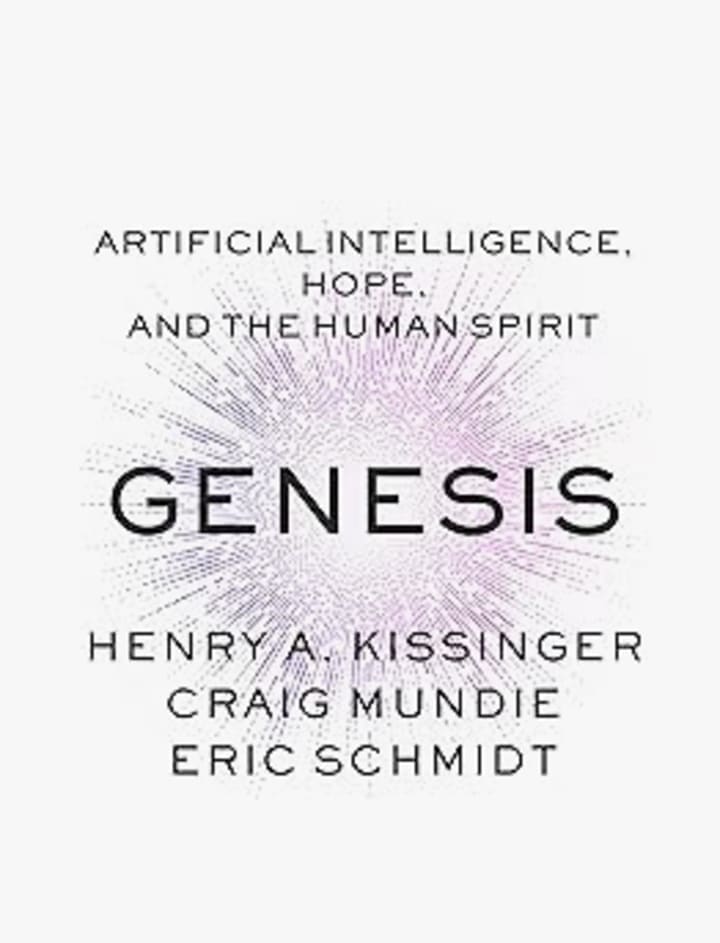
As Artificial Intelligence (AI) becomes more dynamic and ubiquitous, it is dramatically empowering people in all walks of life while also giving rise to urgent questions about the future of humanity—a historic challenge whose contours and consequences are revealed by three eminent thinkers in Genesis.
About the Author: With over a decade of experience as an internet product architect, I’ve spent my career crafting innovative application solutions that bridge technology and real-world needs. Now, as a passionate advocate for artificial intelligence, I focus on exploring its transformative applications. I’m committed to pushing the boundaries of AI to empower lives and shape a smarter future. Join me on this exciting journey as we uncover the endless possibilities of intelligent technology.
About the Creator
roc chiang
I'm a tech enthusiast and entrepreneur based in Vancouver. I share original articles on technology, business and other related topics on social media to showcase my passion and insights.
Editor-in-Chief:fengtou.ca
Keep reading
More stories from roc chiang and writers in Education and other communities.
The Future of Exams with AI
Introduction The integration of artificial intelligence (AI) into educational assessments is revolutionizing the way exams are conducted and evaluated. Traditional assessment methods have long been criticized for their limitations, such as their inability to fully capture a student's understanding and skills, and their lack of adaptability to different learning styles and paces. AI, however, offers a transformative approach to assessments, enhancing fairness, personalization, and efficiency.
By roc chiang10 months ago in Education
When Healing Leads the Way: How Outcome-Driven Healthcare Reshapes Systems, Costs, and Trust
Healthcare is at a crossroads. Rising costs, overwhelmed providers, and frustrated patients have exposed deep flaws in systems that prioritize financial performance over human well-being. For decades, success in healthcare was often measured by revenue, service volume, and utilization rates. While economic sustainability is essential, problems arise when profit becomes the primary goal rather than a byproduct of adequate care. Shifting the focus from profits to outcomes fundamentally changes how healthcare operates, who it serves, and how success is defined.
By Evan Weiss St Louis8 days ago in Education
Lean Management Principles in Healthcare: A Practical Guide to Better Patient Care
Lean management principles in healthcare focus on improving patient outcomes by reducing waste, streamlining workflows, and strengthening team collaboration. Originally developed in manufacturing, Lean has become a powerful approach for hospitals, clinics, and medical practices that want to deliver higher-quality care with fewer delays and less frustration.
By Brady Beitlich8 days ago in Education


Comments
There are no comments for this story
Be the first to respond and start the conversation.