
AI and Job Automation: Progress or Social Crisis?
What 2025 Holds for the Global Workforce

Introduction
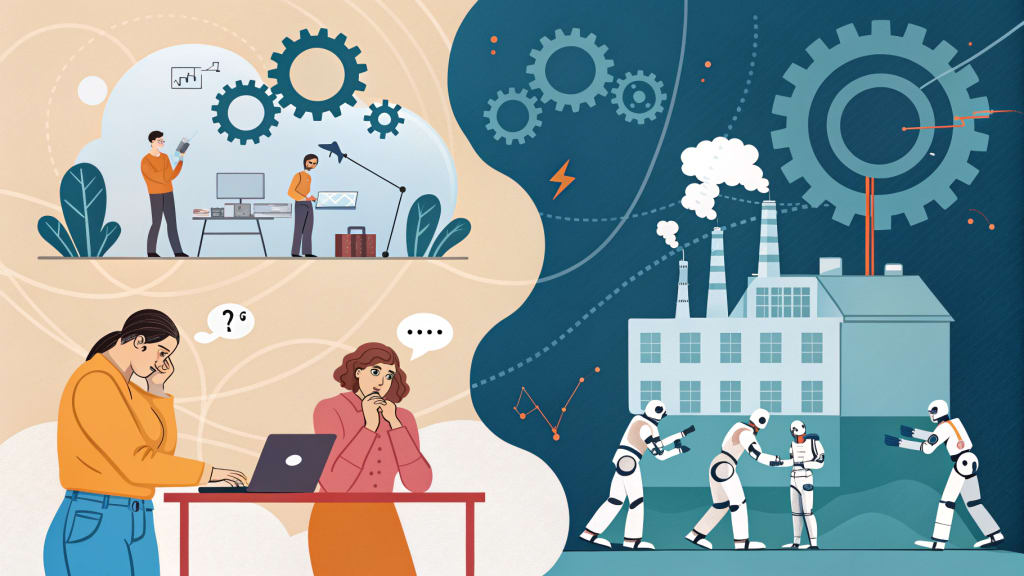
As we step into 2025, the impact of artificial intelligence (AI) and automation on the global workforce is becoming increasingly pronounced. While AI promises to enhance productivity and create new opportunities, it also raises significant concerns about job displacement and economic inequality. This article explores the dual nature of AI's impact on employment, examining both the potential benefits and the challenges that lie ahead.
The Scale of AI's Impact on Employment
Job Displacement and Creation
AI and automation are expected to displace a significant number of jobs globally. According to the World Economic Forum, by 2030, 22% of jobs will be disrupted, resulting in the creation of 170 million new roles while 92 million existing jobs will be displaced, yielding a net increase of 78 million positions. However, the McKinsey Global Institute predicts that AI could displace approximately 300 million jobs globally by 2030, representing about 14% of the global workforce. Despite these challenges, AI is also creating new opportunities, with the potential to generate 375 million new jobs in the same period.
Sector-Specific Impacts
The impact of AI is not uniform across all sectors. White-collar jobs, particularly in finance, law, and administrative roles, are experiencing more significant disruption. For example, traditional retail jobs are expected to decline by 30% due to automated checkout and inventory systems. On the other hand, industries like healthcare and financial services are poised for growth, with AI-driven diagnostics and personalized medicine expected to bring 15-20% productivity gains.
The Benefits of AI in the Workforce
Enhanced Productivity and Efficiency
AI-driven automation can significantly enhance productivity by handling routine and repetitive tasks, allowing employees to focus on more strategic, creative, and interpersonal aspects of their roles. For example, AI-powered tools have been instrumental in reducing errors and increasing efficiency in various industries. Additionally, AI can analyze vast amounts of data to provide actionable insights, enabling businesses to make more informed decisions.
Creation of New Job Categories
AI is leading to the creation of new job categories that require human oversight and decision-making, such as AI ethics consultants, data analysts, and automation specialists. These roles not only offer higher job satisfaction but also open up avenues for career advancement. For instance, the demand for AI specialists, data scientists, and machine learning engineers has skyrocketed, with job postings for AI-related positions increasing by 165% since 2020.
Challenges and Ethical Considerations
Potential for Inequality
The economic effects of AI adoption will be unevenly distributed across industries, regions, and demographic groups. While some regions and industries will see significant growth, others may face job displacement and economic instability. For example, developing economies and manufacturing-heavy regions are at risk of 15-20% job displacement without adequate transition plans. Additionally, workers with post-secondary education are expected to see three times more opportunities than those without.
Algorithmic Bias and Fairness
AI systems can perpetuate or amplify existing biases in hiring, lending, and other decisions. For example, an AI recruitment tool evaluated showed a 35% bias against certain demographic groups based on historical hiring patterns. Implementing fairness constraints can help reduce this bias while maintaining performance benefits.
Data Privacy and Surveillance
AI enables unprecedented monitoring capabilities in the workplace, raising serious privacy concerns. For example, a manufacturing company implemented AI vision systems that improved safety by 45% but raised serious privacy concerns among workers. A collaborative redesign with employee input maintained 80% of safety benefits while addressing privacy issues.
Future Outlook
The Need for Global Alignment
As AI technologies continue to evolve, the need for global alignment on ethical standards becomes more pressing. The UN has called for "pockets of collaboration" to preserve diplomacy amid fierce technological competition. International consensus is essential to ensure that rapid advancements in AI do not outpace the safeguards necessary for ethical and equitable technology development.
Ethical AI and Transparent Practices
Future AI systems will deliver hyper-personalized experiences, considering granular user attributes like mood, time of day, and real-time interactions. This level of personalization can enhance engagement but must be balanced with ethical considerations. As AI continues to evolve, robust regulatory frameworks and ethical guidelines are essential to protect user privacy and ensure data security.
Conclusion
2025 marks a pivotal year in the evolution of AI governance. As innovation accelerates, so must our efforts to ensure that AI is used ethically, transparently, and for the greater good. By prioritizing ethical AI practices and fostering international collaboration, we can harness the full potential of AI to create a more efficient and equitable workforce. The future of work will be defined not by artificial intelligence alone, but by the new forms of intelligence that emerge when human and machine capabilities combine.
Recommended books
Genesis: Artificial Intelligence, Hope, and the Human Spirit
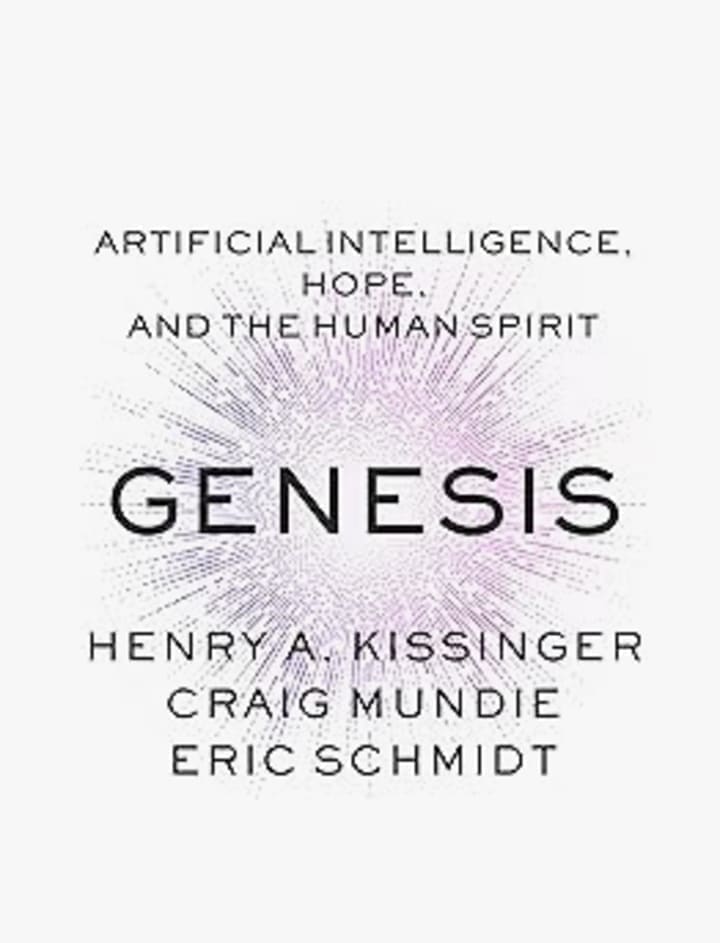
As Artificial Intelligence (AI) becomes more dynamic and ubiquitous, it is dramatically empowering people in all walks of life while also giving rise to urgent questions about the future of humanity—a historic challenge whose contours and consequences are revealed by three eminent thinkers in Genesis.
About the Author: With over a decade of experience as an internet product architect, I’ve spent my career crafting innovative application solutions that bridge technology and real-world needs. Now, as a passionate advocate for artificial intelligence, I focus on exploring its transformative applications. I’m committed to pushing the boundaries of AI to empower lives and shape a smarter future. Join me on this exciting journey as we uncover the endless possibilities of intelligent technology.
About the Creator
roc chiang
I'm a tech enthusiast and entrepreneur based in Vancouver. I share original articles on technology, business and other related topics on social media to showcase my passion and insights.
Editor-in-Chief:fengtou.ca
Keep reading
More stories from roc chiang and writers in Education and other communities.
AI in 2025: The Year of Ethical Reckoning?
Introduction As we step into 2025, the rapid evolution of artificial intelligence (AI) is prompting a global reckoning on its ethical implications. The year is marked by intensified regulatory efforts and ethical considerations as governments and organizations grapple with the dual challenges of fostering innovation and ensuring responsible AI use。
By roc chiang8 months ago in Education
How Mathematical Principles Drive Stable Monthly Results in Index Trading
Index trading has gained popularity among investors who value consistency over speculation. While market headlines often focus on short-term price swings, steady monthly returns in index trading are built on mathematical logic rather than predictions. By understanding how numbers shape market behavior, traders can develop strategies that prioritize reliability and long-term growth over emotional decision-making.
By Agast Mishra2 days ago in Education
The Devil's Cut
“Comrade, finally you’re awake.” The voice was smooth, sensual. A flickering incandescent bar was all that lit the white, sterile room. All Vladimir remembered was everything going black. He tried to move his arms and found them strapped to the gurney.
By Matthew J. Fromm7 days ago in Fiction




Comments
There are no comments for this story
Be the first to respond and start the conversation.