
Advantages of Dynamic Memory Allocation in C
Assigning or Allocating memory to a Variable

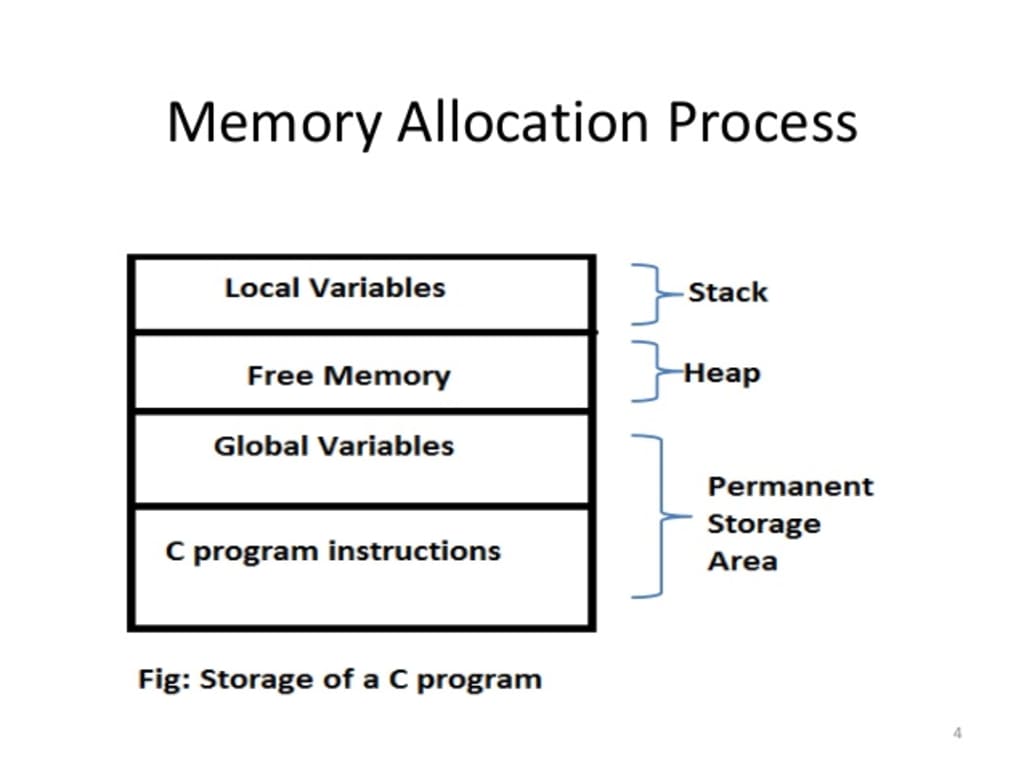
Dynamic memory allocation (DMA) in the C programming language offers significant advantages over static memory allocation, particularly in scenarios where the size and complexity of data structures are not known at compile time. Here, we delve into the key benefits of dynamic memory allocation in C, explaining why it is a crucial feature for efficient and flexible programming.
1. Efficient Memory Utilization
One of the primary advantages of dynamic memory allocation is the efficient use of memory. In static memory allocation, the memory size must be declared at compile time, leading to potential over-allocation or under-utilization of memory resources. Dynamic memory allocation, on the other hand, allows the program to request the exact amount of memory needed during runtime, thus minimizing memory wastage.
Example: If you're implementing a data structure like a linked list or a tree, where the number of nodes can vary greatly, dynamic memory allocation ensures that only the required memory is allocated as new nodes are added.
2. Scalability and Flexibility
Dynamic memory allocation provides the flexibility to scale data structures as the program executes. This capability is essential for applications where data size cannot be predicted in advance, such as databases, file systems, and network buffers.
Example: In a program that handles user inputs, the size of the input array can be adjusted dynamically based on the user's actual input, avoiding the need to allocate a large buffer at the beginning that might never be fully utilized.
3. Handling Variable-Sized Data
In scenarios where data elements vary in size, dynamic memory allocation is indispensable. It allows programs to handle variable-sized data efficiently by allocating memory only as needed.
Example: Consider a text editor application where each line of text might have a different length. Using dynamic memory allocation, the program can allocate memory for each line individually, based on its actual length, instead of pre-allocating a fixed-size buffer for each line.
4. Lifetime Control of Memory
Dynamic memory allocation gives programmers control over the lifetime of allocated memory. Memory can be allocated when needed and released (freed) when no longer in use, which is particularly useful in long-running applications to avoid memory leaks and reduce memory footprint.
Example: In a server application that handles multiple client connections, memory for each client's data can be allocated when the connection is established and freed when the connection is closed, ensuring that memory is not held unnecessarily.
5. Implementing Complex Data Structures
Complex data structures like linked lists, trees, graphs, and dynamic arrays often require dynamic memory allocation. These data structures cannot be effectively implemented using static memory allocation due to their unpredictable and often changing size requirements.
Example: A dynamic array (such as a vector in C++) can be implemented in C using dynamic memory allocation. The array size can grow or shrink as elements are added or removed, ensuring that the array uses only the memory it needs.
6. Supports Recursive Algorithms
Dynamic memory allocation is especially beneficial in recursive algorithms that require memory allocation for each recursive call. Since the depth of recursion is often unknown beforehand, dynamic allocation ensures that each recursive call gets its own memory, thereby facilitating the implementation of complex recursive solutions.
Example: In a recursive algorithm for solving the Tower of Hanoi problem, dynamic memory allocation can be used to store the state of each recursive call, allowing the program to handle a potentially large number of recursive steps.
7. Facilitates Memory Reuse
Dynamic memory allocation allows memory reuse through techniques such as memory pools and custom allocators. These techniques can significantly enhance the performance of applications by reducing the overhead associated with frequent memory allocations and deallocations.
Example: A memory pool can be created to handle small memory allocations in real-time systems, where the time taken to allocate and deallocate memory dynamically is critical. Memory blocks are reused, reducing fragmentation and speeding up memory operations.
8. Memory Management and Debugging Tools
Dynamic memory allocation in C is often accompanied by powerful memory management and debugging tools, such as malloc, free, and realloc, as well as third-party libraries and tools that help in detecting memory leaks, fragmentation, and other issues. These tools are invaluable in ensuring that the allocated memory is managed efficiently and safely.
Example: Tools like Valgrind can be used to detect memory leaks in a C program, helping developers to identify memory that was dynamically allocated but not properly freed, thereby preventing potential issues in production code.
Conclusion
Dynamic Memory Allocation is a cornerstone of efficient and flexible programming in C. It allows programs to use memory resources judiciously, handle variable-sized data, implement complex data structures, and maintain control over memory usage throughout the program's execution. While it adds complexity to memory management, the benefits in terms of performance, scalability, and resource efficiency make dynamic memory allocation an essential technique for any serious C programmer.
About the Creator
Pushpendra Sharma
I am currently working as Digital Marketing Executive in Tutorials and Examples.
Keep reading
More stories from Pushpendra Sharma and writers in Education and other communities.
Message Passing in C++
Introduction Message passing is a crucial concept in concurrent and parallel programming. It allows different parts of a program, or different programs altogether, to communicate with each other by sending messages. In C++, message passing can be achieved through various means, including standard libraries, third-party libraries, and custom implementations.
By Pushpendra Sharmaabout a year ago in Education
Best Laptop for Digital Art
In the vibrant world of digital art, the right laptop can be your greatest creative ally. Whether you're sketching breathtaking illustrations, designing compelling graphics, or animating entire worlds, you need more than just a machine you need a digital canvas that brings your ideas to life.
By Home Care Ranks4 days ago in Education
Why Mentoring Clinicians Is Key to Sustainable Patient-Centered Innovation
Clinician mentorship shapes the foundation for long-term, patient-centered innovation by strengthening skills, encouraging creative problem-solving, and building confidence across healthcare teams. Experienced mentors guide clinicians through complex decision-making while helping them understand how innovation grows from everyday patient interactions.
By Dr. Janet Cholleta day ago in Education
Affection and Healing for Yourself
During the night of the last quarter moon, I gathered my ritual supplies. I carefully handled the chunk of black tourmaline that would protect me from your overall negative and narcissistic energy. I carefully walked the house with my stick of selenite in hand, asking the universe to cleanse our working space.
By Alisha Wilkins ✒️🦋🖋️3 days ago in Fiction



Comments (1)
Thanks for sharing