
Adolf Hitler: A Historical Overview
A Historical Overview
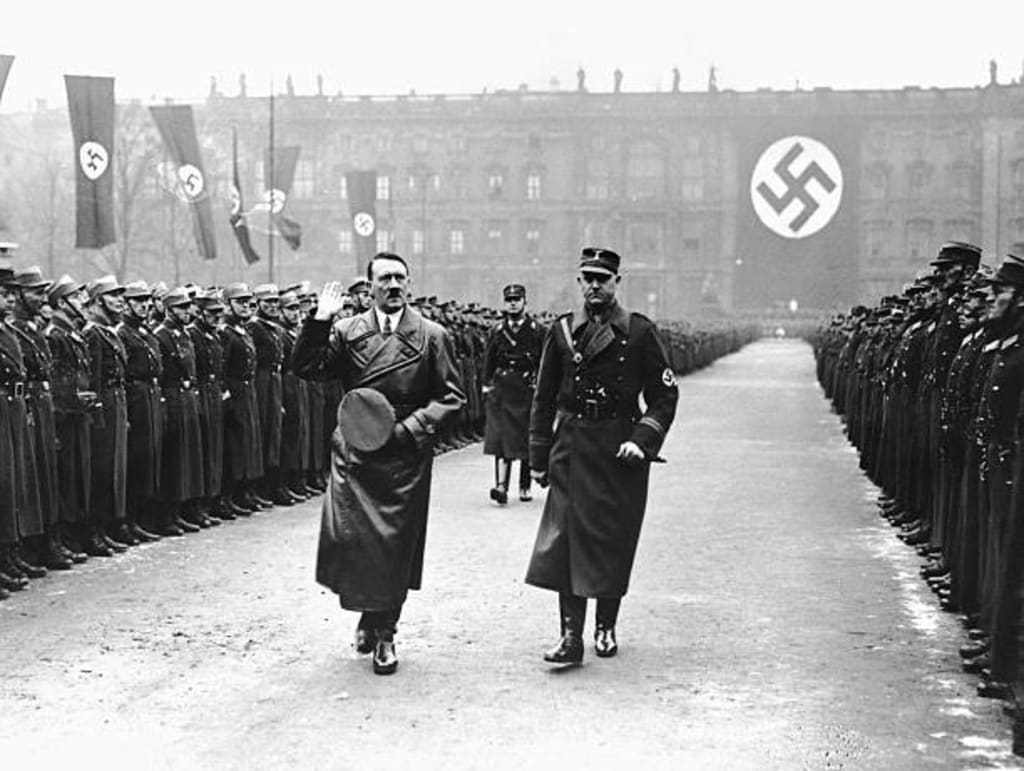
Adolf Hitler: A Historical Overview
Adolf Hitler (1889–1945) remains one of the most infamous figures in modern history. He started World War II and orchestrated the Holocaust while leading Nazi Germany, which resulted in the deaths of millions of people. His ideas, actions, and life had a devastating effect on the 20th century. His legacy is still being studied as a warning against totalitarianism, racism, and power without limits.
Early Life and Rise to Power
Hitler went through a difficult childhood in Braunau am Inn, Austria-Hungary, where he was born on April 20, 1889. His mother, Klara, was a devoted homemaker, while his father, Alois Hitler, was a strict customs official. As a young man, Hitler aspired to be an artist but was rejected twice by the Academy of Fine Arts Vienna. Struggling financially, he lived in homeless shelters in Vienna, where he was exposed to extreme nationalist and anti-Semitic ideologies.
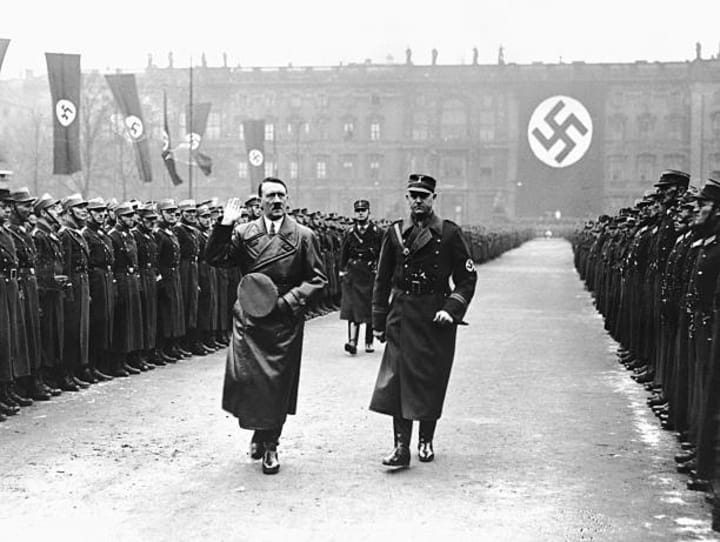
Hitler joined the German army in 1914 when World War I broke out. He received a bravery award despite never attaining corporal rank. He blamed Jews, Marxists, and politicians for Germany's humiliation in the Treaty of Versailles after Germany's defeat in 1918. Political Participation and the Nazi Party Hitler joined the small German Workers' Party (DAP) in 1919, which he later renamed the National Socialist German Workers' Party (NSDAP, also known as the Nazi Party). His persuasive speaking abilities and methods of propaganda attracted followers. He made an unsuccessful attempt at the Beer Hall Putsch in Munich in 1923, which resulted in his brief imprisonment. His extremist views on racial purity, anti-Semitism, and Lebensraum (a living space for Germans in Eastern Europe) were outlined in his book Mein Kampf ("My Struggle"). Hitler rebuilt the Nazi Party after he was released, taking advantage of public discontent with the Weimar Republic's weakening and the Great Depression. He was made German Chancellor by 1933 through political maneuvering and intimidation.
Dictatorship and World War II
Hitler swiftly destroyed democracy once in power. He was able to pass the Enabling Act, which gave him dictatorial power, thanks to the 1933 Reichstag Fire. He established a totalitarian regime with the SS and Gestapo, outlawed opposition parties, oppressed Jews, Communists, and other minorities, and banned them all. Hitler’s aggressive foreign policy led to the annexation of Austria (1938) and Czechoslovakia (1939). World War II began with the invasion of Poland in September 1939. Initially, Germany achieved rapid victories using Blitzkrieg tactics, conquering much of Europe. However, after the United States' entry into the war and the failed invasion of the Soviet Union in 1941, the tide turned. Nazi Atrocities and the Holocaust During the Holocaust, Hitler's regime was responsible for the systematic genocide of six million Jews and millions of other people, including Romani, disabled, and political dissidents.

Concentration camps like Auschwitz became symbols of Nazi brutality.
Death and Destruction By 1945, the Allies had encircled Germany. Refusing surrender, Hitler retreated to his bunker in Berlin. Together with his wife, Eva Braun, he committed suicide on April 30, 1945, as Soviet troops advanced. Germany surrendered days later, ending the war in Europe.
Legacy and Historical Impact
An estimated 50-80 million people worldwide perished as a result of Hitler's actions, which destroyed Europe. The Nuremberg Trials (1945–1946) prosecuted Nazi leaders for war crimes, establishing precedents in international law. Today, Hitler is universally condemned, and his ideology serves as a stark reminder of the dangers of extremism.
Downfall and Death
Allied advances and Germany’s collapse
Hitler’s final days in the Führerbunker
Suicide and Germany’s surrender
Legacy and Historical Lessons
Nuremberg Trials and accountability for Nazi crimes
Hitler’s lasting impact on history and memory
Importance of understanding fascism and preventing extremism
About the Creator
Md. Rasel Rana
[Md. Rasel Rana ] is a storyteller and vocalist.
Welcome to my soundworld! I’m [Md. Rasel Rana ], a passionate vocal artist dedicated to bringing emotion, power, and authenticity to every performance.
Keep reading
More stories from writers in Education and other communities.
How, Too
Many people wonder how, too. You are not alone, and I am an expert. I will teach you how, too! First, you need to remit a small application fee and fill out an application describing the nature of your financial situation and how often payments will be made, as this will have great bearing on how well I teach you how, too.
By Harper Lewis5 days ago in Fiction



Comments
There are no comments for this story
Be the first to respond and start the conversation.