
A Journey to the Strange World of Uranus: Buckle Up for a Cosmic Adventure
5 Seconds on Uranus
A Journey to the Strange World of Uranus: Buckle Up for a Cosmic Adventure
Get ready for a trip to the far reaches of our solar system, where we'll explore Uranus—a planet that's a bit peculiar compared to its cosmic neighbors. Our mission: spend 5 seconds on Uranus and make it back, if we can. But hold on, because this isn't your typical journey; it's a mix of challenges and surprises.
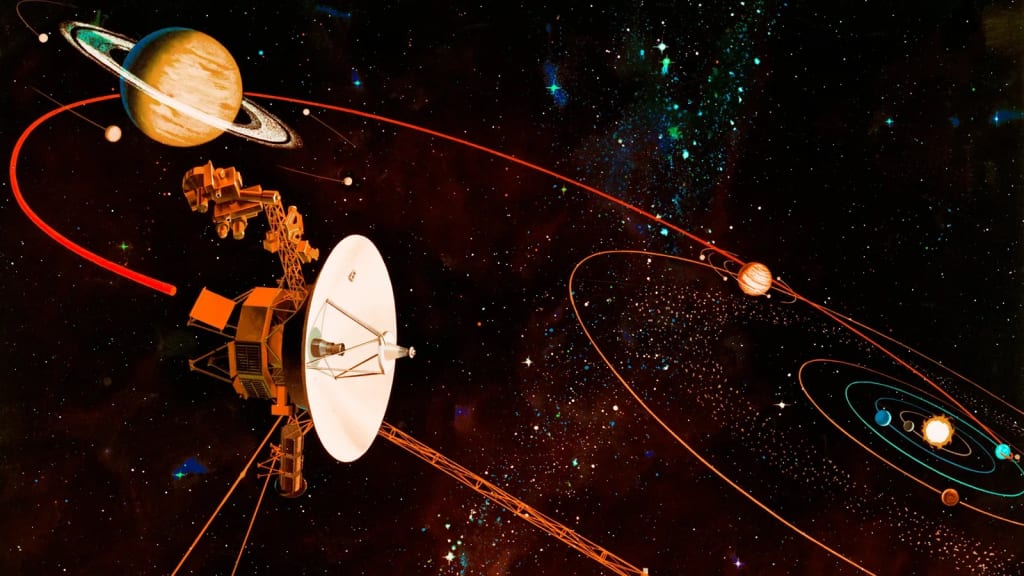
To even get close to Uranus, we need to hop on a spaceship for a super long journey—about 10 years! We might even pass by Jupiter and Saturn along the way. But it's not a joy ride; we've got to make sure our spaceship has enough food and fuel for the adventure.
Now, Uranus is no Earth. It's what scientists call an "ice giant," kind of like Neptune. But what makes Uranus stand out is its strange spin—it's the only planet that tilts on its side. Even though a day on Uranus is just 17 hours, it's not a place we'd want to hang around for long. As we approach, we'll need to be careful navigating through the 13 rings that circle Uranus, each with its own unique look.
Unlike the big, beautiful rings of Saturn, Uranus's rings vary in size and appearance. Some are bright and easy to see, while others are narrow and dark. As we weave through these dusty rings, we'll finally get an up-close view of Uranus's blue atmosphere—a view no human has ever had before.
But landing on Uranus? Nope, not happening. It's not like landing on solid ground because Uranus is basically a big ball of toxic gas wrapped around a tiny icy center. The upper atmosphere is stinky, thanks to clouds with a bad-smelling gas called hydrogen sulfide. Breathing it in would make us faint and, well, that wouldn't be good.
As we descend through the smelly clouds, we find ourselves surrounded by different gases—hydrogen, helium, and a bit of methane. This methane is what gives Uranus its bluish-green color. But things get even weirder as we go deeper. Brace yourself for "diamond rain"! Under lots of pressure, the methane turns into diamonds, falling from the sky. It's like a space jewelry show!
But here's the tough part: winds on Uranus can be super strong—up to 900 kmph, much more powerful than a big hurricane on Earth. It's freezing, and the pressure is intense. As we keep going down, the temperatures rise a bit, but it's still pretty cold.
Heading toward the mantle, it's pitch-black down there. The Uranian mantle is made of water, ammonia, and methane ice, but it's not a cozy place to be. Gravity holds us tight, and we won't be able to move much. The pressure keeps going up as we get closer to the center, and that could be really crushing.
The big twist in our journey? Instead of hitting a solid surface, we could turn into diamonds before reaching the core—a surprising end to our one-way trip into Uranus.
Uranus might not be the best place for a quick visit, but our solar system has lots of other planets and moons that are friendlier. Stay tuned for more space adventures as we explore the wonders beyond our familiar neighborhood in the cosmos!
About the Creator
Keep reading
More stories from Mharvie Loraya and writers in Education and other communities.
How Adidas, Asics, and Other Shoemakers Deal With Waste
In a world where nearly 50 billion shoes are produced annually, a staggering majority end up in landfills. However, a groundbreaking initiative in the Netherlands claims to have cracked the code for recycling footwear at a rate of up to 2500 shoes per hour. Notably, major brands like Adidas are also taking steps to reduce waste by incorporating materials derived from ocean plastic. So, why is recycling shoes such a challenge, and are these efforts from big brands making a difference?
By Mharvie Loraya2 years ago in Education
Top 4 AI certifications to Land High-Paying Jobs in 2026
With artificial intelligence becoming a core business necessity in 2026, and organizations moving towards Agentic AI systems along with specialized infrastructure, the demand for professionals who can build, deploy, integrate, and even use these intelligent systems is growing.
By Anu shreya5 days ago in Education




Comments