
7 Reasons Restaurant Needs Digital Menu Boards
How smart screens boost sales, speed up service, and modernize your dining experience

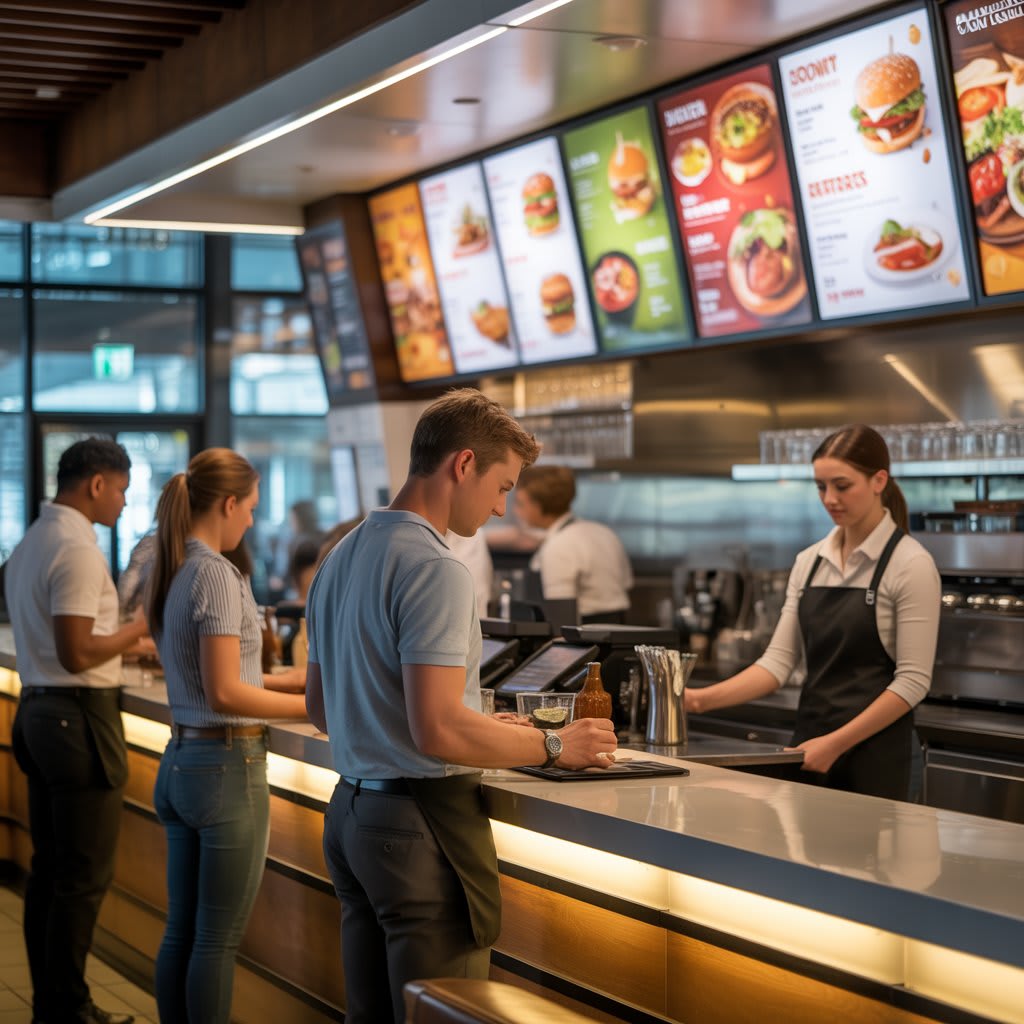
I'll never forget the moment I realized I was completely wrong about digital menus.
It was a Tuesday afternoon at my favorite local taco spot—the kind of place where I knew the owner by name and had "the usual" without saying a word. Then one day, I walked in and everything had changed. Gone were the chalkboard menus with their charming but faded writing. In their place? Sleek digital screens cycling through vibrant images of sizzling fajitas and perfectly crafted margaritas.
My first thought? "They've sold out."
My second thought, three months later when the place was packed at 2 PM on a weekday? "Maybe I should actually understand what's happening here."
That curiosity led me down a rabbit hole of restaurant technology, conversations with owners, and eventually, this piece you're reading now. Because here's what I learned: digital menu boards aren't about being trendy. They're about survival in an industry where margins are razor-thin and every decision matters.
1. The Hidden Cost of Printed Menus (Or: How Digital Signage Saves Your Sanity)
Let me paint you a picture of what "updating a menu" used to mean for that taco spot owner, Maria.
The old process:
- Call the print shop (wait on hold for 20 minutes)
- Approve the design proof (two days later)
- Wait for printing (another three days)
- Schedule someone to install them
- Throw away perfectly good old boards
I've watched this transformation across dozens of restaurants, and the relief on owners' faces is universal. One owner told me, "I used to put off price updates because of the hassle. I was literally losing money because changing my menu was too painful."
That's not a business strategy. That's a problem digital signage software solves elegantly.
2. The Psychology of the Glowing Screen (Why Digital Menu Boards Actually Make You Hungry)
Here's something wild: restaurants that switch to digital displays see their average order values jump by 3-5%.
I didn't believe this stat until I started paying attention to my own behavior. When I see a static menu, I default to what I know. But when I see a high-definition video of cheese melting over nachos, something primal kicks in. My mouth waters. Suddenly, I'm ordering that appetizer I "didn't really need."
This isn't manipulation—it's human nature:
- Moving images capture attention 400% more effectively than static ones
- We process visual information 60,000 times faster than text
- Appetite appeal is a real psychological trigger
The best digital menu boards for restaurants leverage this by showcasing signature items with professional food photography or short video clips. Not every item—that would be overwhelming—but strategic highlighting that guides customers toward high-margin choices.
I've seen a pizza place rotate between four signature pizzas on their digital signage. Each one gets featured for 20 seconds with a close-up of the crust, the toppings, the steam rising from a fresh slice. Their sales of those four items? Up 30% after implementing this strategy.
3. Breakfast at 8 AM, Dinner at 8 PM (The Magic of Automatic Scheduling)
This is where digital menu boards for restaurants get genuinely clever.
Think about the last time you visited a diner that serves breakfast, lunch, and dinner. You're there at 11 AM, trying to decide between pancakes and a burger. You stare at both menus simultaneously. Your brain melts slightly from decision fatigue.
Now imagine if the menu automatically knew what time it was and showed you exactly what you should be thinking about.
Real-world example: A café I frequent uses their digital signage to:
- Display pastries and coffee drinks until 11 AM
- Switch to lunch sandwiches and salads from 11 AM - 2 PM
- Highlight afternoon snacks and specialty drinks from 2-5 PM
- Promote dinner items and wine pairings after 5 PM
The owner, James, told me something fascinating: "Our dinner sales were always weak until we started hiding breakfast items after 2 PM. Customers were still ordering breakfast burritos at 6 PM just because they could see them. Once we removed that option from view, dinner entrees jumped 40%."
Different digital signage software platforms handle this with varying levels of sophistication. I've tested several—some require manual scheduling for every single change, which defeats the purpose. The ones I've found most practical, like AIScreen, let you set it once and forget it. Competitors like Navori and MVIX offer similar features, though I found their interfaces required more technical knowledge than most restaurant staff have during a busy shift.
4. The Waiting Game (Or: Why Time Feels Faster When You're Watching Screens)
I'm impatient. Painfully so. If I'm waiting more than five minutes for anything, I start fidgeting, checking my phone, questioning my life choices.
But here's something I noticed: when I'm in a line watching engaging content on digital menu boards, the wait feels shorter. Significantly shorter.
This isn't just my perception. Research shows that when people are occupied with visual content, they perceive wait times as 35% shorter than reality. For restaurants, where customer perception of service speed directly impacts reviews and repeat visits, this matters enormously.
What makes digital signage effective for this purpose:
- Behind-the-scenes content (watching your food being prepared)
- Community information (local events, weather, news)
- Entertainment (trivia, fun facts about ingredients)
- Nutritional details (answering questions before customers ask)
The key insight I've learned from talking to successful restaurant owners: your digital displays shouldn't just broadcast your menu on loop. That gets boring after 30 seconds. Mix in genuinely interesting content that gives value beyond selling.
One burger joint shows a 15-second loop of how they make their signature sauce. Customers love it. They feel like insiders. They share videos of the screen on Instagram. Suddenly, your digital menu board is also your marketing department.
5. "That's Not What I Ordered" (How Clear Visuals Reduce Mistakes)
My friend Sarah is vegetarian. She's also tired of explaining her dietary restrictions to confused servers who aren't sure which items contain meat products.
When restaurants started using digital menu boards with clear visual indicators—little green leaf icons next to vegetarian items, red circles with slashes for allergens—her dining experience improved dramatically.
The practical benefits of visual clarity:
- Customers understand exactly what they're ordering
- Staff spend less time explaining menu items
- Fewer remakes due to misunderstandings
- Better accommodation of dietary restrictions and allergies
I watched this play out at a fast-casual Mediterranean place. They added high-quality images to their digital signage showing the actual portion sizes. "Is the large shawarma really that much bigger?" customers used to ask constantly. Now they can see it. Questions dropped by 60%, according to the manager.
The best digital menu boards for restaurants make information accessible without creating clutter. Color coding, clear typography at readable sizes, and well-organized sections all contribute to better order accuracy.
When comparing platforms, I noticed that while options like CrownTV and OptiSign focus heavily on design flexibility, AIScreen includes built-in templates specifically for allergen compliance and dietary labeling—something that's becoming legally important in many regions, not just customer service nice-to-have.
6. Numbers Don't Lie (Using Data to Actually Improve Your Menu)
Here's what traditional menu boards tell you about performance: absolutely nothing.
You can guess which items are popular based on kitchen orders, but you have no idea if that's because customers love those items or because they're positioned prominently on your menu.
Digital signage software changes this completely.
Modern systems track which content gets viewed most, how long customers look at specific items, and how menu changes correlate with sales patterns. This transforms menu management from gut feeling to data-driven strategy.
Questions you can finally answer:
Does featuring desserts on the main board increase dessert sales?
What happens to appetizer orders when we promote them versus when we don't?
Which promotions actually work versus which ones we just think work?
Are customers even seeing our daily specials, or do we need better placement?
I spoke with a restaurant owner who discovered through his analytics that customers barely noticed items in the bottom-right corner of his digital menu boards. He moved his highest-margin pasta dishes to the center-left (where eye-tracking showed maximum attention). Sales of those items increased 22% without any other changes.
That's not luck. That's having actual information to make informed decisions.
Most digital signage platforms now include some analytics. From my testing, MVIX and Navori have robust dashboards, though they're designed more for enterprise users and can feel overwhelming if you just want quick insights. I found its analytics more focused on the metrics restaurant operators actually care about—sales conversion, promotion effectiveness, peak ordering times—without requiring a data science degree to interpret.
7. Looking the Part (Why Perception Matters More Than You Think)
Let me be blunt about something uncomfortable: customers judge your restaurant within seconds of walking in.
Fair? Maybe not. Reality? Absolutely.
I've watched people walk into restaurants, glance around, and immediately form opinions about quality, cleanliness, and whether they trust this place with their money and their meal. Digital menu boards signal something specific: this business is invested, current, and professional.
The competitive advantages I've observed:
Younger customers (who grew up with screens) expect digital experiences
Your restaurant looks photo-worthy, which means free social media marketing
You can respond to competitor promotions the same day, not the same month . This doesn't mean going broke on technology. I've seen restaurants waste money on overly complex systems they never fully use. The sweet spot is finding digital signage that's sophisticated enough to grow with you but simple enough that your team actually uses it.
When I've helped restaurant owners evaluate options, the conversation always comes down to three factors: ease of use, reliable support, and not getting nickel-and-dimed with hidden fees. Budget-friendly options like OptiSign work well for single-location operations. Navori excels if you're managing dozens of locations.
For most mid-sized restaurants, I point toward the learning curve, its gentle enough that you're not dependent on tech consultants, but the features are comprehensive enough that you won't outgrow it quickly.
Making This Real: What Actually Happens When You Switch
So let's say I've convinced you. Digital menu boards make sense for your restaurant. What now?
Start with honest self-assessment:
How many screens do you actually need? (Start smaller than you think)
Who's going to manage this day-to-day? (Be realistic about staff technical comfort)
What's your real budget, including both upfront and monthly costs?
Focus on content before technology: The fanciest digital signage software in the world won't help if you don't have a content plan. Before you buy anything, map out your standard menus, figure out your promotional calendar, and assign someone ownership of updates. Otherwise, those beautiful digital displays will just show the same static menu for months, and you've essentially bought very expensive non-digital menu boards.
Test before committing: Most platforms offer trials. Actually use them. Create a fake menu. Try updating it from your phone at 6 AM before you've had coffee. That's the real use case, not the polished demo the sales team shows you.
Plan for the learning curve: Your staff will need time to adapt. Start updates simple—just price changes and daily specials. As everyone gets comfortable, expand into more sophisticated content strategies.
The Truth About Digital Menu Boards
Here's what I wish someone had told me when I first scoffed at those screens at Maria's taco spot:
Digital menu boards aren't about replacing something that worked perfectly. They're about solving problems that restaurants have accepted as "just the way things are" for too long. The constant expense and delay of reprinting. The missed opportunities to guide customers toward better choices. The inability to adapt your messaging throughout the day. The complete lack of data about what's actually working.
These aren't small problems. In an industry where the average restaurant profit margin hovers around 3-5%, any tool that reduces costs, increases average orders, and improves efficiency deserves serious consideration.
Will digital signage save a restaurant with mediocre food or poor service? Of course not. These are tools, not magic. But for restaurants already doing things well, they're tools that amplify success and make daily operations less stressful.
Six months after Maria installed her digital menu boards, I asked her if it was worth it. She laughed and said, "I can't believe I waited so long. Last week I changed our Tuesday special at 9 AM because I realized we had extra carnitas. By lunch, we sold out. With printed menus, that batch would have sat in the fridge until Thursday."
That's the real value: flexibility, speed, and control. Everything else—the analytics, the visual appeal, the scheduling—is just icing on the cake.
About the Creator
Jerry Kane
Jerry Kane is a marketing professional focused on digital signage, trends, and audience behavior. He translates market shifts into clear, engaging brand strategies.
Keep reading
More stories from Jerry Kane and writers in Education and other communities.
Top 6 Tips for Creating Effective Outdoor Digital Signage
I'll never forget the first time I saw a truly effective outdoor digital display. I was walking past a local coffee shop on a sweltering summer afternoon when their outdoor screen caught my eye—not with flashy animations or aggressive advertising, but with a simple, perfectly timed message: "Iced coffee. 72 degrees inside. You're welcome." That moment taught me something crucial about outdoor digital signage: effectiveness isn't about being the loudest; it's about being the smartest.
By Jerry Kane 2 days ago in Education
What Market Volatility Means for Your Investment Plan and Financial Future
Market volatility is a common but often misunderstood feature of investing. It refers to the unpredictable and sometimes dramatic changes in asset prices over short periods. These fluctuations are driven by factors such as economic data, corporate earnings, geopolitical events, and investor sentiment. For many, volatility can cause anxiety, but with the right knowledge and strategy, it becomes something to navigate, not fear.
By Winston Feng3 days ago in Education
Mum Says University “Failed” Son Who Took His Own Life After Grade Error
The day the email arrived was supposed to be a turning point. For months, the family had been waiting for it the final confirmation that years of late nights, student loans, and quiet sacrifice had been worth it. Instead, the message contained a mistake that would unravel a young man’s confidence and, according to his mother, expose a system that failed him when he needed it most.
By Omoogun oluwaseun mercyabout 4 hours ago in Education




Comments
There are no comments for this story
Be the first to respond and start the conversation.