
12 Science-Backed Self-Improvement Tips for a Healthier, Happier, and More Productive Life”
Practical habits proven by research to boost your mind, body, and success every day.”

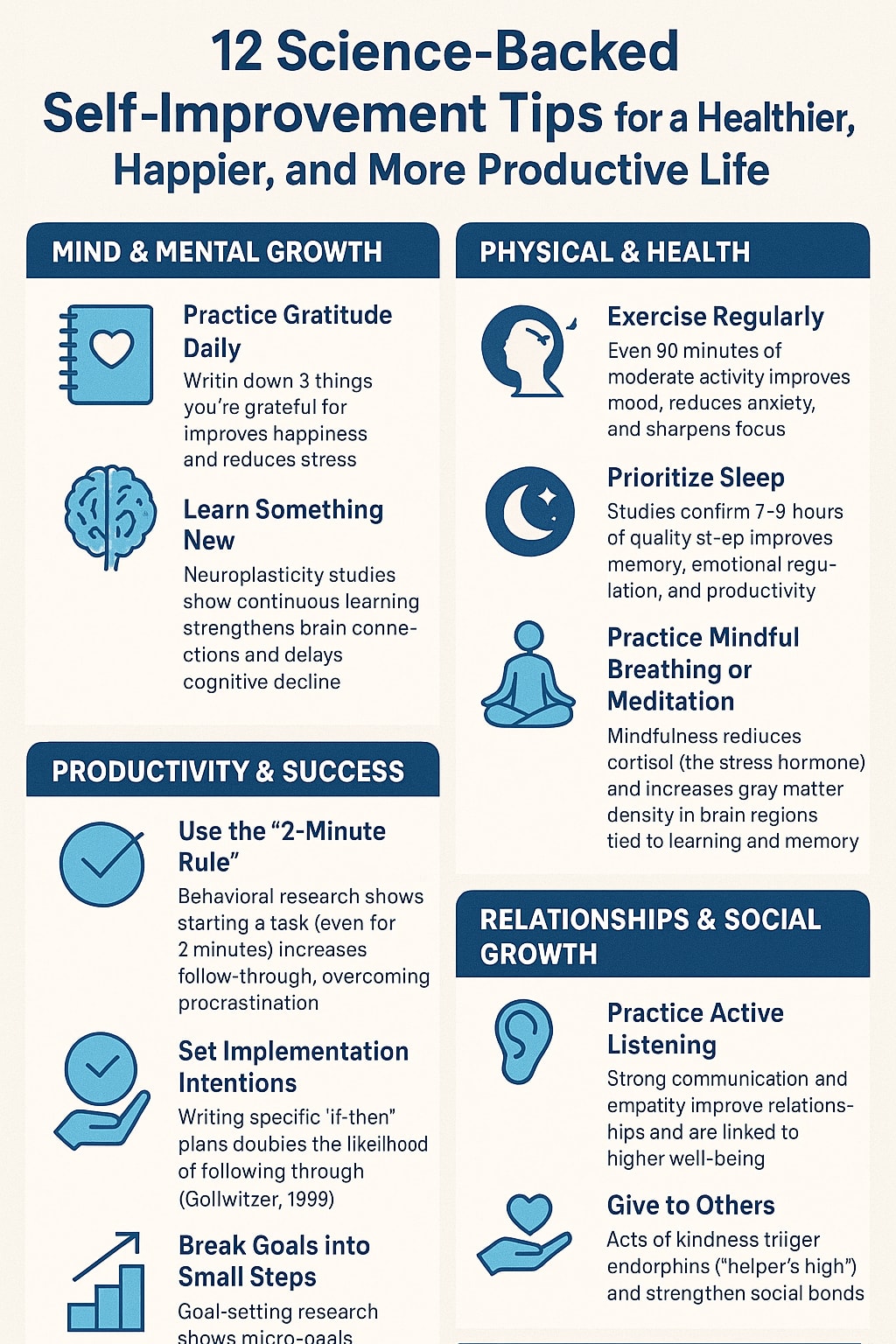
In today’s fast-paced world, everyone is looking for ways to live better, feel happier, and achieve more. While there’s no shortage of advice on self-improvement, not all of it is backed by solid evidence. Fortunately, scientific research provides us with proven strategies that can make a real difference in our lives. Here are twelve powerful, science-backed self-improvement tips to help you grow in mind, body, and relationships.
---
1. Practice Gratitude Daily
Research from psychologists Robert Emmons and Michael McCullough shows that regularly writing down what you’re grateful for improves happiness, reduces stress, and strengthens emotional resilience. A simple practice of jotting three things you’re thankful for each day can rewire your brain to focus more on the positive aspects of life.
---
2. Learn Something New
Neuroplasticity studies confirm that the brain continues to grow and change throughout life. Learning a new skill, language, or hobby strengthens neural connections and delays cognitive decline. Whether it’s playing an instrument or reading about a new subject, consistent learning enhances mental agility and creativity.
---
3. Limit Multitasking
Contrary to popular belief, multitasking isn’t a sign of productivity. Research from Stanford University found that multitaskers struggle with memory, attention, and task-switching compared to those who focus on one task at a time. Instead of juggling multiple activities, work in focused blocks of time and finish one task before starting the next.
---
4. Exercise Regularly
Exercise is one of the most powerful tools for self-improvement. According to Harvard Medical School, just 30 minutes of moderate activity—like brisk walking—can reduce anxiety, improve mood, and sharpen focus. Exercise also releases endorphins, the body’s natural mood enhancers, helping you feel more energetic and positive.
---
5. Prioritize Sleep
Sleep isn’t a luxury—it’s essential for mental and physical performance. Studies show that seven to nine hours of quality sleep each night improves memory, decision-making, emotional regulation, and productivity. A consistent bedtime routine, limited screen use before bed, and a cool, dark sleeping environment can significantly improve sleep quality.
---
6. Practice Mindful Breathing or Meditation
Mindfulness meditation has been shown to reduce cortisol levels (the stress hormone) and increase gray matter density in brain regions related to learning and memory. Even a few minutes of daily mindful breathing can lower stress, increase focus, and improve overall emotional well-being.
---
7. Use the “2-Minute Rule”
Procrastination is one of the biggest barriers to self-improvement. A simple hack is the “2-minute rule”: if a task takes less than two minutes, do it immediately. Behavioral research shows that simply starting a task increases the likelihood of finishing it, helping you overcome inertia.
---
8. Set Implementation Intentions
Psychologist Peter Gollwitzer’s research highlights the power of “if-then” planning. For example, “If it’s 7 a.m., then I will go for a jog.” This type of specific planning doubles the chances of achieving your goals because it turns vague intentions into clear actions.
---
9. Break Goals into Small Steps
Big goals often feel overwhelming, leading to procrastination. Research on goal-setting shows that breaking large goals into smaller, achievable milestones increases motivation and creates a sense of accomplishment. Celebrating small wins keeps momentum alive and builds confidence over time.
---
10. Practice Active Listening
Strong relationships are essential for personal well-being, and communication plays a vital role. Active listening—truly focusing on what others are saying without interrupting—improves empathy and builds trust. Studies show that better communication skills are linked to stronger, more fulfilling relationships.
---
11. Invest in Social Connections
The Harvard Study of Adult Development, one of the longest studies on happiness, revealed that strong relationships are the single biggest predictor of long-term health and well-being. Spending quality time with friends and family not only boosts mood but also protects against stress and illness.
---
12. Give to Others
Generosity isn’t just good for others—it’s good for you, too. Research shows that acts of kindness release endorphins, creating the so-called “helper’s high.” Whether it’s volunteering, offering support, or simply lending a hand, giving strengthens social bonds and enhances personal happiness.
---
Final Thoughts
Self-improvement doesn’t require drastic changes. Instead, it’s about small, consistent habits backed by science. Practicing gratitude, prioritizing sleep, exercising regularly, and investing in relationships may seem simple, but they add up to powerful results over time. By incorporating these evidence-based tips into your daily life
About the Creator
Ghalib Khan
my name is Ghalib Khan I'm Pakistani.I lived Saudi Arabia and I'm a BA pass student
Keep reading
More stories from Ghalib Khan and writers in Education and other communities.
How to Gain Real Work Experience in Wealth Management
Breaking into wealth management can feel confusing at first. Many roles ask for experience, but it is not always clear how to get it. The good news is that real wealth management work experience comes from action, not just titles. With the right approach, you can build skills, credibility, and confidence before landing a full-time role.
By John Lennox Cummings4 days ago in Education
Common Online Money
Introduction: The Dark Side of Online Earning The internet has created countless opportunities to earn money online. From freelancing and blogging to online teaching and affiliate marketing, many people now make a living from the digital world. However, along with real opportunities, the internet is also full of scams. Every year, millions of people lose money, time, and personal information because of online money-making frauds. Understanding these scams is the first step to staying safe. This article explains the most common online money-making scams and how you can avoid them.
By Bilal Mohammadi3 days ago in Education



Comments
There are no comments for this story
Be the first to respond and start the conversation.