
Wood Charcoal Machine – Safety Assurance You Can Rely On
Safety Assurance
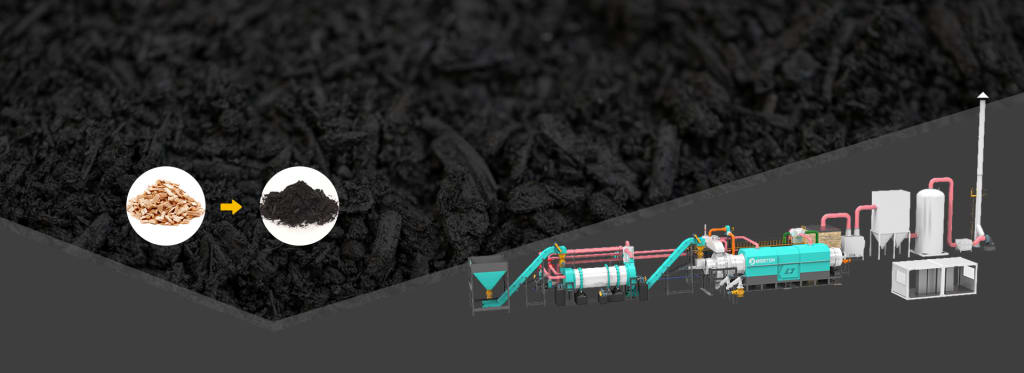
In today’s eco-conscious world, the wood charcoal machine has emerged as a sustainable solution for converting biomass waste into valuable charcoal. Whether you are a small business owner or part of a large-scale operation, investing in this equipment is a step toward environmental responsibility and economic growth. However, one crucial aspect that should never be overlooked is safety.
Let’s dive into how modern wood charcoal machines are designed to operate safely, protect workers, and ensure stable, long-term use.
1. Advanced Sealing System – Preventing Leaks and Hazards
A major safety feature of any wood charcoal machine is its fully sealed design. During the carbonization process, the equipment operates at high temperatures and produces flammable gases. Any leakage can pose serious fire or explosion risks.
To counter this, high-quality machines come with multi-layered sealing systems, stainless steel insulation, and pressure-resistant joints. These components work together to ensure that no harmful gas escapes the reactor, safeguarding both the environment and personnel.
2. Intelligent Temperature and Pressure Monitoring
The carbonization process inside the machine requires precise control. If temperatures or pressure rise beyond safe levels, there’s a risk of equipment damage or operator injury.
That’s why most wood charcoal machines today are equipped with automatic monitoring and control systems. Real-time sensors detect fluctuations in temperature, pressure, and airflow. If anything goes out of range, the system either triggers alarms or shuts down the process automatically, reducing the possibility of accidents.
3. Explosion-Proof Components for Added Security
Safety doesn't stop at the control panel. To prevent the buildup of flammable gas, especially syngas, manufacturers use explosion-proof valves and pipelines.
In high-risk zones such as the gas purification area or combustion chamber, protective elements are installed to prevent backdraft and flash explosions. Some systems also include fire-stop devices to block flames from traveling backward into the machine, a critical feature for 24/7 continuous operations.
4. Safe Feeding and Discharging Systems
Feeding raw materials and discharging finished charcoal may sound simple, but if not designed correctly, these steps can expose workers to hot surfaces or unstable materials.
Modern wood charcoal machines are built with automated or semi-automated feeding systems that isolate the operator from the high-temperature zone. Likewise, the cooling system in the discharging line ensures that charcoal leaves the machine at a safe temperature—usually below 30℃—before being collected.
5. Emergency Stop Mechanism and Power Protection
Unexpected events such as power outages, equipment faults, or mechanical blockages demand quick action. That’s why emergency stop buttons and fail-safe mechanisms are standard in most machines.
In addition, electrical overload protection systems are integrated into the control units to prevent motor burnout and electrical fires. These intelligent features not only protect the machine but also minimize downtime, contributing to both safety and productivity.
6. Dust and Smoke Control – Safer for Operators and Environment
The carbonization process may release smoke or fine dust particles if not properly managed. To mitigate this, exhaust gas treatment systems like cyclone dust collectors, water spray towers, and activated carbon filters are installed.
This ensures that the emissions from the wood charcoal machine meet local environmental standards, keeping the workplace clean and air quality healthy for your team.
7. Routine Maintenance and Operator Training
Even the safest machine needs regular care. A well-designed wood charcoal machine comes with a clear maintenance manual and lubrication schedule. Timely inspection of wear parts, checking for leaks, and cleaning filters are key to preventing unexpected failures.
Equally important is operator training. Responsible manufacturers offer comprehensive training during installation to help users understand every part of the machine, including safety protocols, emergency handling, and troubleshooting.
Conclusion: Invest in Safety, Reap Long-Term Benefits
When choosing a wood charcoal machine, don’t just focus on output capacity or price. Safety features are equally vital. A well-protected machine not only ensures the well-being of your workers but also protects your investment by preventing costly accidents and downtime.
With modern technology, safety assurance has become an integral part of the machine’s core design. So, whether you’re converting sawdust, coconut shells, or wood chips into charcoal, rest assured that today’s equipment is built with protection, reliability, and peace of mind at the forefront.
About the Creator
The Reality of the Illusion of Time
Recently, as I strolled along the short stretch to my strength training session, I aimlessly took in the row of tatty shops and shabby buildings along the route and passed an off-street, in which one of my sisters used to live, around thirteen years ago.
By Chantal Christie Weiss3 days ago in Earth
Why Putin Went Quiet When Challenged by Trump Over Venezuela
When U.S. forces captured Venezuelan President Nicolás Maduro in early January 2026, the world was stunned. Venezuela has long been a Russian ally, yet Russian President Vladimir Putin remained almost completely silent when challenged directly by U.S. President Donald Trump. Why would a leader so often outspoken on the world stage hold back in such a dramatic moment? Let’s unpack the story and explore what it means for global politics. A Bold Move That Shocked the World On January 3, U.S. forces executed a daring operation in Venezuela, taking Maduro into custody in New York to face charges including drug trafficking and narco‑terrorism. The operation was framed by the U.S. as a step to enforce justice, but critics saw it as an extraordinary overreach of power. Venezuela is no ordinary country for Russia. Since the days of Hugo Chávez, Moscow has cultivated close ties with Caracas, offering military support, energy deals, and diplomatic backing on the global stage. Past actions included Russian bombers visiting Venezuela and high-profile defense agreements. Given this history, many expected a fiery response from Putin. Yet, the Kremlin remained calm, issuing measured statements rather than sharp threats. Why Silence Was Strategic Experts suggest there are several reasons for Putin’s muted reaction, each revealing the careful calculation behind the Kremlin’s foreign policy. 1. Focus on the War in Ukraine Russia’s primary priority remains Ukraine. Engaged in a high-stakes military and diplomatic battle, Putin cannot afford distractions or new confrontations far from home. Escalating tensions with the United States over Venezuela could jeopardize Moscow’s position in Europe. A New York Times report highlighted that Russia is “subordinating all other interests to the war in Ukraine,” suggesting that even a high-profile ally like Venezuela takes a back seat to Moscow’s strategic goals. 2. Limited Military Options While Russia’s alliance with Venezuela is longstanding, much of the support has been symbolic rather than operational. Defense systems and military cooperation exist on paper, but Russia lacks the immediate ability to counter a U.S. operation thousands of miles away. Putin may have recognized that responding aggressively would be both ineffective and costly, potentially risking military and economic consequences that Moscow cannot afford. 3. Maintaining Diplomatic Channels with Washington With Donald Trump back in the White House since 2025, there has been cautious optimism in Moscow about recalibrating U.S.–Russia relations. Avoiding a dramatic confrontation over Venezuela keeps diplomatic channels open, allowing Russia to negotiate on other high-priority issues like Ukraine and sanctions relief. In other words, silence can be a calculated strategy, signaling restraint rather than weakness. 4. Russia’s Global Influence Is Waning The Maduro episode also highlights a broader geopolitical reality: Russia’s global reach has limits. Since the 2022 invasion of Ukraine, Moscow’s influence in regions like the Middle East and parts of the former Soviet Union has weakened. Venezuela remains one of its few high-profile allies outside Europe, but even there, Russia’s power is largely symbolic. By not escalating, Putin is acknowledging a practical truth: Russia cannot be everywhere at once, and some battles are not worth fighting. 5. Choosing Battles Wisely Some analysts emphasize that Putin’s quiet response is more about strategic prioritization than capitulation. In a world dominated by nuclear powers and volatile global politics, direct confrontation with the United States over Venezuela could spiral into a far larger crisis. By staying silent, the Kremlin may be signaling that it picks its battles carefully, focusing resources on Ukraine, where the stakes are highest. What This Means for the World Putin’s silence sends several messages: Russia is currently stretched, economically and militarily. Moscow is prioritizing Ukraine over symbolic allies. Strategic restraint is sometimes more powerful than public confrontation. The limits of Russian influence are becoming more visible to the world. This episode reflects a new reality in geopolitics: power is as much about choosing when not to act as when to assert force. The Bigger Picture The capture of Maduro is a defining moment not just for Venezuela, but for global politics. It shows the United States asserting power in a way not seen for decades, while Russia’s quiet reaction underscores its current limits and priorities. For observers, Putin’s silence is a lesson in modern geopolitics: even the most assertive leaders exercise restraint when stakes are high and risks are global. In the end, the Maduro affair reminds us that in today’s world, the loudest response is not always the most effective one — sometimes, quiet calculation speaks volumes. Sources and Further Reading The US capture of Maduro reveals Russia’s weakness – Atlantic Council ‘It sends a horrible signal’: US politicians react to capture of Nicolás Maduro – The Guardian Russia slams 'neocolonial threats' against Venezuela – Reuters
By Muhammad Hassan7 days ago in Earth



Comments
There are no comments for this story
Be the first to respond and start the conversation.