
Wonders of Nature: Marvels Beyond Imagination
Wonders of Nature: Marvels Beyond Imagination
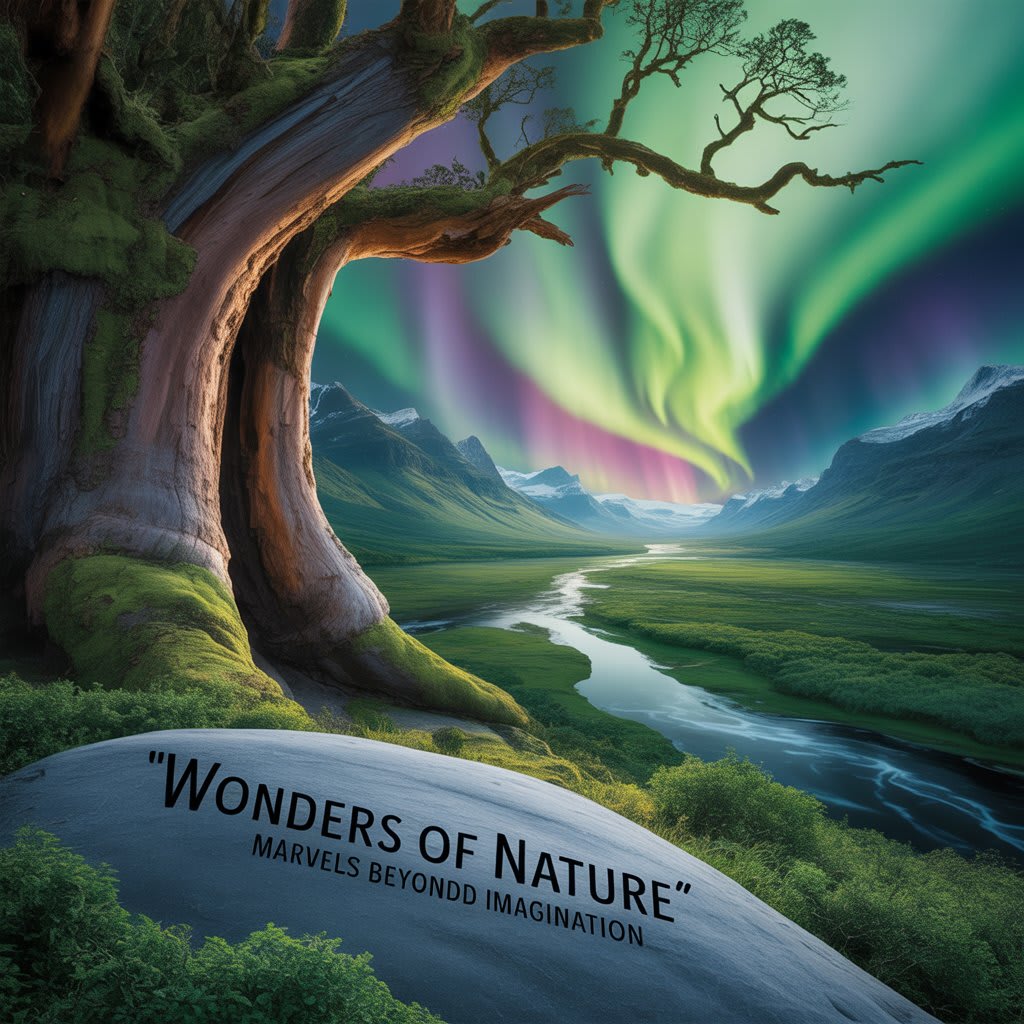
The world is a vast, living canvas, painted with colors, textures, and shapes beyond human invention. Nature does not need permission to surprise us—it simply does. From deep, shadowy oceans to the thin air of the highest peaks, from the smallest insect to the most colossal mountain, our planet holds wonders that can humble even the most experienced explorer.
It was early morning when Sarah, a wildlife photographer, zipped up her weathered jacket and stepped out into the crisp air of Thailand’s Kaeng Krachan National Park. She had traveled halfway across the world, chasing a rumor—a whisper of a sighting of something so rare that even seasoned scientists doubted its existence: the Purple Sirindhorn Crab. According to locals, its shell shimmered in royal hues, and its claws reflected sunlight as though dipped in liquid amethyst. For Sarah, this was more than a quest for a photograph; it was a pilgrimage.
She ventured deeper into the park, where the forest floor was littered with fallen leaves and the air thrummed with the sound of cicadas. Streams wove through the terrain like silver threads, catching and tossing the morning light. As she crouched near the edge of a trickling brook, her eyes caught a flash of violet beneath the water. Her breath caught in her throat. There it was—delicate, majestic, and impossibly real. The Purple Sirindhorn Crab moved slowly, almost knowingly, as if aware of its own significance. Sarah’s camera clicked softly, immortalizing the moment.
Such encounters remind us that nature still holds secrets. Scientists have long insisted that there are thousands—perhaps millions—of species yet to be discovered. Some hide in remote jungles, others in the uncharted deep. Not far from where Sarah stood, dense rainforests shelter creatures like the Malayan Tapir, a gentle, black-and-white giant that moves like a shadow. At night, the forest canopy comes alive with bioluminescent fungi, glowing green in the darkness like tiny lanterns strung by unseen hands
In South America, the Salar de Uyuni in Bolivia stretches like an endless mirror. During the rainy season, a thin layer of water transforms the world’s largest salt flat into a sky-reflecting masterpiece. Visitors walking across its surface feel as though they are drifting between two realms—one above, one below.
Meanwhile, deep in the Pacific Ocean lies another marvel—the Great Barrier Reef. It is the largest living structure on Earth, so vast it can be seen from space. Coral polyps, each no larger than a pinhead, have built a city of color and life over millions of years. Schools of fish shimmer like liquid gold, sea turtles glide gracefully between coral towers, and reef sharks patrol their territories with quiet authority. Yet, this wonder is fragile; climate change threatens its vibrancy, reminding us that marvels are not guaranteed—they must be protected.
Sarah’s travels eventually took her from Asia to the Arctic. She stood on the deck of a small expedition ship, watching an iceberg drift by like a floating cathedral of ice. Seals lounged on its edges, while a lone polar bear paced, sniffing the air for prey. The silence was profound, broken only by the groaning of the ice as it cracked and shifted. The Arctic is a place where time feels slower, yet change is rapid—a paradox that leaves visitors both awestruck and uneasy.
Not all natural wonders are grand in scale. Sometimes, they are found in the smallest of details: the symmetrical perfection of a snowflake, the delicate engineering of a spider’s web, or the iridescent wings of a blue morpho butterfly. These tiny masterpieces are proof that nature invests as much care in the minuscule as it does in the monumental.
One evening, Sarah returned home to her quiet apartment, walls lined with photographs from her journeys. The Purple Sirindhorn Crab stared back from one frame, the northern lights swirled in another, and the reef shimmered in yet another. She realized that the marvels she had captured were more than just images—they were reminders. Each photograph whispered the same truth: The Earth’s beauty is vast, but it is not infinite.
To explore nature is to fall in love with it. And to love something is to protect it. Our planet’s rare creatures and breathtaking landscapes do not exist solely for human wonder—they are vital threads in the web of life. The Purple Sirindhorn Crab is not just a gem of a discovery; it is a living being, part of a delicate ecosystem that must remain whole.
Sarah decided her next project would not just be about finding rare wonders—it would be about telling their stories in a way that inspired others to safeguard them. She understood now that the marvels of nature are not just treasures to be admired—they are responsibilities to be shared.
And so, with her camera ready and her heart set on preservation, she planned her next journey. Somewhere out there, beyond the edges of the map, another wonder awaited. And she would be ready—not just to witness it, but to honor it.
About the Creator
Keep reading
More stories from Muhammad Yasir and writers in Earth and other communities.
Cute Labo Boo — A Friend to Every Heart
In a small mountain village, where the sun spilled golden rays over green hills and the scent of wildflowers danced in the air, lived a lively little girl named Eman. She was bright, cheerful, and always brimming with curiosity. Yet, deep down, there was a small sadness she carried — she didn’t have a special toy to call her own.
By Muhammad Yasir5 months ago in Humans
Severe Geomagnetic Storm Could Bring Northern Lights Across Much of the U.S.
On Monday evening, skywatchers from the Pacific Northwest to the Midwest got ready for something out of the ordinary: a celestial display that typically occurs at high northern latitudes. Americans who provide forecasts as a powerful cloud of charged particles from the sun accelerates toward the Earth's magnetic field, the National Oceanic and Atmospheric Administration (NOAA) has issued a "G4 (Severe) geomagnetic storm watch."
By Raviha Imranabout 15 hours ago in Earth
Greenland News
Greenland News Greenland has increasingly drawn global attention in recent years due to its political developments, environmental changes, and growing strategic importance. As the world looks more closely at the Arctic region, news from Greenland reflects a unique mix of local priorities and international interest. From climate-related challenges to economic opportunities and governance issues, Greenland continues to shape its own path while remaining closely connected to global affairs.
By America today 2 days ago in Earth




Comments (4)
Good night love 😘 me 😙 me ❣️
Good morning 🌞🌞🌄🌞🌄
Good luck
Natural is butfull