
Wolf, Monster or Murderer: The Beast of Gévaudan
When a Murderous Wolf-Like Creature Ravaged 18th Century France


France was in a terrible state. The disastrous Seven Year's War had left it reeling and national pride was at an all time low.
What the country needed was time to heal - instead, it faced the Beast of Gévaudan.
The Beast Makes Itself Known: In 1764 Gévaudan, France, fourteen year old Jeanne Boulet watched her sheep... but hungry eyes in the forest were fixed on the shepherdess rather than her flock.
The beast's reign of terror began when a wolf-like creature attacked a young woman herding cattle in Langogne. Though she presented an isolated and vulnerable target, the cattle instinctively formed a defensive ring as the beast emerged. Presented with a wall of angry beef, the creature decided to seek easier prey and slunk back into the forest.
Around a month later, Jeanne Boulet was attacked and slain near the village of Saint-Étienne-de-Lugdarès. Unlike the first woman, she had been herding sheep... and the beast wasn't interested in or scared by them.
Yet another month passed and a fifteen year old girl was mortally wounded by the creature in nearby Puylaurent. With her final breaths, she spoke of "une bête horrible" or a "horrible beast." Finally, people began to take notice.
Official Intervention: Fear gripped the peasantry - artists depicted the beast reveling amid scenes of carnage and it seemed that mere days separated each attack.
As the body count rose, Captain Jean Baptiste Duhamel swung into action and brought his dragoons with him He was a military man and organized a combined force of soldiers and volunteers as they attempted to flush out and destroy the beast.
Though they tried everything from planting poisoned meat to having soldiers dress up as peasant women, the beast eluded them and continued its own unrelenting hunt. Their efforts were hindered by the terrain of Gévaudan, a once volcanic region filled with swamps, rugged rocks and thick forests that made tracking a nightmare.
The press didn't do anything to calm the situation, spreading tales of the beast dismembering victims, tearing off heads and slurping down blood, all accompanied by illustrations of wolf-like creatures ripping apart helpless-looking peasants. Adding to the panic was a rumor that the beast had shrugged off gunfire on the rare occasions it was actually seen (though that could just be testament to the quality of firearm commonly available at the time!)
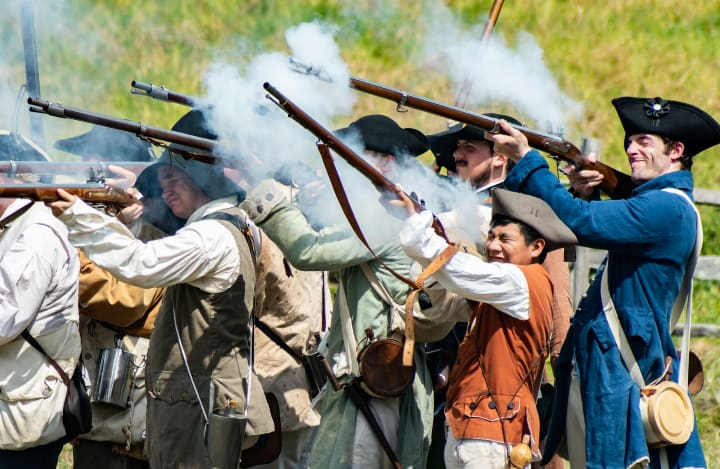
The Peasants Who Fought Back: Simple chance caused Jean Vallet to look back, beholding the beast with muscles tensed to pounce. She could have been paralyzed by fear, but instead raised a homemade spear to bite through fur and flesh...
The beast was a cunning predator, seeming to select only women and children as prey... but there were times it bit off more than it could chew.
On the 12th of January in 1765, Jacques Portefaix and a group of other children were watching cattle when the beast tried to make a meal of them. The group fought back with crude spears, managing to hold the creature off - they even managed to rescue one of their number the beast had seized. Impressed by this feat of bravery, King Louis XV sent a cash reward to the group and arranged for Jacques to be educated at the crown's expense.
The beast would be foiled again on August the 11th of 1765 by Marie-Jeanne Vallet. She was fording a river when she turned and saw the beast gathering itself to pounce. Isolated and trapped, Jeanne readied the only chance at survival she had - a crude, homemade spear.
The beast's advance carried it onto the point, causing it to fall back, raise a paw to the wound and cry out in pain. Like any true monster though, the creature rolled into the river and escaped - it would be back.
Jeanne's survival and defiance won her the appellation the “Maiden of Gévaudan” and a statue of her impaling the beast stands to this day.
Political Pressure: The people of France had taken a beating in the war - the last thing their bruised pride needed was international mockery for being bested by a wolf!
While all this was going on, King Louis XV was getting frustrated with Duhamel's lack of results. It didn't help that Britain had got wind of the beast and had taken to making jokes about France being routed by a single wolf.
The d’Ennevals, a father-son duo with an impressive number of wolf kills (over a thousand) declared that they would bring down the beast. They employed tried and tested wolf-hunting tactics, but after five months admitted the wolf had bested them.
The exasperated king then sent François Antoine, his personal gunbearer and "Lieutenant of the Hunt." Accompanied by his son and a detachment of men, Antoine scoured the countryside and eventually brought down an enormous wolf in the September of 1765. Several of the survivors identified the kill as the beast that attacked them - though curiously, no human remains were found in the creature's stomach. Antoine sent the body to Versailles, claimed the bounty and accolades, then left.

The Final Hunt: Sighting the beast, Jean Chastel raised his gun. With a flash, crack and a puff of powder smoke, the shot punched home...
Of course, nothing's ever that simple. Approximately two months after the "beast" was slain and sent to Versailles, the attacks resumed.
This time King Louis XV wanted nothing to do with the situation - his hunters had killed the "beast" and admitting to the mistake would make him a laughing stock. This time, the people of Gévaudan were on their own.
Jean Chastel was a local farmer who'd been involved in some of the earlier hunts - in fact, he had actually been thrown in jail for a few days after leading Antoine and his men into a bog.
Despite this, he was allowed into a hunt organized by the Marquis d’Apcher... and on June the 19th of 1767, the farmer felled the beast with a well aimed shot. Not only did this wolf have human remains in its stomach, the attacks stopped with its death.
As a final little bit of mystery, the body was shipped to Paris during the heat of summer and rotted on the way. It was in no state to be exhibited and received only limited royal attention - still, Chastel became something of a folk hero to the people of Gévaudan. Perhaps that's why retellings would add little details to the story, such as suggesting that Chastel used a silver bullet cast from a melted religious amulet for the fatal shot.
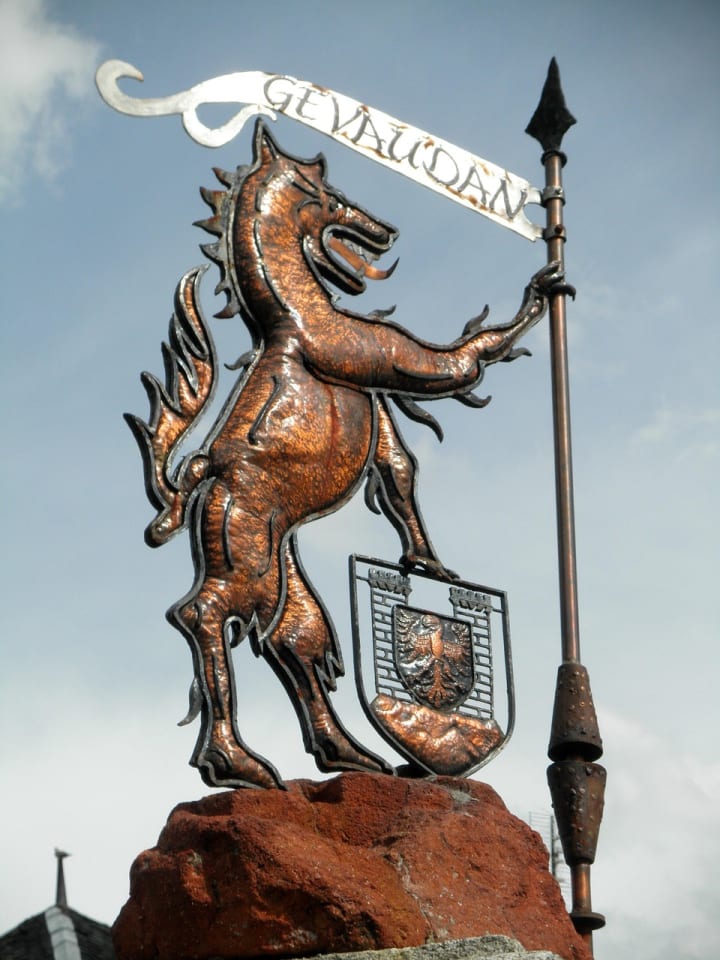
The Case for a Wolf: So was the beast simply an overgrown wolf? Jeanne Vallet described the beast as resembling a large dog, while other survivors described the beast as wolf-like. Meanwhile, the "beasts" brought in by both Antoine and Chastel were identified as wolves, albeit ones of an abnormal size and coloration.
One possible explanation is that these wolves were not purebred. Wolves are quite capable of breeding with domestic dogs (though this is quite rare in nature) and something like a wolf-mastiff hybrid could produce a big and deadly canid. Being a mixture of dog and wolf could also help explain some of the behavioral quirks of the beast, while something like a Bordeaux mastiff could explain a reddish tint to the coat.
Of course there's also the fact that the isolated and forested region of Gévaudan was an excellent habitat for wolves. With a deficit of fighting men (remember, France had just endured a bruising war) to hunt them, the wolf population could have exploded. These hungry lupines would need feeding and if there wasn't enough wild game to be found, a vulnerable human might have presented a tempting alternative.

The Case for a Monster: I'll admit that monster is probably an overstatement, but could the beast have been an imported exotic animal?
Having a menagerie (basically a zoo) wasn't an alien concept for the nobility - King Louis XV himself had the Ménagerie Royale de Versailles. It's not hard to imagine that these places could have had the occasional escapee - and that the owners would not want to let on.
Duhamel described the beast as having a breast as wide as a horse, a body as long as a leopard and red fur with a black stripe. He also seems to have believed that the creature was some sort of hybrid lion.
One other suggestion that's been bandied around is that the beast could have been a hyena. They still resemble a wolf to some extent, while their fur can have a reddish tinge and black markings.

The Case for a Murderer: One final possibility is that the beast was no wild animal at all, but rather a human serial killer using a trained animal as their weapon. It sounds far-fetched, but it would account for a few things - for example, why the beast preferentially targeted humans.
Being under the control of a handler would also explain how the beast avoided poisoned meat, while a set of leather or fur armor could explain both the strange appearance and seeming resilience of the creature.
Perhaps the strangest thing about this theory is a suggestion that Jean Chastel was the handler. It would explain how he found and killed the beast when so many others had failed - and it is curious that he sabotaged a hunt by leading it into a bog.
The Mystery of the Beast: So what do you think the beast really was? In my opinion the best supported option is a pack of dog-wolf hybrids, mixing the physical power and human familiarity of a large fighting dog with the hunting prowess and survival instincts of a wolf.
As for the other theories, I suspect hyenas and big cats wouldn't have fared well in the cold, wet winters of Gévaudan. I suppose it's possible that the beast had a murderous handler, but the odds of remaining undiscovered for three years seem poor. Plenty of skilled trackers examined the attack sites and any human prints should have been spotted.
On a final positive note, the residents of the region seem to have forgiven the wolves - they've even established the Parc des Loups du Gévaudan, a wolf sanctuary!
Sources and Further Reading:
- Margeride en Gévaudan: The Beast of Gévaudan
- The Legend of the Beast of Gévaudan
- When the Beast of Gévaudan Terrorized France
- The Beast of Gevaudan: Hunting the Monster of 18th Century France
- The fear of wolves: A review of wolf attacks on humans
- Marie-Jeanne Valet vs. the Beast of Gevaudan
- Monument to Jean Chastel, Beast Slayer
- How An Ancient Volcano Helped A Man-Eating Wolf Terrorize 18th Century France
- Wolf-Dog Hybrids
About the Creator
Bob
The author obtained an MSc in Evolution and Behavior - and an overgrown sense of curiosity!
Hopefully you'll find something interesting in this digital cabinet of curiosities - I also post on Really Weird Real World at Blogspot
Nuclear Transmutation: The Accidental Dream of Making Gold
Picture a laboratory humming with quiet intensity, banks of instruments blinking in the low light, and somewhere inside a shielded reactor chamber, something almost magical is happening. An element is changing. One thing is becoming another. What was mercury is now, atom by atom, becoming gold.
By CurlsAndCommas6 days ago in Earth


Comments
There are no comments for this story
Be the first to respond and start the conversation.