
"Wings Across the World: The Arctic Tern's Epic Journey"
Discover the incredible life of the Arctic Tern — the bird that chases the sun, crosses continents, and masters the skies in the longest migration on Earth.


Among the most fascinating avian wonders on Earth is the Arctic Tern — a graceful, white and gray seabird known not just for its beauty, but for its record-breaking migratory journey that spans the globe.
Appearance and Physical Traits
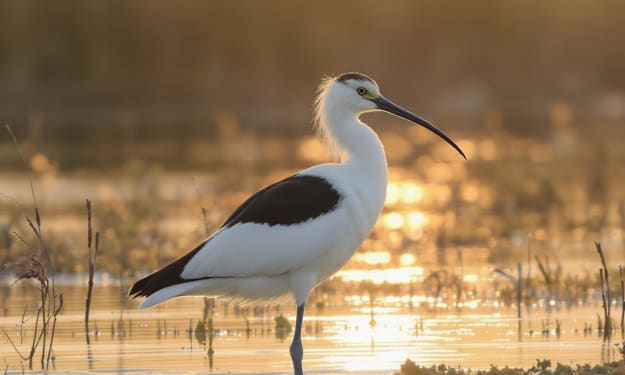
The Arctic Tern is a medium-sized bird, measuring about 28 to 39 centimeters in length, with a wingspan ranging from 65 to 75 centimeters. It weighs between 90 and 120 grams. Its slender body is mostly light gray above and white below, with a distinct black cap covering its head like a helmet. Its sharp red beak and bright red legs add a striking contrast to its sleek plumage. Long, pointed wings and a deeply forked tail allow the tern to glide effortlessly across vast ocean expanses.
Habitat and Distribution
This bird breeds in the Arctic and sub-Arctic regions of North America, Europe, and Asia. During the warmer months, it nests along rocky coastlines, tundra, and remote islands. But as winter approaches, the Arctic Tern begins an extraordinary journey — flying from the northernmost parts of the world to the icy waters of Antarctica, where it spends the Southern Hemisphere’s summer. This migration covers every major ocean and crosses almost every climate zone on the planet.
The Longest Migration in the Animal Kingdom
No other creature on Earth travels as far as the Arctic Tern. Each year, it flies from the Arctic to the Antarctic and back again — a round trip that can exceed 70,000 to 80,000 kilometers. Some individual terns have been recorded covering nearly 96,000 kilometers in a single year. What makes this feat even more astonishing is that the Arctic Tern experiences two summers each year — one in the Northern Hemisphere and another in the Southern — effectively living in near-constant daylight for much of its life. This bird sees more sunlight annually than any other creature on Earth.
Diet and Feeding Behavior
The Arctic Tern primarily feeds on small fish such as sand eels and herring, as well as marine invertebrates like shrimp and crustaceans. During the breeding season, it may also hunt insects or even snack on small berries. The tern catches its prey by diving from the air into the sea, using precise, quick movements to snatch food just below the surface. It's a skilled hunter and often swallows its catch mid-flight.
Breeding and Life Cycle
Arctic Terns are monogamous, often forming lifelong pair bonds. They breed in colonies during the Arctic summer, building nests on open ground or rocky shores. A typical clutch consists of one to three eggs, which both parents incubate for about three weeks. After hatching, the chicks remain hidden nearby while the parents bring them food. Within a few weeks, the young begin flying and learning to forage. Arctic Terns reach sexual maturity around three to four years of age and may live up to 30 years or more.
Unique and Fascinating Facts
The Arctic Tern holds several remarkable distinctions. It is the longest-distance migrator of any known animal and possibly the bird that experiences the most daylight during its lifetime. Another curious trait: its chicks can be born with different feather colors, ranging from gray to brown — sometimes even within the same nest. Also, during molting season, the tern may rest more and fly less, conserving energy on the cold Antarctic ice.
Conservation and Threats
Although currently classified as a species of "Least Concern," the Arctic Tern faces increasing challenges. Climate change is shifting the availability of its breeding grounds, warming ocean waters are affecting the fish populations it depends on, and severe storms can disrupt its migratory and nesting patterns. In some breeding colonies, predators like rats and mink pose a threat to its eggs and chicks. Nonetheless, international efforts are underway to monitor and protect this extraordinary bird through migratory bird agreements and protected nesting areas.
Final Thoughts
The Arctic Tern is not just a symbol of endurance and elegance; it is a marvel of nature’s design. Its epic journeys across hemispheres, its precision in hunting, and its lifelong loyalty to both partner and habitat make it one of the most admirable species in the avian world. In a changing world, safeguarding birds like the Arctic Tern means preserving a natural story that spans continents, climates, and the boundaries of human understanding.
About the Creator
Hassan
Nature lover & storyteller 🌿✒️ Sharing the beauty of birds, wildlife & emotional journeys through words. Let’s fly together through stories that touch the soul. 🕊️✨
Japan Furniture Market Size and Forecast 2025–2033
Introduction Japan’s furniture industry stands at a unique intersection of tradition and innovation. Renowned worldwide for its craftsmanship, minimalist design, and functional aesthetics, Japanese furniture reflects the nation’s cultural emphasis on harmony, efficiency, and simplicity. Today, as Japan’s population becomes increasingly urban, digitally connected, and environmentally conscious, the furniture market is undergoing a quiet but significant transformation.
By Janine Root 5 days ago in Earth
Maryland to Get Its Own Smaller Version of the Las Vegas Sphere
Maryland is about to become home to a new entertainment icon. Inspired by the famous Sphere in Las Vegas, a smaller version of the massive immersive venue is planned for the state, promising to deliver a combination of live entertainment, cutting-edge technology, and a new tourist attraction. While the Las Vegas Sphere has already made headlines worldwide for its futuristic design and mind-blowing shows, Maryland’s version aims to bring a scaled-down but equally captivating experience to the East Coast.
By Muhammad Hassanabout 7 hours ago in Earth



Comments
There are no comments for this story
Be the first to respond and start the conversation.