
Will the World Go Dark on August 2?
The Real Story Behind the Solar Eclipse Rumors

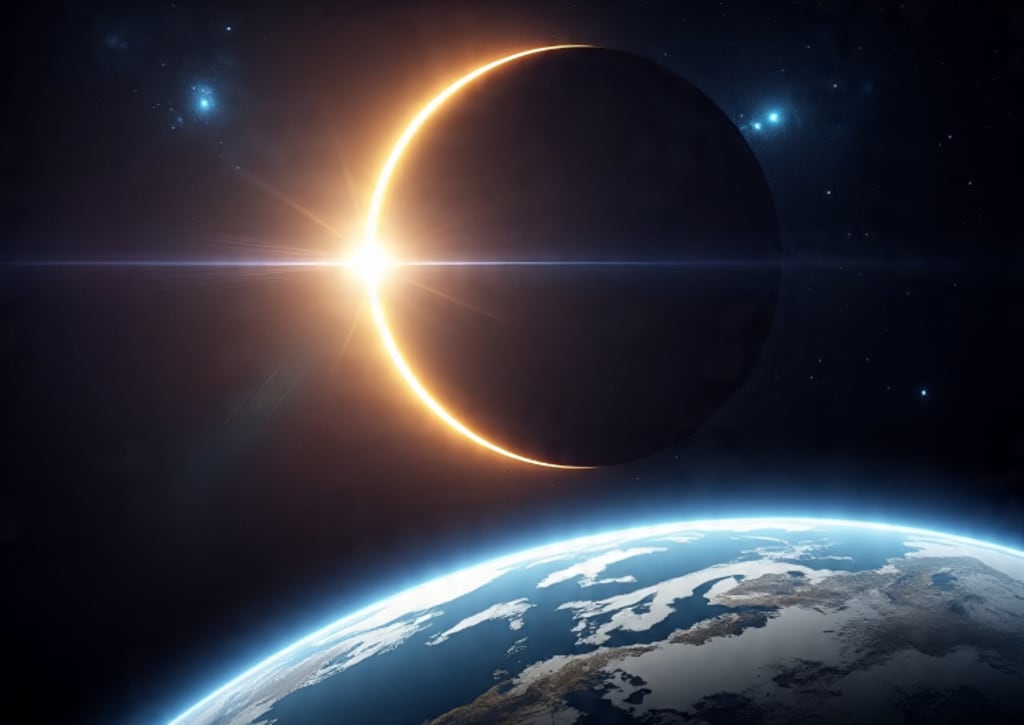
In recent weeks, a viral claim has captured public attention, suggesting that the entire world will be plunged into six minutes of darkness on August 2 due to a rare solar eclipse. The story, widely circulated on social media, has raised curiosity—and in some cases, unnecessary alarm. However, astronomers and space science experts have stepped forward to set the record straight. The truth is far less dramatic: there is no scientific evidence to support the claim of a global blackout on that date.
The Origin of the Confusion
Experts believe the rumors stem from a mix-up between two dates: August 2, 2025, and August 2, 2027. There is no solar eclipse scheduled to occur on August 2, 2025. The confusion likely arose when information about a real and significant solar eclipse scheduled for 2027 was mistakenly associated with the wrong year.
The August 2, 2027 eclipse is indeed noteworthy—it is expected to be one of the longest total solar eclipses of the 21st century, lasting an impressive six minutes and 23 seconds. While this will be a spectacular astronomical event, it is still two years away and will only be visible in certain regions of the world. It will not cast the entire globe into darkness, contrary to what some viral posts suggest.
What’s Actually Happening in 2025?
Although there will be no total solar eclipse on August 2, 2025, astronomers confirm that a partial solar eclipse is expected later that month, on August 23. This event will be visible in select parts of Canada, Greenland, and the Arctic. Unlike a total eclipse, a partial eclipse does not fully obscure the Sun. It results in only a slight dimming of daylight and is not associated with any form of complete darkness.
Partial eclipses are relatively common and safe, provided people use proper viewing equipment. These natural events are not dangerous and certainly will not affect the entire world. Claims suggesting a global impact are simply inaccurate.
What Makes the 2027 Eclipse Special?
The solar eclipse on August 2, 2027, is gaining attention for good reason. It will be the longest total solar eclipse of this century. During a total eclipse, the Moon passes directly in front of the Sun, temporarily blocking its light and casting a shadow over a specific region on Earth.
This particular eclipse will be most visible from parts of Spain, North Africa, and the Middle East. The city of Luxor in Egypt is expected to experience the longest duration of total darkness, making it one of the best locations to witness the event. However, only those within the path of totality will see the full eclipse. For everyone else, the Sun may only be partially obscured, or not at all.
Understanding Solar Eclipses
A solar eclipse occurs when the Moon moves between the Earth and the Sun. There are three main types:
Total Eclipse: The Moon completely blocks the Sun, leading to a temporary period of darkness during the day.
Partial Eclipse: The Moon only covers part of the Sun, causing a subtle dimming of light.
Annular Eclipse: The Moon is too far from Earth to completely cover the Sun, leaving a bright ring—often called a "ring of fire"—around the Moon's silhouette.
These events are entirely natural and happen several times a year in different parts of the world. They are not omens, disasters, or events to be feared, though they must be observed with caution.
Safe Viewing Tips
Experts consistently emphasize the importance of safety when watching any solar eclipse. Looking directly at the Sun can cause serious eye damage, even during an eclipse. To safely observe a solar eclipse, follow these precautions:
Use certified solar viewing glasses that meet international safety standards.
Avoid regular sunglasses, which do not provide adequate protection.
If using binoculars or telescopes, make sure they are fitted with proper solar filters.
Never look directly at the Sun through any optical device without protection—it can result in permanent eye injury.
Final Thoughts
The claim that the world will experience six minutes of darkness on August 2, 2025, is a myth. There is no scientific basis for it, and no such event is scheduled to occur. The rumor likely stems from confusion surrounding the highly anticipated 2027 total solar eclipse, which is a real event—but one limited in scope and region.
As always, it's best to rely on verified scientific sources when encountering extraordinary claims online. The universe offers plenty of genuine marvels worth celebrating—no need to believe in ones that aren't real.
About the Creator
Taimoor Khan
Hi, I’m Taimoor Khan. Writing is my way of capturing the quiet moments of life that often go unnoticed.
Keep reading
More stories from Taimoor Khan and writers in Earth and other communities.
A Place That Doesn’t Exist on Google Maps
We live in a world where every corner can be zoomed in and measured.You want to see a street in Paris? Zoom in.Find a secret base in the middle of a desert? It’s probably blurred, but still there.Need to check if an island in the Pacific really exists? Type it in. Hit Search.
By Taimoor Khan7 months ago in Earth
Central Florida is under a fire weather watch due to the increased risk of wildfires.
Late winter is a time of mild temperatures and clear skies for many Floridians, not of burning sun and wildfire danger. However, this week, a significant portion of Central and West Florida was subjected to an unusual weather threat: an "elevated fire danger" and a "red flag" warning. These are conditions that are more frequently associated with the dry plains or the mountainous West than with the Sunshine State's typically humid climate. Fire officials, meteorologists, and residents alike were taken aback by how quickly the region’s fire risk escalated. The ideal conditions for fires to start and grow included dry vegetation, persistent winds, and low humidity. Authorities urged caution in some areas due to the speed with which embers can travel in gusty conditions, transforming tiny sparks into rapidly spreading wildfires. The narrative began with a prolonged drought.
By Raviha Imran7 days ago in Earth


Comments
There are no comments for this story
Be the first to respond and start the conversation.