
Will humans disappear from the earth? Scientists predicted 2799 years is the inflection point, what will happen
Scientists predicted 2799 as the inflection point.

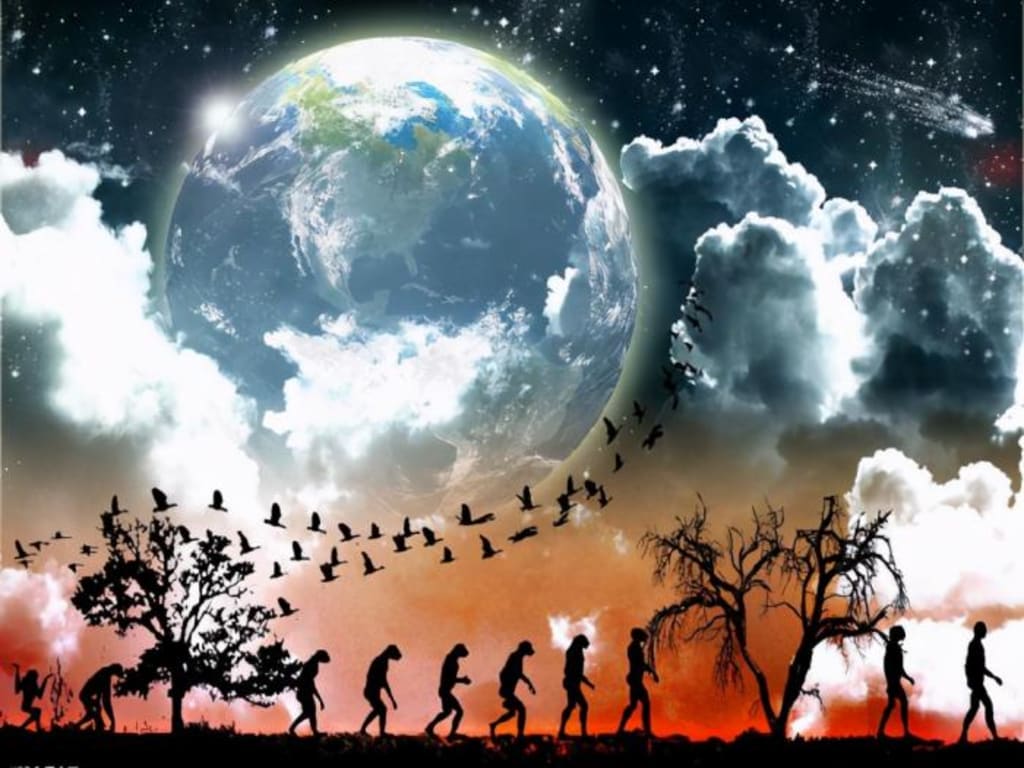
Will humans disappear from the earth? Scientists predicted 2799 years is the inflection point, what will happen
The mainstream of the scientific community believes that the biological history of the Earth has at least 3.6 billion years, but the pattern of the Earth's ecosystem in these billions of years is constantly changing, the last period is the dominance of this species, the next period will be replaced by another species domination, in short, no species can always dominate. For example, it is believed that the longest domination of the Earth's dinosaurs in 65 million years ago gradually extinct, ruling the Earth for more than 100 million years, so far no species of domination time can exceed the dinosaurs.
There are views that humans may have hope to surpass dinosaurs as the longest reigning species in the biological history of the planet because humans are currently the only higher intelligent life on Earth, our ancestors created civilization and continue to this day, and the future is likely to continue to develop. With the support of culture and technology, human beings have been sitting at the top of the ecosystem for a long time. But there is also the view that humans will never escape the fate of extinction, and this fate is the ultimate inescapable fate of all species.
For the future fate of mankind, a related study appeared in the journal Nature in 1993. The author of the study was Princeton astrophysicist Richard Gott, who used the "Copernican principle" and related formulas to predict the future fate of mankind, which showed that mankind would probably disappear before 2799 years. How did Goth arrive at this prediction? Is it possible for the prophecy to come true?
Is there any basis for this horrifying prophecy?
Without understanding the way Goth arrived at his prophecy, many people would probably consider his statements to be conspiracy theories, but Goth's conclusion was reached through rigorous mathematical reasoning. The Copernican principle, named after the Polish astronomer Nicolaus Copernicus, refers to the fact that no observer has a special position. This phrase sounds very abstract, so how should it be understood? Combined with the heliocentric theory proposed by Copernicus at that time, this phrase should be to let us not put ourselves and the Earth where we are in a special position when observing the universe and thinking about the problem.
This principle was also applied in reality, and it was based on this principle that Goth discovered the scientific method of prediction based on probability science. When he visited the Berlin Wall in 1969, he predicted to a friend that the wall would last at most about 24 years. However, his friend did not believe his prediction, and the Berlin Wall was brought down in the twentieth year after Gott made his prediction. The detailed reasoning process of how Gott came up with this prophecy is available in the wiki for those who are interested.
In 1993, Goth again used his pioneering prophecy method to predict the future fate of mankind, and the prediction showed that mankind might disappear in 2799, but this disappearance was not passive or species extinction, but mankind's initiative to make itself change through the role of technology, which is a process of active selection. To make this prophecy more convincing, Goth also envisioned the future stages of human development.
What visions of the future emerge under this prophecy?
First of all, it should be noted that Goth's vision of the future stages was based on the ecological environment of the earth at that time and the development of human technology. He clearly understood that the development of technology would have both positive and negative effects, with the positive effects being largely taken up by humans, while most of the negative effects were left to nature. Since the beginning of the industrial revolution, mankind has become increasingly dependent on fossil energy, with the consequence of increasing greenhouse gas emissions.
After more than a hundred years of accumulation, today the Earth's greenhouse effect is already very obvious. Gott predicts that the global average temperature will rise by at least 1 degree Celsius in 2045. 1 degree Celsius is not much of a change to the human senses, but it is a huge shock to the natural climate environment and may even lead to the collapse of local ecosystems. In this period, mankind has taken the initiative to reduce its dependence on fossil energy and to increase the input and use of new energy sources.
Even so, the "debt" accumulated by mankind in the first 100 years is so heavy that it is difficult to reverse the overall damage to the earth's ecological environment. Moreover, human beings cannot completely abandon fossil energy in just fifty years, so the warming trend will continue to advance in the future, and millions of species may become extinct in 2100. If the warming problem is not curbed, a large amount of land will be submerged and the living space for humans and other terrestrial creatures will be drastically reduced.
To solve this problem, humans began to try to build immigration bases in extraterrestrial space, such as the moon and Mars. This time should come in 2180 years, human exploration and long-attempted controlled fusion technology are considered successful, this technology directly pushed human civilization to another level. With the help of this technology, it will be less difficult for humans to build moon bases and Mars bases, and they may also completely get rid of their dependence on fossil energy.
Humanity will face the choice of space migration in the 22nd century. To cope with the complex and dangerous space environment, human beings must actively transform themselves to adapt to the requirements of the environment, and the most likely method is considered to be genetic engineering and a human-machine combination. Compared to its transformation of the genes in the human body, so that the human body can adapt to the space environment for a long time, the direct development of the human-machine combination will greatly reduce the human impact of space radiation, so the future of human beings may be like the current science fiction movies, half of the body is a mechanical body, half of the body is flesh, or perhaps even flesh directly replaced by a mechanical body, and then implanted in the human mind and consciousness.
What visions are possible to achieve?
Such a degree of human has been freed from the bondage of the physical body, the key is the mind and consciousness. Some scholars believe that such a human is no longer the original definition of a human, and all organs in the human body are replaced with program-controlled mechanical parts, at which point the human has become a cyborg. There are also views that the core part of the definition of a human is the mind, if the robot still retains the human mind, then it is still human even if it is not in the flesh.
So which of the above ideas about the future of mankind are likely to come true? First of all, humans gradually develop new clean and friendly energy, reducing the dependence on fossil energy, which is very likely to be realized. If we want to develop sustainably, we have to change the current development model and break some of the defects and blockages in the old model. Second, human beings can master controlled fusion technology in the future.
The Soviet Union, Europe, and other countries began to study nuclear fusion technology in the last century, although the development process in the middle of some twists and turns and is slow, the international cooperation of the thermonuclear fusion reactor has entered the assembly stage, whether human beings can develop this technology in the future, but also depends on the experimental situation in the next 30 years. Furthermore, interstellar migration is also possible, the nearest to the Earth's moon and Mars may also become the preferred migration base for humans.
For the future fate of mankind, some scientists think so
Goth's view of the future fate of mankind is considered relatively optimistic, there are scientists with a very different point of view, that mankind is difficult to pass the year 2100. The late physicist Stephen Hawking predicted during his lifetime that mankind would have to leave the earth before 2100, otherwise it would not be able to survive on earth. Hawking made this prediction because he saw that the current problems encountered by the Earth's natural environment are unprecedented and are deteriorating much faster than expected.
The climate problem is the biggest problem for the future development of mankind, and it is a long-term process. In addition to climate issues, humans are facing multiple challenges at the same time, such as virus infestation. At the beginning of last year, the new crown epidemic broke out worldwide, and except for China, which has contained the epidemic, other countries are still fighting the epidemic. Some time ago, the number of new cases in India exceeded 300,000 in a single day, making the epidemic situation abroad even more serious
Under the impact of the New Coronavirus epidemic, economic development and public health care in various countries have been greatly affected. More than 100 million people have been infected with the virus worldwide, and half of them are still under the threat of the New Coronavirus. In addition to the new coronavirus, nature has a variety of viruses that threaten human survival, they are the untimely bombs in the microbial world, do not know when they will explode and cause another global pandemic disease outbreak.
If climate problems and virus infestations are nature's test for mankind, then international conflicts and disputes are a problem for mankind's development. Wars between different countries, civilizations, and tribes have existed since the birth of human civilization, and with the continuous development of human military technology level, the damage caused by conflicts and wars has become more and more serious. At this stage, mankind has developed nuclear weapons, which are sufficient to instantly destroy a city.
If a global war breaks out again in the future, it is difficult to guarantee that nuclear weapons will not be used, so we need to be cautious about our future, as the damage caused by a nuclear bomb would be irreversible if it breaks out.
Can humans escape the effects of natural selection?
Back to the question of human fate, although humans are higher intelligent beings, they still cannot escape from the role of natural selection, why? For one thing, the current level of human technology is not enough to get rid of the influence of the earth's nature. For example, when a large-scale natural disaster occurs, we can only avoid and reduce the damage, but cannot prevent the disaster from happening. Secondly, even if the level of human technology has developed to the level of freedom from the natural bondage of the Earth, into the universe, humans will continue to be bound by the laws of the universe.
In a way, the universe is also a broad sense of nature, human survival in the universe will also be affected by natural selection.
About the Creator
De pepper
Share a little science every day
El Niño is likely to return in 2026. Here's what that means for Houston and Texas.
La Niña has been active since mid-October. However, according to the January update from the National Oceanic and Atmospheric Administration, it’s likely to end over the next couple of months, and a transition to El Niño is likely to occur later this year.
By Dena Falken Esq5 days ago in Earth
High-Speed Train Crash in Southern Spain Leaves at Least 21 Dead
A devastating high-speed train crash in southern Spain has left at least 21 people dead and dozens injured, shocking the nation and triggering a major emergency response. The incident, which occurred on a busy rail route connecting key southern cities, has reignited concerns over railway safety, infrastructure maintenance, and emergency preparedness in one of Europe’s most advanced rail networks.
By Aarif Lashariabout 12 hours ago in Earth


Comments
There are no comments for this story
Be the first to respond and start the conversation.