
Why Tabby Cats Are So Popular in Pakistan
tabby cats in Pakistan


If you’ve ever walked down a Karachi street or scrolled through a Lahore pet group, chances are you’ve seen one of these beautiful striped cats. Some have tiger-like patterns, others look like they’re wearing tiny coats of dots and swirls. These are tabby cats — easily one of the most recognizable feline patterns in the world.
What surprises many people is that “tabby” isn’t a breed at all. It’s a coat pattern — one that shows up in several breeds, shapes, and sizes. In Pakistan, tabby cats are everywhere — from bustling city neighborhoods to quiet village courtyards. Each one has a personality that feels just as unique as their markings.
The Story Behind the Stripes
Those distinct stripes and the famous “M” shape on a tabby’s forehead are more than just cute features. According to PetMD, these patterns were once nature’s camouflage, helping cats blend into forests and deserts. In Pakistan, the pattern just happens to make them look even more charming — like mini tigers exploring rooftops and alleys.
Most people don’t realize how many breeds can have tabby patterns — Persians, Maine Coons, British Shorthairs, even ordinary street cats. Some are brown and gold, others gray or silver. Each type tells its own story, painted right onto their fur.
Tabby Cats and Pakistani Homes
Walk into a typical Pakistani household, and you’ll probably find a cat curled up on the sofa, often a tabby. They’re social, playful, and love to be part of the family. Whether it’s a child sharing a meal under the table or a grandmother feeding leftovers on the balcony, tabby cats quickly become part of the routine.
In smaller apartments of Karachi or Islamabad, tabbies adapt easily. They don’t need a garden — just a warm corner and some love. That’s part of why they’ve become so common here.
But it’s not just in homes — tabby cats are also part of street life. You’ll often see them lounging near tea stalls or quietly observing markets. Shopkeepers sometimes feed the same cat every day, turning it into an unofficial guardian of the store.
A Connection Through Care
It’s interesting how these cats bridge communities. Neighbors often share stories about “that one tabby” everyone knows in the street — the one who greets everyone or sleeps in a specific corner. Some people even build small shelters for them during winter. It’s a simple act of kindness that says a lot about how Pakistanis view animals.
Many of these cats are strays, yet they’re treated with surprising affection. Their calm nature and expressive eyes seem to earn them a kind of respect. Some believe tabby cats bring good luck, while others just can’t resist their adorable antics.
A Little Bit of Science (and Love)
Tabby cats come in several pattern types — classic (swirly marbling), mackerel (narrow stripes), spotted, and ticked. Scientists believe these variations come from ancient wildcats that once roamed the Middle East and Asia — meaning the ancestors of the tabby cat in Pakistan might have walked these very lands thousands of years ago.
This fascinating blend of history and genetics adds another layer of charm. It’s why tabby cats aren’t just “pets.” They’re living art — every stripe and swirl tells a tiny story from evolution.
Why Pakistanis Love Them
It’s easy to see why these cats fit so naturally into Pakistani life. They’re low-maintenance, affectionate, and surprisingly smart. Some owners even say their tabbies respond to their names or recognize family members.
Another reason for their popularity is accessibility — you can find them almost anywhere. From adoption groups to Facebook pet communities like Pawfect Pakistan and Karachi Cats Club, people are always posting photos and stories about rescued tabbies finding homes.
If you want to understand their coat types, personality quirks, and care needs in more detail, the article tabby cat in Pakistan offers a full breakdown — including patterns, behavior, and cultural importance.
Misconceptions That Need Clearing Up
A common myth is that tabby cats are a “breed.” They’re not — they’re a pattern. Another is that street tabbies are more aggressive or unfriendly. In truth, most just need time and trust. Give a stray tabby regular food and care, and you’ll soon find a gentle, loyal companion.
Also, some people think only imported or “fancy” cats deserve to be adopted. That mindset is slowly changing. Many Pakistanis now choose to adopt local tabbies rather than buy exotic breeds. It’s a small step, but one that’s improving animal welfare across cities.
Where to Find or Adopt a Tabby Cat in Pakistan
If you’re planning to bring one home, start with adoption. Local rescue groups and online pet communities often have dozens of tabby cats waiting for a loving family. You can check Instagram accounts like Cats of Pakistan or visit shelters in Lahore and Karachi.
When adopting, make sure the cat is vaccinated and checked by a vet. Most tabbies adapt quickly to indoor life — they just need patience and affection. Once they feel safe, you’ll have a companion who’ll follow you everywhere (especially when food’s involved).
About the Creator
Wildlife Vcanit Blog
I love exploring how nature and everyday life connect. Here, I share articles on wildlife, environment, and tips that help readers learn something new without the fluff. You can also find my work at https://www.vcanitblog.com (Wildlife)
Keep reading
More stories from Wildlife Vcanit Blog and writers in Earth and other communities.
Why Spiders Show Up in Autumn and How to Handle Them Calmly
As soon as the weather starts to cool and the evenings get darker, many people notice more spiders around the house. Webs suddenly appear in corners, and an unexpected eight-legged visitor might dash across the living room floor. For some, it’s just a seasonal thing, but for others, it can feel uncomfortable.
By Wildlife Vcanit Blog4 months ago in Earth
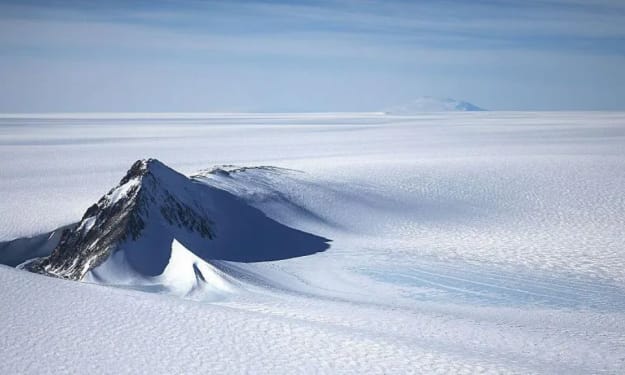
Landscape Beneath Antarctica's Icy Surface Revealed in Unprecedented Detail
For decades, Antarctica has been the Earth’s ultimate mystery — a vast expanse of ice covering almost 14 million square kilometers, hiding secrets beneath its frozen surface. Now, thanks to advanced radar technology and satellite mapping, scientists have produced the most detailed map yet of the continent’s hidden landscape, revealing mountains, valleys, subglacial lakes, and river systems that were previously invisible. This discovery is more than just a scientific curiosity. Understanding Antarctica’s topography beneath the ice is critical for predicting ice sheet stability, global sea-level rise, and climate change impacts. The new data could also shed light on Earth’s geological history and the ways in which life may survive in extreme environments. How Scientists Mapped the Hidden Terrain For years, researchers have relied on a combination of methods to peek beneath the ice: Ice-penetrating radar: Devices mounted on aircraft or satellites send radio waves through ice layers, which bounce back when they hit bedrock, revealing contours beneath kilometers of frozen water. Satellite gravimetry: Small variations in Earth’s gravitational field help infer the presence of mountains, valleys, and subglacial lakes. Seismic surveys: Explosions or controlled vibrations allow scientists to detect underground structures by measuring the way seismic waves travel through different materials. Using these techniques, a consortium of international researchers created a high-resolution map of Antarctica’s sub-ice topography, revealing features that rival the landscapes of continents that have been visible for millions of years. What’s Beneath the Ice? The map reveals a striking variety of features: Mountain ranges: Peaks rise more than 4,000 meters above the surrounding terrain, hidden beneath miles of ice. Some of these ranges may be older than the Rockies or the Alps. Deep valleys: Vast troughs and gorges, carved by ancient rivers or tectonic activity, provide clues about how the continent evolved over millions of years. Subglacial lakes: Scientists have identified hundreds of liquid water lakes trapped beneath the ice, including the famous Lake Vostok. These lakes remain liquid due to pressure and geothermal heat and may host microbial life isolated for millions of years. Subglacial river networks: Surprisingly, water flows beneath the ice in channels and rivers, slowly carving pathways that affect ice sheet movement. This intricate landscape challenges the perception of Antarctica as a flat, featureless ice sheet. Instead, it is a dynamic and complex environment, where hidden topography influences everything from ice flow to global sea levels. Why This Discovery Matters The importance of understanding what lies beneath Antarctica’s ice cannot be overstated: Predicting Ice Sheet Stability: Ice sheets move more quickly over smooth surfaces than over rugged terrain. Knowing where mountains and valleys lie helps scientists predict which areas of ice may collapse first, potentially raising sea levels faster than anticipated. Climate Change Models: Subglacial lakes and water channels lubricate the ice from below, influencing melting rates. Incorporating these features into models improves accuracy in forecasting future sea-level rise. Earth’s Geological History: The newly revealed landscape offers a window into Antarctica’s past — from tectonic shifts to ancient rivers and climates. This data helps reconstruct how continents drifted and climates evolved over millions of years. Search for Extreme Life: Subglacial lakes may harbor microbial life isolated for millions of years, providing insights into life in extreme environments, potentially even on other planets. Global Implications Antarctica may feel distant, but its ice sheets hold the key to global sea-level stability. Even small changes beneath the ice can have profound consequences for coastal cities around the world. With melting accelerated by climate change, understanding the terrain under the ice is crucial for planning and mitigation. Governments, scientists, and environmental organizations are now using this information to: Improve climate models for sea-level rise predictions Identify vulnerable regions of the ice sheet Guide future research missions to subglacial lakes and mountains The discovery also strengthens the case for continued international collaboration in Antarctica, where research and environmental protection are governed by treaties emphasizing peaceful scientific study. Challenges Ahead Mapping Antarctica is far from complete. Extreme weather, thick ice sheets, and logistical difficulties make the continent one of the hardest places to study. While radar and satellite technologies have advanced, field validation and deeper exploration remain difficult and expensive. Researchers also face ethical and environmental concerns. Drilling into subglacial lakes to sample microbial life, for instance, must be done carefully to avoid contamination. Antarctica’s fragile ecosystem demands that scientific progress balances discovery with protection. Looking to the Future The detailed map of Antarctica’s hidden landscape opens new possibilities for exploration and understanding: Ice Flow Predictions: With accurate topography, scientists can model how ice sheets will respond to warming climates more precisely. Resource Insights: While exploitation is restricted by international agreements, understanding subglacial mineral deposits can inform potential future uses. Extreme Environment Biology: Studying subglacial lakes could reveal new species adapted to cold, dark, and high-pressure environments, broadening our understanding of life on Earth. The data also strengthens international scientific cooperation, as multiple countries share findings and resources to better understand a continent that belongs to no single nation. Final Thoughts Antarctica’s ice may appear static and endless, but beneath it lies a vibrant and rugged landscape filled with mountains, valleys, lakes, and rivers. The new detailed mapping of this hidden world is a landmark achievement in Earth science, combining advanced technology, international collaboration, and the human drive to explore. By uncovering what lies beneath the ice, scientists are not just satisfying curiosity — they are equipping humanity with the knowledge to protect our planet, anticipate climate challenges, and understand the deep history of Earth itself. Antarctica’s secrets, once locked beneath kilometers of ice, are finally being revealed, and what we learn could reshape our understanding of the planet and our place within it.
By Muhammad Hassana day ago in Earth



Comments (1)
This is such a heartwarming and culturally rich piece! I love how you blended science, folklore, and everyday Pakistani life to explain why tabby cats feel like part of our streets and homes.