
Why Researchers Want to Bring Back Extinct Species
Why Extinct Species Resurrection Is Important to Scientists

How about if we told you that Jurassic Park isn't entirely a work of fiction?
That interacting with animals we only see in museums in the future would be feasible?
Woolly mammoths, Tasmanian tigers, and dodo birds. Scientists and researchers are currently focused on that planet rather than T. rex or brontosaurus.
We'll explain why we won't be doing it scientifically later.
Scientists are instead concentrating on animals that might be able to undo some of the harm that humans have caused to the planet.
Additionally, this resurrection may be sped up by the DNA of extinct species that has been discovered and kept in museums around the globe.
The passenger pigeon is one species in particular that could aid in the regeneration of North America's forests.
The area of Earth that sustains life is known as the biosphere. All land, all ocean, and a thin layer of air above the earth are included. The Earth's biosphere has supported innumerable species over the course of its 3.5 billion-year history, some of which have contributed more than others to maintaining the balance of the environment.
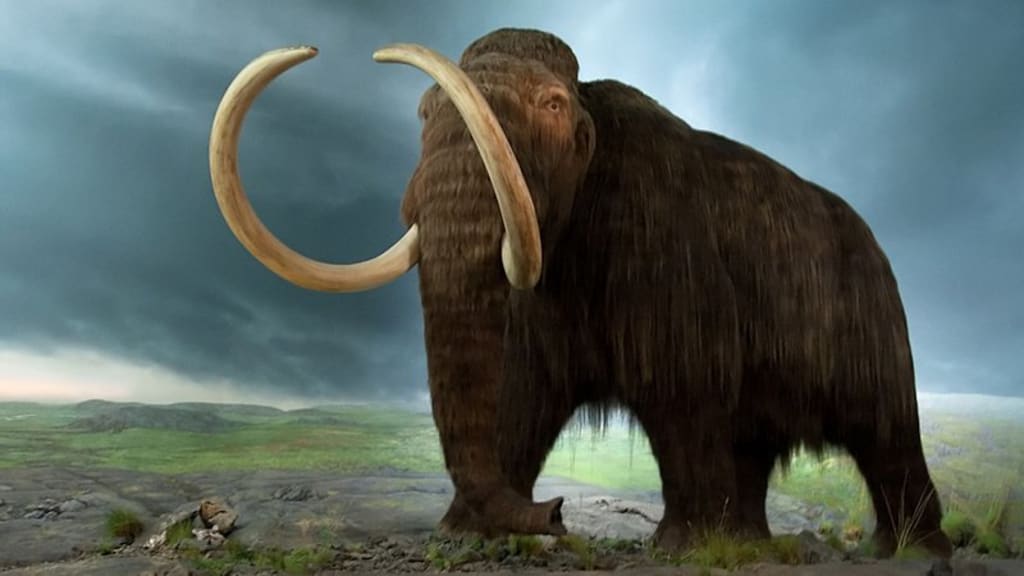
The woolly mammoth, which weighed five tons. The Eurasian tundras were significantly impacted by its grazing habits and movement patterns across the landscape.
Permafrost in the area grew and was protected as a result keeping massive amounts of CO2 underground. For thousands of years, people have had a disproportionately large and largely negative impact on the ecosystem. Due to human meddling, about 70% of the wildlife population has perished since 1970.
But what if we could reverse some of that harm by bringing ecosystems back to their pre-human condition?
What if, through a process known as de-extinction, the woolly mammoth might assist in rebalancing the biosphere?
This may be feasible, and experts from all around the world are attempting to make it so.
Scientists like Dr. George Church, the inventor of genomics, who is in charge of a group of scientists trying to revive the woolly mammoth and the Tasmanian tiger. So, how does Dr. Church perceive the future? He said: - "The best method to foretell the future, then, is to make an effort to alter it. My lab initiatives often consist of three elements: some sort of fundamental research, some cutting-edge technology, and some attention to long-term societal requirements. The environment and the survival of threatened species are our key priorities. I guess you could say that, as a scientist, I'm pessimistic because I cling to the facts. However, as a technologist, I'm confident that there are no genuine obstacles to testing theories and altering the future."
The species that Dr. Church wants to reintroduce are known as keystone species because of the significant impact they have on ecosystems. The passenger pigeon is a different keystone species that researchers are focusing on. The most common bird in North America and possibly the entire world was the passenger pigeon.
According to some estimates, there are billions of passenger pigeons worldwide. There have been reports of flocks 200 miles long and a mile wide. The flock would also block out the sun when they soared overhead for several hours at a time.
However, the nineteenth century followed. Their numbers fell off quickly as a result of industrialization, excessive hunting, human population growth, and human intervention. The final surviving passenger pigeon passed away in captivity in 1914. Researchers believe that the passenger pigeon played a key role in increasing biodiversity in North American forests because of the way that their enormous flocks behaved in a way that was both damaging and beneficial to the environment.
They would swarm in like a whirlwind, destroying canopies and stripping trees of their bark. However, that made it possible for more diverse plant species to flourish by allowing sunlight to reach the forest floor. This disturbance to the canopy is supposed to have set off a series of events that helped the forest rebound and give rise to new species of insects, reptiles, deer, and hawks. All in all, the enormous hardwood forest that predominated pre-colonial America depended on the passenger pigeon for its survival.
Everything fits into a sizable balanced cycle. So, the question is, would the cycle repeat again if the passenger pigeon were brought back?
That is what researchers are attempting to ascertain. They must first understand the true science behind de-extinction, though. A copy of a species' DNA, or genetic code, is required to bring it back from extinction. DNA typically has a half-life of 500 years, which means that after 500 years, 50% of the DNA of the extinct species will have degraded.
However, if that DNA was frozen, it could be kept safe for an extremely long time. One such discovery in the Siberian permafrost was a woolly mammoth tooth that was 1.2 million years old. And from that tooth, scientists were able to sequence mammoths' DNA.
If you're thinking of the scene in Jurassic Park where the mosquitoes are imprisoned in amber, you should know that amber isn't the best material for keeping DNA because it doesn't really freeze, and because it's porous, bacteria can get inside and ruin the contents.
To cut a long tale short, we’re fine with velociraptors for the time being. In the 20th century, passenger pigeons vanished from existence. As a result, researchers have a reasonably full DNA sample.
Finding the extinct species' closest genetic relative still alive is the next step. It is the band-tailed pigeon in this instance. Why is that necessary to do? Because we aren't really reviving a species in its entirety. More complicated than that, actually.
- "The first thing that comes to mind when people think of de-extinction is that we will have perfect replicas of passenger pigeons and woolly mammoths, but that is just not possible." Dr. Beth Shapiro is the author of "How to Clone a Mammoth" and a prominent figure in the fight to prevent extinction.
She continues by saying, - "What we're actually discussing is the resurrection and restoration of extinct characteristics, extinct behaviors, and extinct capacities to fill any potential ecological gaps left by extinction.
- While a passenger pigeon cannot be brought back, it may be possible to alter an existing species, such as the band-tailed pigeon, to allow it to at least partially fill the void left by the extinct bird. Therefore, we are unable to suddenly bring back a 200-year-old bird, and, to be honest, we probably don't want to.
- Every living thing is more than just the arrangement of the A, C, G, and T letters that make up its DNA.
The sequence of the genome and the environment in which we live together make us who we are. And those settings are no longer present for the majority of extinct species.
However, the band-tailed pigeon is real. It's actually prospering. Genetically, it is not dissimilar to passenger pigeons. Therefore, researchers are attempting to pinpoint the crucial genetic sequences in the band-tailed pigeon that they wish to alter. Can they breed a hybrid bird by giving it characteristics of the passenger pigeon? One that, like the band-tailed pigeon, can thrive in a contemporary biosphere while maintaining the genetic and ecological significance of the passenger pigeon? Can they create a passenger band pigeon?
Scientists employ a process known as somatic cell nuclear transfer to produce hybrid creatures and resurrect features from extinct species like the woolly mammoth or Tasmanian tiger. It may be known to you as cloning. This innovation is nothing new. The same techniques were used in the 1990s to clone a sheep by the name of Dolly.
However, compared to mammals, birds have a completely distinct reproductive physiology. Genetic engineers must intervene earlier and modify the stem cells that will eventually develop into sperm or egg cells in the passenger pigeon. Primordial germ cells, or PGCs, are what these cells are. Researchers remove the PGCs from a band-tailed pigeon, after which they modify the bird's genome to give its offspring features. Eventually, the hybrid qualities will be passed down to the offspring when the band-tailed pigeon reproduces.
We are certain that this will succeed. Prior to a few years ago, researchers implanted duck primordial germ cells into a chicken embryo. As an adult, that chicken was a female chicken just like any other, with the exception that some of her eggs were duck eggs. When she deposited some eggs and was fertilized with duck sperm, all of the eggs developed into completely normal ducks.
But even if we succeed in doing so and bring the passenger pigeon back to life, should we? This isn't a case of a species being wiped out by ice ages or natural climatic change like natural selection. We exterminated them, and now we want to resurrect them to help save us and undo our environmental blunders.
What happens if this hybrid pigeon wrecks fragile ecosystems and drives other creatures toward extinction? There are way too many instances when humans have introduced invasive species and irreparably changed surroundings. Are we just repeating this? Who gets to choose the location of the passenger pigeon roost? How strictly regulated must this procedure be?
Furthermore, if you stop to consider it, by reviving an extinct species, we are instantly producing a new endangered species that needs protection and resources. These are resources that might be used for other conservation initiatives.
Our earth is in a terrible state, and it will require some significant changes to put us on the right course alongside solutions on a par with extinction-ending. And if science and ethics are applied correctly, we might be able to restore the biosphere's balance to a state similar to that which it had before human intervention.
And that won't only help us; it will also help all the other species on the globe who rightfully deserve to have their ecosystems restored.
- I believe that in order to manage this process as responsibly as possible, we should continue to investigate the science of de-extinction while simultaneously making these discussions public. And I believe the future will be a very wonderful place if we do this correctly. Do you support de-extinction? Which creatures would you wipe out?
About the Creator
Althea March
I am a writer who searches for facts to create compelling nonfictional accounts about our everyday lives as human beings, and I am an avid writer involved in creating short fictional stories that help to stir the imagination for anyone.
Keep reading
More stories from Althea March and writers in Earth and other communities.



Comments