
Why Nature No Longer Trusts Us
The broken bond between humanity and the world that sustains it
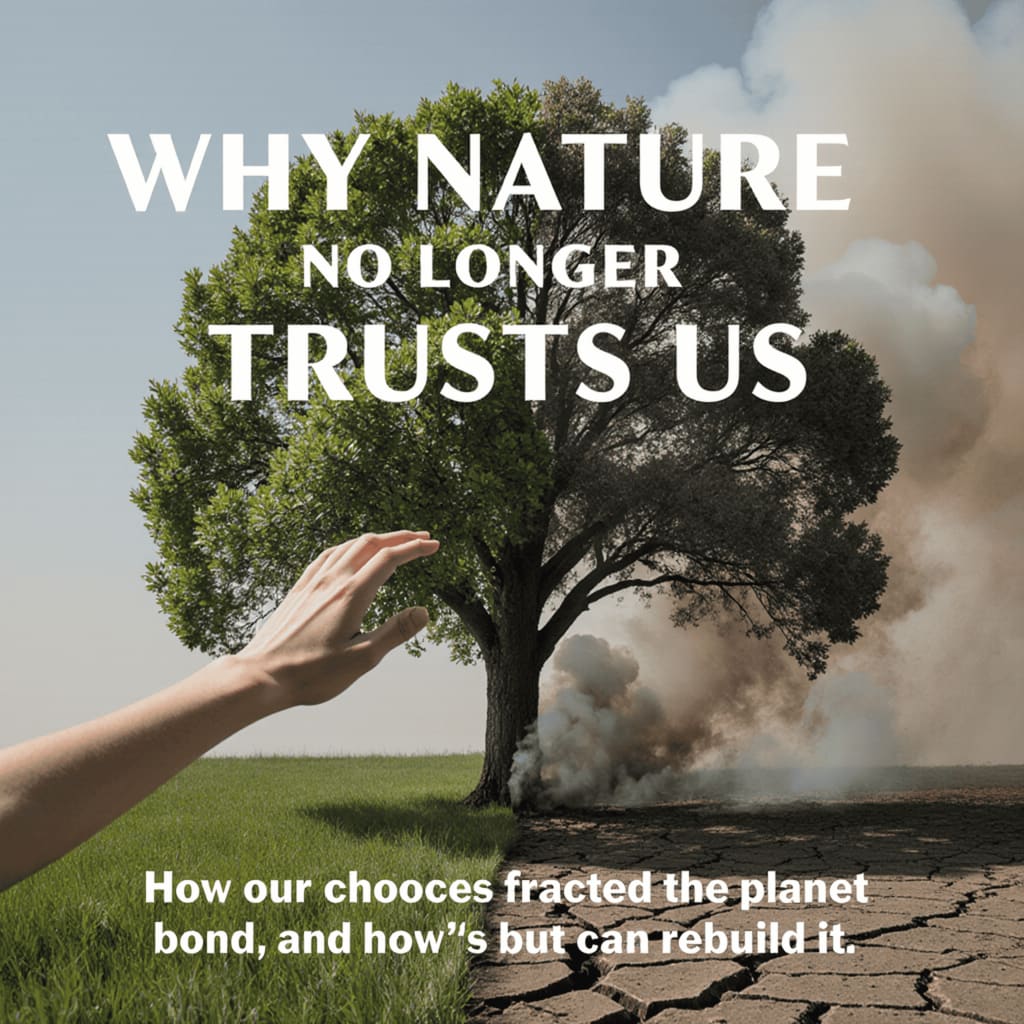
Trust is delicate. It takes years to create, a moment to break, and often a lifetime to mend. For centuries, humanity co-existed with nature as guest and protector — dwelling close to rivers, sowing fields in time with seasons, and showing respect to the skies, forests, and seas. But somewhere on the way to progress, that trust was broken. Today, if nature were to speak, it would greet us with open arms no more but with trepidation and even fear.
A History of Betrayal
The planet has never stopped giving. It provided arable land, clean water, food to eat, and oxygen to inhale. Human beings were supposed to be stewards. Instead, history is the record of taking but not giving. Trees have been cleared faster than they could be replanted, rivers have been filled with pollutants so that they no longer run freely, and the air has been loaded with gases that suffocate the sky.
To nature, they are not accidents but betrayals. A steward looks for balance; an exploiter only for profit. Through the years, our ways have announced which side we have taken.
The Signs of Distrust
If openness is the measure of trust, then nature's increasing resistance is its attempt at closing the door. Glaciers once steady are melting back. Seasons come out of sync, baffling animals and crops alike. Oceans surge, engulfing coasts as if shoving us away from shores we have overreached.
Even the little things explain it. Bees, vital for pollination, disappear quietly. Birds change their migratory patterns. Storms intensify, as if nature now greets us with force instead of softness. These are not accidents. They are indications of a strained relationship, the world reeling from our negligence.
The Human Blind Spot
The biggest tragedy is that so many do not notice nature's distrust. We are confused by plenty and think that because the Earth keeps giving, it must still accept us. Nature's resources, however, are not unlimited, and its tolerance is not boundless.
This blind spot is dangerous. It permits us to familiarize ourselves with droughts, wildfires, and floods as remote headlines rather than our consequences. We keep pretending as though trust can never be lost. But ask any relationship — once the bond is severed, all is transformed.
Can the Bond Be Repaired?
The answer is not simple, but it is possible. Trust, once broken, requires not only apology but action. For humans, this means shifting from dominance to partnership. It means protecting forests instead of stripping them, restoring wetlands instead of draining them, and listening to indigenous wisdom that has always valued reciprocity with the Earth.
Small things count too. Each tree planted, each plastic bottle skipped, each vote for green policy cast is an act of remaking. Nature won't forgive right away, but it does notice. A dirty river can once again run clean; a desert field can erupt with flowers.
Listening Before It's Too Late
If one lesson can be gleaned from nature's distrust, it is the imperative of listening. The tempests, the silences, the eroding landscapes — these are not by chance but messages. We are being summoned to hear, to react, to transform.
Trust can be lost, but is not yet irreparable. The Earth doesn't need us, but we need it desperately. If we opt for humility instead of greed, care rather than exploitation, and balance in place of excess, then maybe one day the forests will sing once more, the rivers will flow freely, and nature will trust us enough to open its arms once again.
About the Creator
El Niño is likely to return in 2026. Here's what that means for Houston and Texas.
La Niña has been active since mid-October. However, according to the January update from the National Oceanic and Atmospheric Administration, it’s likely to end over the next couple of months, and a transition to El Niño is likely to occur later this year.
By Dena Falken Esq3 days ago in Earth
Icy Chaos in Central and Eastern Europe
Winter has unleashed its fury across central and eastern Europe, leaving travelers frustrated and transport networks struggling to keep up. Over the past few days, freezing rain and ice have wreaked havoc on airports, train stations, and highways — forcing flight diversions, delaying trains, and making roads treacherously slippery. From Vienna to Budapest, Prague to Bratislava, this icy grip has brought travel to a near standstill. Let’s take a closer look at what’s happening, how it’s affecting people on the move, and what it tells us about winter travel in Europe. A Sudden Winter Blow A sudden wave of freezing rain swept across the region, coating runways, rail tracks, and roads with a dangerous layer of ice. Major airports in Austria, Hungary, Slovakia, and the Czech Republic were particularly affected. At Vienna International Airport, operations were temporarily suspended when runways became too slick for flights to land safely. Travelers already in the air had to divert to alternative airports in Munich, Frankfurt, and Venice. Meanwhile, Budapest’s Ferenc Liszt International Airport paused all arrivals and departures, and Prague’s Václav Havel Airport continued operating but at limited capacity. Trains Crawling Through Ice Rail networks weren’t spared. Across Austria, Hungary, and the Czech Republic, ice on tracks and power lines caused delays and cancellations. Austria’s national rail operator, ÖBB, urged passengers to postpone non-essential journeys. In the Czech Republic, travelers at Prague’s main station faced long waits as trains struggled to maintain schedules. Hungary’s tram and suburban rail services were temporarily suspended due to ice buildup on power lines. This combination of black ice, frozen switches, and heavy snowfall has tested the limits of winter infrastructure in Europe. Roads Turn Into Skating Rinks The icy weather didn’t just affect public transport — roads became treacherous, too. Authorities in Slovakia and the Czech Republic warned residents to avoid non-essential travel as highways turned into slippery skating rinks. Accidents and minor collisions were reported, and emergency services were busy responding to dozens of injuries from slips and falls. Even schools weren’t immune: parts of Romania shifted to online learning, keeping children safe during the extreme temperatures, which dropped to around -13°C in some areas. Why This Weather Is So Disruptive Meteorologists point to several factors that made this storm particularly severe: Freezing rain on top of existing snow creates an icy layer that’s extremely hard to clear. Rapidly refreezing surfaces make conditions unpredictable. Temperatures hovering around freezing prevent efficient melting during the day. This “perfect storm” scenario underscores just how vulnerable transport systems are to extreme weather. Even well-prepared airports and rail networks can struggle when weather transitions from snow to freezing rain. Voices From the Ground Passengers took to social media to express their frustration: Crowded airports as travelers scrambled to rebook flights. Train stations packed with delayed commuters, unsure when the next train would depart. Warming centers opened to provide shelter and hot drinks for stranded travelers. For many, a simple trip turned into a test of patience and resilience. Tips for Traveling in Freezing Conditions If you must travel during winter storms, experts recommend: Check flight and train schedules regularly, as delays can change quickly. Allow extra time for travel to avoid missing connections. Consider travel insurance that covers weather-related disruptions. If driving, carry winter essentials: blankets, food, water, and check road conditions before departure. Most importantly, prioritize safety over schedules — icy conditions can change rapidly, making travel risky. A Reminder From Winter This recent chaos in central and eastern Europe serves as a stark reminder of how interconnected transport systems are, and how vulnerable they can be to extreme weather. Flights grounded, trains stalled, and highways turned icy show that winter can bring travel to a halt — sometimes with very little warning. As Europe continues to face volatile winter conditions, travelers and authorities alike are reminded: preparation and flexibility are key. Sometimes, the weather truly has the final say. ❄️🛫🚆
By Muhammad Hassan3 days ago in Earth


Comments
There are no comments for this story
Be the first to respond and start the conversation.