
Why is the "ozone hole" hardly mentioned now? Is it a lie of the century, or has it healed?
The formation of the ozone hole

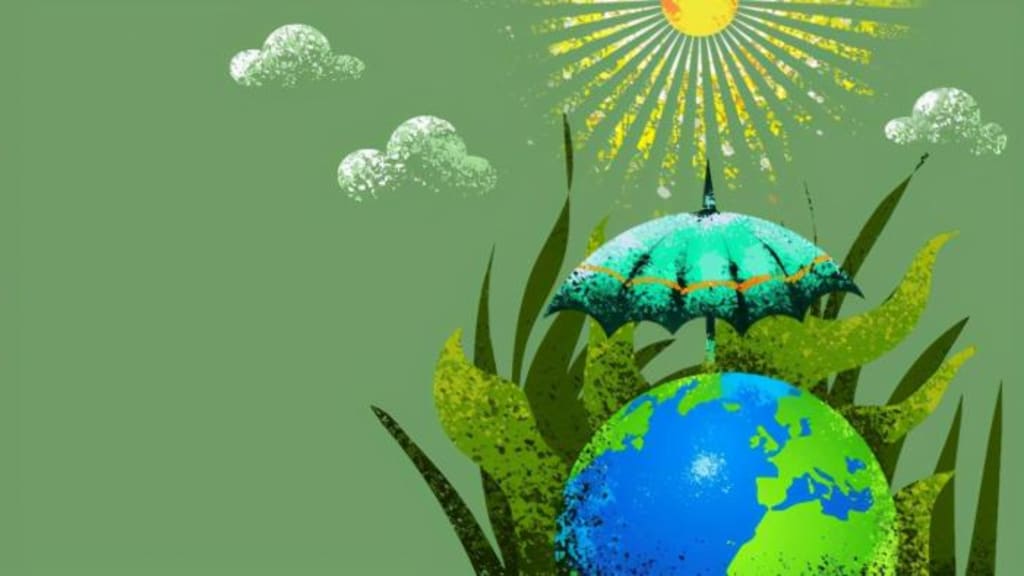
From the end of the 0th century to the beginning of the 21st century, what were the most mentioned environmental issues? Perhaps the first thing that comes to most people's minds is the greenhouse effect, ignoring another issue that is also of concern - the hole in the ozone layer.
At the beginning of the century, the content of the ozone hole at the earth's poles was written into textbooks. The crisis facing the earth's ozone layer seems to have reached an urgent level, and it has even begun to threaten the life and death of human beings.
But with the passage of time, the "ozone hole", a global disaster-level event, has been gradually forgotten by people, so that almost no one mentions it anymore, and what's more, they don't even know about it. the existence of things.
Why does this weird situation happen? Is it because the void has healed, or is it simply a century of lies? Let's look down.
What is the ozone layer
Contrary to what many people think, the ozone layer is not located in the outermost part of the earth's atmosphere, but in the stratosphere. In a sense, it is actually part of the stratosphere with high ozone concentration.
For all creatures on earth, the ozone layer is essential, because it can absorb ultraviolet rays with a wavelength below 306.3nm in sunlight, so that this part of the destructive ultraviolet rays cannot cause damage to surface organisms, just like an umbrella to protect Living and multiplying of life on earth.
According to relevant reports, because of the existence of the ozone layer, at least more than 100 million cases of skin cancer and millions of eye diseases can be avoided by the end of this century.
In addition to the main protective effect, ozone can also absorb ultraviolet rays in sunlight and convert them into heat energy to heat the atmosphere, which has a very important influence and help on the overall circulation of the atmosphere.
How such an important ozone layer was formed
Hundreds of millions of years ago, there was no ozone layer on the earth, so the surface of the earth would be exposed to strong ultraviolet rays, resulting in almost no life on the surface, only a small amount of life in the water, because water can absorb ultraviolet rays.
Later, as plants appeared, they continuously absorbed carbon dioxide from the atmosphere, converted it into oxygen through photosynthesis and diffused it into the air.
This part of the oxygen is "hit" by ultraviolet rays in the upper layer of the atmosphere and becomes two atoms, and then these two atoms merge with the oxygen that has not been "hit", and finally produce ozone (O₃). More than 90% of the ozone in the atmosphere today is formed in this way.
Is the ozone hole real?
It is indeed true, not the so-called "lie of the century". Since 1970, based on measurements from the Total Ozone Satellite Observatory (TOMS), scientists have found that the ozone layer over Antarctica rapidly thins during certain seasons, creating so-called "holes."
In 1985, the ozone layer over Antarctica even thinned by an astonishing 70%. This situation shocked scientists, because the ozone layer is extremely important to surface life, and once it has a problem and the ultraviolet intensity on the surface increases, it will cause very serious health and environmental problems.
For example, excessive ultraviolet rays can damage the human immune system, cause various obstacles to the autoimmune system, and increase the risk of malignant diseases.
In addition, plant leaves will also become smaller due to excess ultraviolet rays, which will directly affect their photosynthesis, resulting in a sharp drop in plant output. At the same time as the sharp drop in output, ultraviolet rays will also affect the quality of the output. According to relevant research, every 20% reduction in the thickness of the ozone layer will reduce the global soybean production by 20% to 25%.
How does the ozone hole form?
The formation and expansion of the ozone hole can be divided into natural causes and anthropogenic causes. First of all, from a natural point of view, ozone is composed of 3 oxygen atoms, and the area with the highest concentration is usually located 20 to 25 kilometers away from the ground.
Ozone is a chemically unstable substance, and a certain chemical reaction can occur in the ozone layer, thereby decomposing ozone into oxygen molecules and oxygen atoms, thereby destroying the ozone layer.
In addition, from an artificial point of view, human beings use a lot of foaming agents, fire extinguishing agents, insecticides, refrigerants, etc. Freon.
After chlorofluorocarbons are discharged into the air, they will rise to the top of the ozone layer, and the ultraviolet rays will decompose the chlorine atoms in them, and the decomposed chlorine atoms will plunder the oxygen atoms in the ozone, making the ozone into oxygen, and eventually lose the absorption of ultraviolet rays. Ability.
In addition, the unrestricted use of chemical fertilizers in agriculture, which produces large amounts of nitrogen oxides, is one of the main reasons for the thinning of the ozone layer. It can be seen that the culprit of the hole in the ozone layer is actually human beings themselves.
Recognizing that chlorofluorocarbons would cause irreversible damage to the ozone layer, 45 countries signed the Montreal Protocol in 1987 to avoid and control the continued destruction of the ozone layer by chlorofluorocarbons, while also codifying the importance of the ozone layer to mankind In textbooks, it has influenced a generation.
Why is almost no one talking about the ozone hole now?
The reason is simple, because it is no longer a threat. Due to the joint "self-rescue" of human nations, the hole in the ozone layer in the Arctic has been completely "healed", and the larger hole in the Antarctic is slowly recovering.
Note that the void over the Antarctic region has not completely "healed", its size still changes with the seasons, for example, it will start to increase in July and August every year, until it reaches its limit around October, and then becomes smaller again .
Of course, the ozone hole in Antarctica is much smaller than it was decades ago when CFCs were abusive. According to scientists' predictions, the ozone layer over the Antarctic should be able to recover to the level of 1980 from 2060 to 2075. As for when it will fully recover, there is no accurate answer yet.
About the Creator
suzanne darlene
Take you to understand scientific knowledge
Keep reading
More stories from suzanne darlene and writers in Earth and other communities.
There may have been a nuclear war in the solar system, and experts have come up with "evidence" that the Martian civilization disappeared like this?
Have the planets in the solar system ever had a nuclear war? Authoritative experts took out "direct evidence", and the behavior of Martian civilization has subsided like this?
By suzanne darlene3 years ago in Earth
Man Shot Dead by Police After Aiming Bow and Arrow at Officers
A man has been shot dead by police after allegedly aiming a bow and arrow at officers, authorities have confirmed. The fatal encounter has triggered public debate over police use of force, crisis response protocols, and how law enforcement handles situations involving unconventional weapons.
By Aarif Lashari3 days ago in Earth


Comments
There are no comments for this story
Be the first to respond and start the conversation.