
Why Felt Products Are Good for Nature and Mother Earth
A Soft, Sustainable Choice for a Healthier Planet
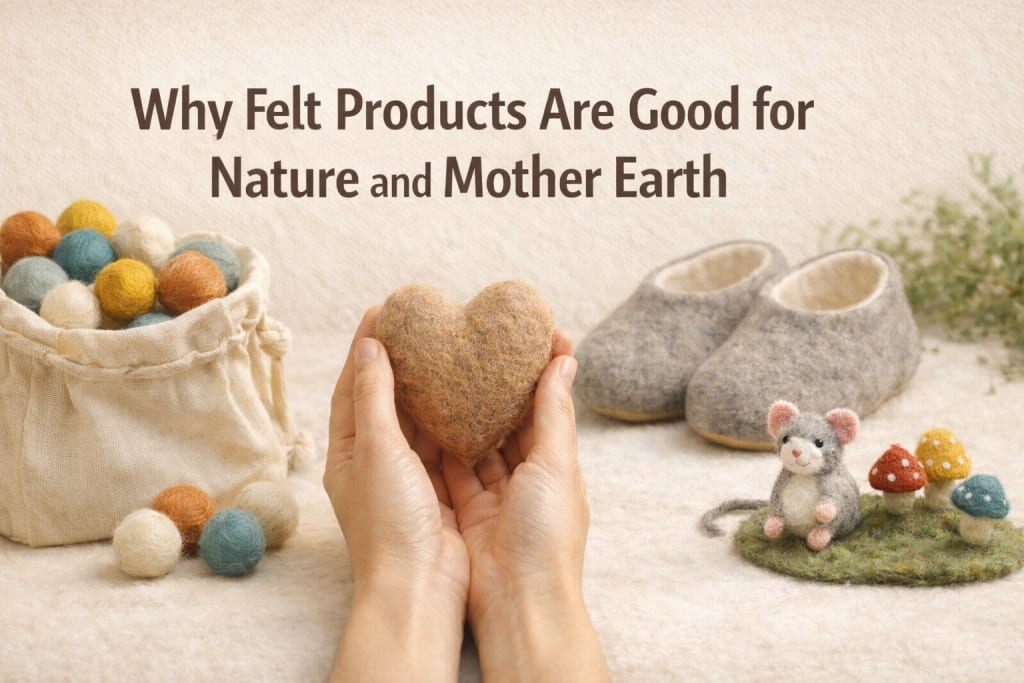
When we talk about sustainable living and eco-friendly choices, most people think of solar panels, electric vehicles, or biodegradable packaging. But sustainability can also be woven—literally—into the things we use every day. One of the most heartfelt examples of that is felt.
Felt products—made from natural wool—have been around for centuries. They’re beautiful, soft, durable, and, most importantly, environmentally friendly. Beyond the colorful felt accessories we see in stores or online, there’s a truly green story behind each piece. Let’s dive deep into why felt products are not only good for you but also good for Mother Earth.
1. Made from Nature, Not Chemicals
Felt is made primarily from sheep’s wool, which is a completely natural and renewable resource. Unlike synthetic fibers, which are derived from petroleum, wool comes from animals that regrow their fleece every year. No toxic chemicals, no artificial dyes (when made naturally), and no carbon-heavy manufacturing.
When artisans create felt, they use a process called wet felting or needle felting. In wet felting, wool fibers are agitated in warm, soapy water until they interlock and create a dense fabric. It’s simple, clean, and chemical-free. The only ingredients are wool, soap, and water—a process that leaves behind almost no environmental footprint.
In comparison, synthetic materials like polyester or acrylic can take hundreds of years to decompose. They also shed microplastics every time they’re washed, which pollutes oceans and harms marine life. Wool felt, on the other hand, is completely biodegradable—when discarded, it returns to the earth as organic matter, nourishing the soil instead of damaging it.
2. Biodegradable and Compostable
One of the biggest ecological benefits of felt is that it’s biodegradable. Throw a piece of wool felt into your compost pile, and it will naturally break down within months. It won’t release harmful gases or residues; instead, it enriches the soil with nitrogen and other nutrients.
Imagine that—your favorite felt coaster, once old and worn, can literally feed plants someday. That’s the beauty of circular living.
Synthetic materials never offer that closure. A single plastic handbag or polyester rug stays on Earth long after we’re gone. Felt, by contrast, respects the natural cycle—it’s made from nature and returns to nature.
3. A Low-Energy Production Process
Eco-friendly felt products aren’t just about what they’re made from—they’re about how they’re made. Felt creation is one of the few textile processes that demand minimal machinery and energy. In many communities, particularly in countries like Nepal, felt products are handcrafted using traditional methods.
Women artisans roll, press, and mold wool into beautiful shapes using warm water and soap—powered not by electricity but by hand. This drastically reduces the carbon footprint compared to factory-made goods.
It’s slow, mindful production—where human skill replaces industrial smoke. Every felt ball, ornament, or slipper carries that human touch, while also helping reduce global energy consumption and reliance on fossil fuels.
4. Supports Ethical and Sustainable Livelihoods
There’s an often-overlooked environmental truth: true sustainability also includes people. Felt production, especially in regions like Nepal, supports thousands of local artisans—mostly women—who rely on sustainable wool crafts for their livelihoods.
By using natural materials and traditional methods, these artisans contribute to a green economy. The wool often comes from local sheep farms that practice ethical grazing, meaning the animals live healthy lives and are shorn humanely.
This cycle—farm to artisan to consumer—creates a socially sustainable model. When you buy a felt product, you’re not just buying something eco-friendly; you’re supporting families, communities, and generations of traditional craftspersons who keep this earth-friendly practice alive.
5. Chemical-Free and Non-Toxic
Modern industrial textiles are often dyed, coated, or treated with a cocktail of chemicals—think formaldehyde, flame retardants, or synthetic dyes. These compounds can cause skin allergies, pollute waterways, and harm workers in the production cycle.
Felt, especially handmade wool felt, is refreshingly different. Many felt producers now use natural dyes extracted from plants, roots, and minerals, creating lovely shades without harming the environment.
Next time you touch a felt toy or home décor piece, realize you’re touching something completely safe—for both you and the planet. It leaves behind no toxins when produced, used, or disposed of.
6. Long-Lasting and Durable
“Eco-friendly” isn’t just about what’s natural; it’s also about how long something lasts. Felt is incredibly sturdy and long-lasting. Its fibers are densely matted, making it resistant to wear, water, and even dirt.
Because of its durability, you don’t need to replace felt items frequently. That means fewer products entering landfills and less waste for the planet to manage. A felt basket or felt slipper can serve you for many years with little care—and when it finally wears out, it still won’t harm the earth.
This is the essence of sustainability: reduce, reuse, and respect.
7. Natural Insulation and Breathability
Few people realize how thermally efficient wool felt is. Felt has natural insulating properties—it keeps your feet warm in winter and cool in summer. That’s why felt slippers and hats are popular in both cold and moderate climates.
Because the material is breathable, it doesn’t trap moisture or odors, which makes it ideal for household use. You can use felt coasters, trivets, or storage boxes without worrying about mold or static buildup.
This high functionality, combined with its natural properties, makes felt one of the most energy-efficient textiles to use and maintain. Unlike synthetic materials, you don’t need frequent washing or special detergents—saving both water and energy over time.
8. Aesthetic and Sustainable Design
Beyond practicality, felt products simply look beautiful. Their texture adds warmth, softness, and coziness to any space—whether it’s a living room with felt cushions or a child’s playroom filled with felt toys.
Designers across the world are turning to felt for its versatility and eco-conscious appeal. Unlike plastics or metals, felt products have a soul—they tell a story of earth, art, and sustainability. When customers buy felt items, they’re not just purchasing décor; they’re making a statement about living thoughtfully and respecting the environment.
9. Reduces Dependence on Plastic Products
Every felt product you choose replaces a potential plastic alternative. A felt shopping bag instead of a synthetic tote, a felt dryer ball instead of disposable dryer sheets, or a felt ornament instead of plastic décor—all these small swaps add up.
It’s simple math: less plastic use means fewer microplastics in our oceans, fewer landfills, and more breathable air for everyone. Switching to felt is one of the easiest and most impactful steps toward a greener lifestyle.
10. A True Gift from Nature
When you hold a piece of felt, you’re holding the result of nature’s artistry—the work of wool, water, human hands, and time. There’s no other material quite like it. It connects us back to nature in a world where so much feels artificial.
Felt reminds us that sustainability doesn’t have to be complicated. Sometimes, the most natural, simple things offer the greatest value—to us and to the Earth.
Final Thoughts
The next time you browse through handmade felt items—slippers, bags, mats, ornaments, or toys—remember that these aren’t just pretty crafts. They’re small symbols of harmony with the planet.
Every felt product supports sustainable farming, low-waste manufacturing, ethical employment, and chemical-free living. In a world struggling with pollution and overproduction, choosing felt is one of the most loving choices you can make for our planet.
So, if you want to gift something that truly gives back to Mother Earth—choose felt. It’s soft on the skin and even softer on the planet.
About the Creator
AQI Cigarette Calculator: Understanding Air Pollution
The air we breathe is a complex mixture of gases and particles, many of which are invisible to the naked eye. While we can feel the heat of a sunny day or the chill of the wind, the silent, creeping impact of air pollution is far less tangible. This lack of tangibility makes it a difficult public health threat to communicate and motivate action against. A powerful innovation in environmental health communication has emerged to bridge this gap: the concept of the AQI cigarette calculator.
By Walter Schiller-Anders4 days ago in Earth
One Unchecked Box
"Republished" because it was the only way to add the embed for the newly recorded audio version of this story due to the Top Story badge. Plus it serves as a nice, informal announcement of the podcast's revival for another season (go subscribe!):
By Stephen A. Roddewig5 days ago in Fiction


Comments
There are no comments for this story
Be the first to respond and start the conversation.