
Why Do Bats Hang Upside Down?
Learn about bats before dealing with them.

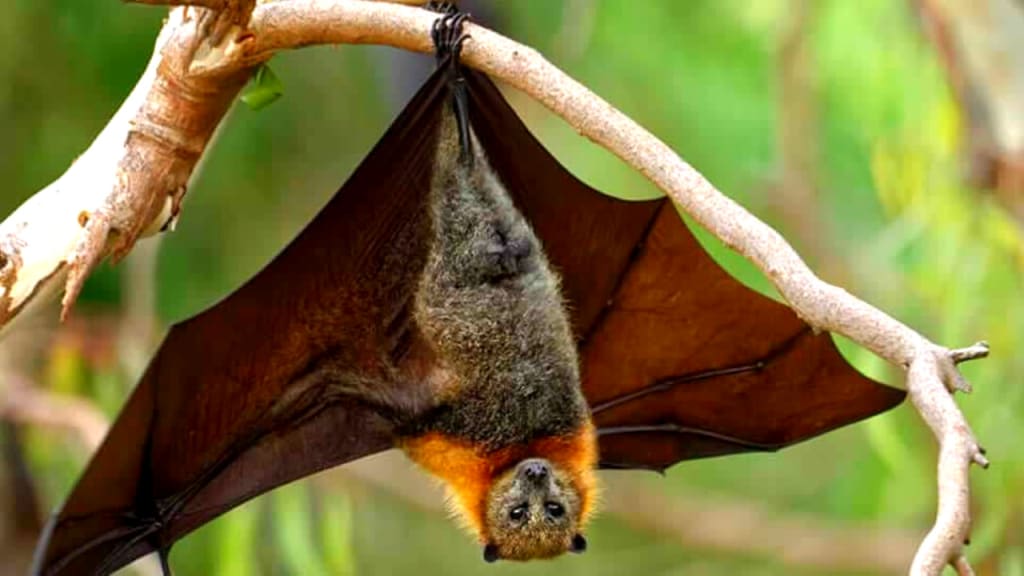
Bats are strange creatures. Though they're often associated with images of Dracula and other spooky things, most people don't know much about these animals.
For one thing, many people are surprised to learn that bats aren't actually birds. And for another, it's common to wonder why bats hang upside down all the time.
So today, we're going to take a closer look at some of the more interesting aspects of bat behavior and find out why these animals prefer hanging upside down over flying around right-side up.
The History and Evolution
Bats are one of the most enigmatic creatures in the animal kingdom. They are the only mammal capable of true flight, but there is very little fossil evidence of a non-flying bat ancestor.
The dominant theory holds that bats evolved flight from a mammal capable of climbing trees and possibly spending significant time there hunting for tasty insect treats. Over time, this non-flying mammal began to fly, possibly by gliding like modern shrews, or by some other undiscovered evolutionary route.
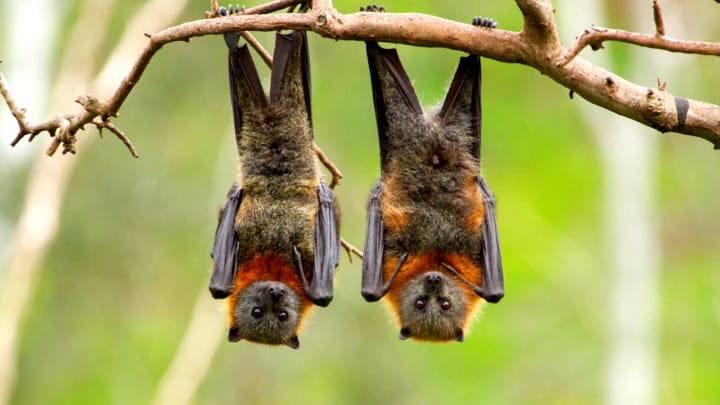
This tree-climbing, insect-eating, possibly flying mammal may have preferred hanging upside down. The researchers who studied a bat fossil discovered that this proto-bat could have been an upside-down hanger. This discovery provides a tantalizing glimpse into the evolution of these fascinating creatures.
Why Do Bats Hang Upside Down
Bats and birds both have the ability to fly, but they use different methods to take to the skies. Bats are able to simply let go of the branch they are clinging to and take off almost immediately.
They fall a few meters before gaining enough momentum to glide away. Birds, on the other hand, primarily use a "jump and flap" method of flying. Most bats cannot take off from the ground, as this requires a lot of energy.
Flying is a very energy-intensive activity, so creatures must have powerful muscles to generate enough power for flight. Bats appear to have evolved flight in a different way than birds.
Rather than running and jumping like birds, bats use their muscles to generate enough energy for flight. This difference in flying styles is just one of the many ways that bats and birds differ from each other.
How Do Bats Hang Upside Down
Physiologically, bats are pretty amazing creatures. They have the unique ability to hang upside down without expending any energy whatsoever. How do they do it?
It all has to do with their talons. The talons of a bat are very similar to those of a human hand. When we make a fist, one muscle contracts and pulls on the tendons, closing our fingers.
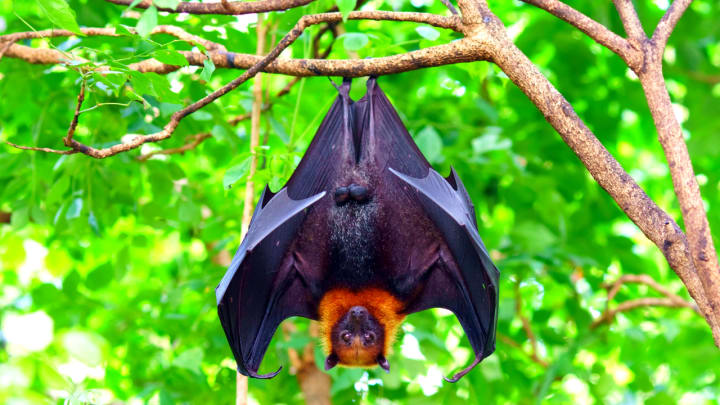
However, in bats, the tendons are attached to their upper body rather than a muscle. So when a bat wants to hang upside down, it will fly into position and then open its claws and grasp until it finds a surface to grip.
Once it's found a suitable surface, it simply relaxes and lets its weight pull its talons closed. The tendons connected to the talons then clench as the upper body is pulled down on them. That's all there is to it! Bats don't put in any extra effort to hang upside down - they just let gravity do its job. Pretty nifty, huh?
Safety from Predators
When it comes to avoiding predators, bats are true masters of disguise. Thanks to their ability to hang upside down, they can blend in with the branches of trees and the ceilings of caves, making them all but invisible to potential threats.
And if the danger does come calling, bats can simply let go and make a quick escape. This built-in predator protection is thanks to their wings, which extend from their arms to their legs and allow them to take off and fly with speed and agility.
Not only does this make them difficult prey for predators such as birds and mammals, but it also allows them to hibernate and rear their young in relative safety high up on the ceilings of caves and trees.
Where Bats Can Usually Be Found?
If you're looking for bats, your best bet is to check your attic. These creatures are notoriously shy, and they prefer to roost in dark, hidden corners.
However, they will also roost behind your chimney or in the cracks of your walls if they can find a suitable hiding spot. Bats typically gain access to homes through holes in the roof, so be sure to check there as well.
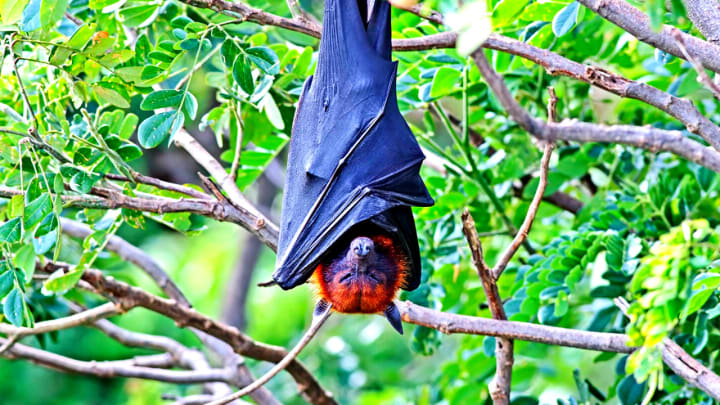
Keep in mind that bats are looking for a safe place to live and raise their young--somewhere where they won't be bothered by the many dangers of the wild. As a result, they're not likely to be found in areas where there's a lot of human activity.
If you want to attract bats to your property, try creating a bat house. These structures provide a safe and secure roosting spot for these creatures, and they can help to control insect populations.
Conclusion
Bats hang upside down because it's the best way to fly. By hanging upside down, bats can use their wings as props to help them stay in the air. This position also gives bats a better view of what's below them so they can more easily hunt for food.
Bats aren't the only animals that hang upside down--some primates and birds also do it occasionally.
About the Creator
Keep reading
More stories from Heather Whitney and writers in Earth and other communities.
Gorilla Trekking Adventure in Rwanda and Uganda: A Journey Into the Wild
Deep within the forests of East Africa, Rwanda and Uganda protect one of the most remarkable wildlife experiences on Earth—gorilla trekking in Rwanda. These countries are home to endangered mountain gorillas, living quietly in mist-covered mountains and dense jungle.
By Alex Winslow2 days ago in Earth
The Piggy Project
I’ve had so many names in this life I lose track of which ones were ever really mine and which ones I wore because someone needed me to. Some were handed to me before I had words to refuse them, before I knew what they meant, before I knew I could say no. Most weren’t meant to hurt. That doesn’t mean they didn’t leave marks. Marks that told me who I belong to, who I am by way of who claims me, recognizes me in the good and bad, who walks beside me.
By Fatal Serendipityabout 15 hours ago in Confessions


Comments (1)
Good info! Thanks for sharing.