
Why Beavers Are So Obsessed With Building Dams
Why do beavers have a dam problem?


Find out how beavers construct their magnificent dams and what effects they have on the environment.
The longest beaver dam in the world is located in Canadian woodlands. This 850-meter-long construction has drastically changed the area, creating a pond with 70 million liters of water. It is large enough to be visible in satellite images. However, dams of any size can significantly alter their surroundings. So how precisely do beavers construct these stunning structures? Glynnis Hood conducted extensive research on this.
The creators of this wooded kingdom are well-housed in this roomy setting. However, dams as small as one hundredth the size of this one can nonetheless significantly alter their surroundings. What does a beaver do to remodel a forest, and how can they create such stunning structures in the first place?
Take a look at this beaver in the northwest of the US. He is a proud representative of the second-largest rodent species in the world, standing just under 2 feet tall. While he is vulnerable to predators on land, once he has constructed a lodge, he will have a huge moat to protect him. He is unable to just erect a dam anywhere. Our beaver investigates densely wooded areas after hearing the sounds of running water in quest of a medium-sized stream that is neither too steep nor too deep. He finds a creek with a soft, muddy bottom after leaving one building site due to its rocky bottom.
Along the edge of the creek, he builds a little bank out of plants, mud, and sticks. Then, our beaver eats the surrounding wood into robust sticks with a bite that is nearly three times as powerful as any other mammal of this size. He then rolls them into the water and drives spikes into the smooth streambed. Beavers may build dams in a variety of designs, but in order to diffuse the forceful rushing water, our beaver chooses a concave dam. He also layers in big boulders to fortify the places where the water runs the strongest.
The speed at which these devoted builders can construct a dam depends on the size of the dam, the speed of the stream, and the number of beavers used. Beavers have occasionally overnight rebuilt dams that people attempted to demolish, sometimes making them much larger than before. The beaver's project is only a few meters long, like most dams. And building this dam by yourself can take several days. But as soon as the building crosses the channel, his wet house starts to fill.
He will extend the dam as the pond expands to prevent water from flowing around the sides. Although some is allowed to escape downstream, this relieves pressure on the dam and controls water levels in the pond. The size of the beaver's territory increases with pond size. Beavers can easily acquire food near shorelines since they have the capacity to hold their breath for up to 15 minutes. Our beaver gathers an astonishing amount of food for the winter during the autumn while simultaneously looking for someone to share it with.
Although beavers are ferociously territorial, they also form lifelong bonds. Our young beaver couple divides their time between having a brood and going to the food cache with their lodge's special entrance when the pond freezes over. The juveniles will help strengthen and build their dam throughout the summer, gather food, and keep an eye on their smaller siblings.
These young beavers will disperse to find their own territory and partners after two to three years. However, their ancestor dam has a long lifespan. Beavers who moved in after the ruling family left or new beavers who moved in continue maintenance work. There are certainly plenty of neighbors; in some areas, there are up to 40 beaver dams for every kilometer of stream. For the nearby wildlife, which is greatly dependent on these semi-aquatic engineers, this is excellent news.
Different species of ducks might find refuge and a place to nest in lodges. Along with connecting water bodies, beaver channels increase the biodiverse zones between water and land. Beaver construction projects also assist humans. Their ponds contribute to the replenishment of groundwater reserves in part by generating vast areas of surface water. Beaver dams also help to reduce floodwaters, just like their man-made counterparts. These ecosystem engineers therefore have a significant impact downstream just by acting on their innate impulses.
About the Creator
Althea March
I am a writer who searches for facts to create compelling nonfictional accounts about our everyday lives as human beings, and I am an avid writer involved in creating short fictional stories that help to stir the imagination for anyone.
Keep reading
More stories from Althea March and writers in Earth and other communities.
The Continents Are Shifting. When Will They Collide?
Alfred Wegener, a meteorologist, discovered startling parallels between the coasts of South America and Africa at the beginning of the 20th century. These observations prompted him to put up a contentious new hypothesis: perhaps these and numerous more continents were once joined to form a single, enormous landmass.
By Althea March3 years ago in Earth
UK must double down on renewables as wars drive up energy costs, experts say
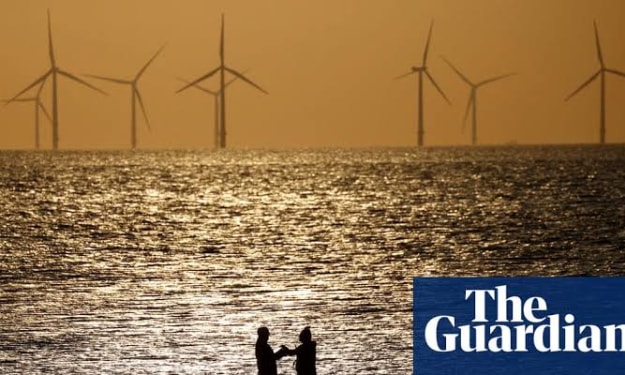
Britain must accelerate its transition toward renewable energy sources as geopolitical conflicts continue to drive global energy prices higher, according to leading energy analysts and climate policy experts. The warning comes as wars and political tensions across key energy-producing regions expose the vulnerability of countries still heavily reliant on imported fossil fuels. In recent years, the United Kingdom has made significant progress expanding renewable energy capacity, particularly in offshore wind and solar power. However, experts argue that the pace of the transition remains insufficient to shield the country from the volatility of international energy markets. Conflicts in the Middle East and Eastern Europe have demonstrated how quickly supply disruptions can translate into rising costs for households and businesses. Energy economists say the lesson from recent global crises is clear: the more dependent a country is on imported oil and gas, the more exposed it becomes to geopolitical shocks. Britain imports a substantial portion of its natural gas and refined fuel products, meaning instability in global supply chains can quickly affect domestic energy bills. During periods of international conflict, oil prices often spike due to fears that shipping routes or production facilities could be disrupted. Even rumors of attacks near key energy chokepoints — such as major pipelines or shipping lanes — can cause markets to react sharply. These fluctuations, analysts say, ultimately filter down to consumers through higher electricity and heating costs. Renewable energy sources offer a potential solution to this problem because they rely on domestic resources such as wind and sunlight rather than imported fuels. Once renewable infrastructure is built, operating costs remain relatively stable because there is no need to purchase fuel on global markets. The United Kingdom already operates some of the world’s largest offshore wind farms, and renewable energy now accounts for a significant share of the country’s electricity generation. Government data indicates that wind power alone has become one of the largest sources of electricity in Britain, particularly during periods of strong weather conditions. Despite this progress, energy specialists argue that further investment is essential. Expanding renewable generation capacity requires not only building more wind and solar farms but also upgrading the national electricity grid. A modernized grid would allow energy produced in remote offshore locations to be transmitted efficiently to cities and industrial centers. Energy storage is another critical piece of the puzzle. Because renewable sources like wind and solar are intermittent, large-scale battery systems or alternative storage technologies are needed to ensure a stable supply of electricity during periods when generation drops. Developing these systems will require both technological innovation and sustained financial investment. Some experts also emphasize the importance of diversifying the country’s renewable portfolio. While offshore wind remains a cornerstone of Britain’s energy strategy, solar power, tidal energy, and green hydrogen could also play important roles in the future energy mix. The government has already announced plans to increase renewable capacity dramatically over the next decade. Officials argue that reducing reliance on fossil fuels will not only strengthen national energy security but also help the country meet its climate targets. However, critics say policy uncertainty and slow planning approvals have sometimes delayed renewable projects. Industry leaders have urged authorities to streamline regulatory processes and provide clearer long-term incentives for investors. For many analysts, the link between energy security and climate policy has never been more obvious. Wars and geopolitical tensions have shown that fossil fuel dependence can create economic vulnerability, while domestically produced renewable energy offers greater stability. “The global energy system is changing,” said one energy policy researcher. “Countries that invest early in renewable infrastructure will be better protected from geopolitical shocks and price spikes.” As international conflicts continue to reshape global energy markets, the debate over Britain’s energy future is likely to intensify. For supporters of renewable power, the current moment represents both a warning and an opportunity — a chance to accelerate the transition toward a more secure and sustainable energy system.
By Fiaz Ahmed 4 days ago in Earth



Comments
There are no comments for this story
Be the first to respond and start the conversation.