
Whispers of the Earth
The Beautiful Birth of the Meadows

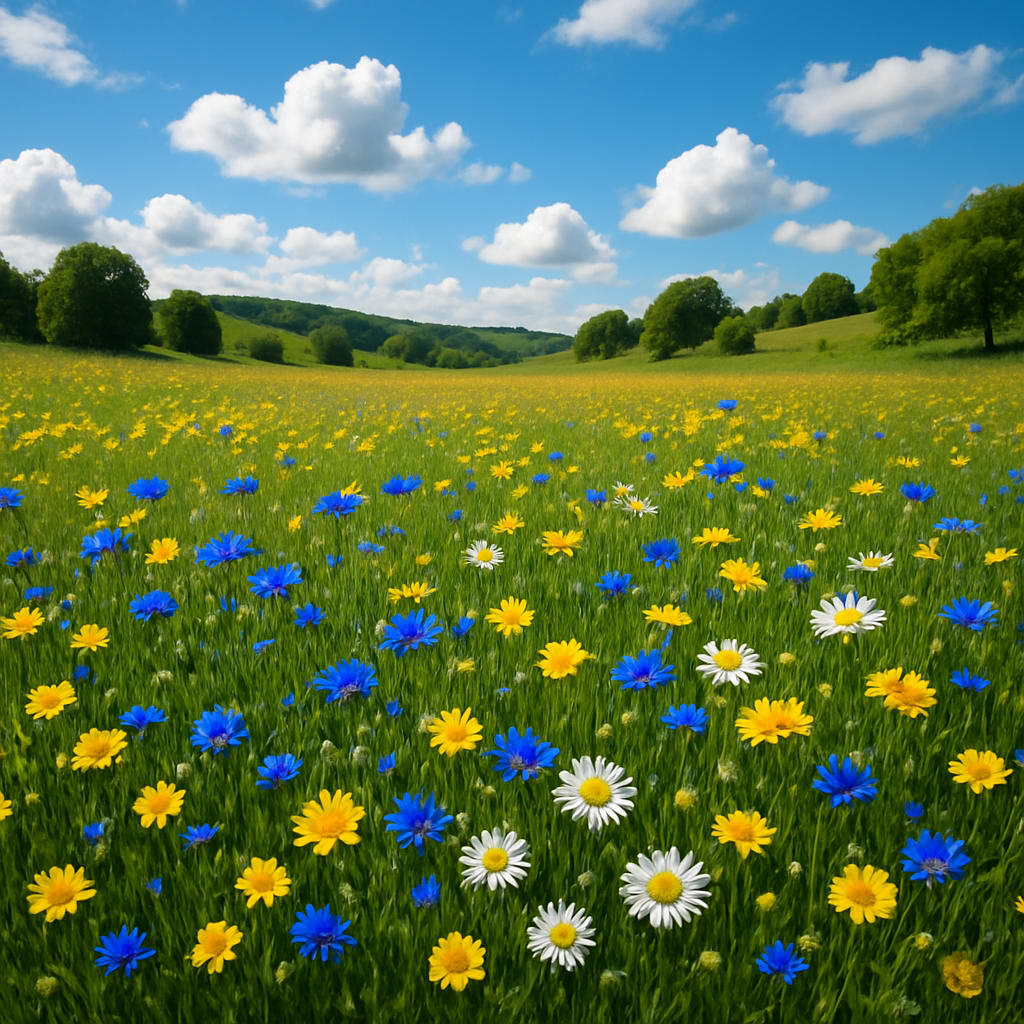
Long before the roads, buildings, and towns stretched across the land, there was only silence—and nature. The world was wild, free, and raw. Mountains touched the sky, rivers danced across the earth, and deep within the valleys, something magical was taking shape: the meadows.
The story of how the meadows were made begins millions of years ago, when great glaciers ruled the land. Towering sheets of ice carved their way through mountains, flattening valleys and leaving behind rich soil as they melted. These valleys, cradled between hills and peaks, became soft beds ready to grow life.
As the ice disappeared, sunlight returned in full. The earth warmed. The soil, moist from the melting glaciers, welcomed the wind. And the wind—gentle and patient—carried seeds across the land. Some came from trees. Others from faraway grasses, flowers, and herbs. Wherever the seeds landed, life began to stir.
Tiny green blades poked through the earth first. Then came wildflowers—red, blue, yellow, and violet. Bees buzzed, butterflies danced, and the sky seemed to smile as nature painted a living masterpiece across the land. Slowly but surely, meadows bloomed—open fields of color, life, and peace.
Over time, animals found their way to these new lands. Deer wandered into the meadows, drawn by the soft grass and gentle breezes. Birds built nests among the bushes and flowers. Rabbits dug little homes beneath the tall grass. Life in the meadows grew in harmony, each creature taking only what it needed and giving back in return.
The meadow was more than just land—it was a gift of balance. It held the warmth of the sun, the freshness of rain, and the whispering wisdom of the wind. Seasons came and went, and the meadow changed colors with each one. In spring, it was a canvas of blossoms. In summer, it turned golden and bright. In autumn, it wore deep reds and browns. And in winter, it rested beneath a soft white blanket of snow, preparing for rebirth.
But the meadows didn’t stay hidden forever.
Humans, too, discovered their beauty. The first people who saw them were travelers, shepherds, and nature-lovers. They stopped in awe—drawn by the peaceful charm and open sky. They made homes near the meadows, letting their animals graze in the rich fields. Children played, people rested, and songs were sung under the wide, blue sky.
For generations, people respected the meadows. They knew the land gave more than just grass—it gave peace to the soul. It was a place to breathe, to dream, to connect with something deeper than words.
But as time passed, not everyone remembered the meadow's sacred story. Machines arrived. Roads were built. Forests were cut down. Some meadows were lost, replaced by concrete and noise. The creatures that once danced freely grew quiet and rare.
Still, not all hope was lost.
In hidden corners of the world, the meadows remained—protected by nature’s will and the hearts of people who still believed in their magic. Farmers began planting wildflowers again. Conservationists worked to protect meadowlands. Hikers and artists found inspiration in their quiet grace. And every spring, the meadows returned, bursting with life and color, reminding the world that beauty begins with patience and respect.
Today, when you walk through a meadow, you are walking through a story written over thousands of years. Every blade of grass, every buzzing insect, and every flower swaying in the breeze carries the memory of creation. It tells us how the earth can heal itself, how beauty can grow from silence, and how something simple can become something sacred.
So next time you see a meadow, pause. Listen. The wind still carries the ancient song of the glaciers, the seeds, and the sun. It whispers the tale of how the meadows were made—not with machines or hands, but with time, peace, and the love of the earth itself.
About the Creator
Raza Ullah
Raza Ullah writes heartfelt stories about family, education, history, and human values. His work reflects real-life struggles, love, and culture—aiming to inspire, teach, and connect people through meaningful storytelling.
Keep reading
More stories from Raza Ullah and writers in Earth and other communities.
Echoes Among the Peaks
To many, mountains are just large pieces of earth—cold, high, and difficult to climb. But for those who seek something deeper, mountains are ancient teachers, silently watching the world for millions of years. This is the story of Amina, a young woman who left behind her busy city life to climb the towering peaks of the Karakoram range, searching not for adventure, but for peace.
By Raza Ullah7 months ago in Earth
Warships and Fighter Jets: What Is the ‘Massive’ US Armada on Its Way to Iran?
A Show of Force in a Volatile Region The United States has begun deploying what officials and analysts are describing as a “massive” military armada toward the Middle East, amid rising tensions with Iran. The movement includes aircraft carriers, guided-missile destroyers, submarines, and advanced fighter jets, signaling one of the most significant American military postures in the region in recent years.
By Aarif Lashariabout 8 hours ago in Earth
Why Earth is round why not plan?
For thousands of years, humans have wondered about the true shape of the world beneath their feet. Early civilizations imagined many possibilities: a flat disc, a giant mountain, or even a floating island. However, careful observation of nature, the sky, and the seas gradually revealed something remarkable — Earth is round. Not perfectly like a ball, but very close to a sphere, slightly flattened at the poles. This shape is called an oblate spheroid. The evidence for this conclusion comes from ancient observations, modern science, and direct images from space.
By USA daily update 4 days ago in Earth


Comments (1)
Meadow.