
Warships and Fighter Jets: What Is the ‘Massive’ US Armada on Its Way to Iran?
As tensions with Tehran escalate, Washington deploys aircraft carriers, warships, and fighter jets to the Middle East — but is this about deterrence, defense, or preparation for conflict?
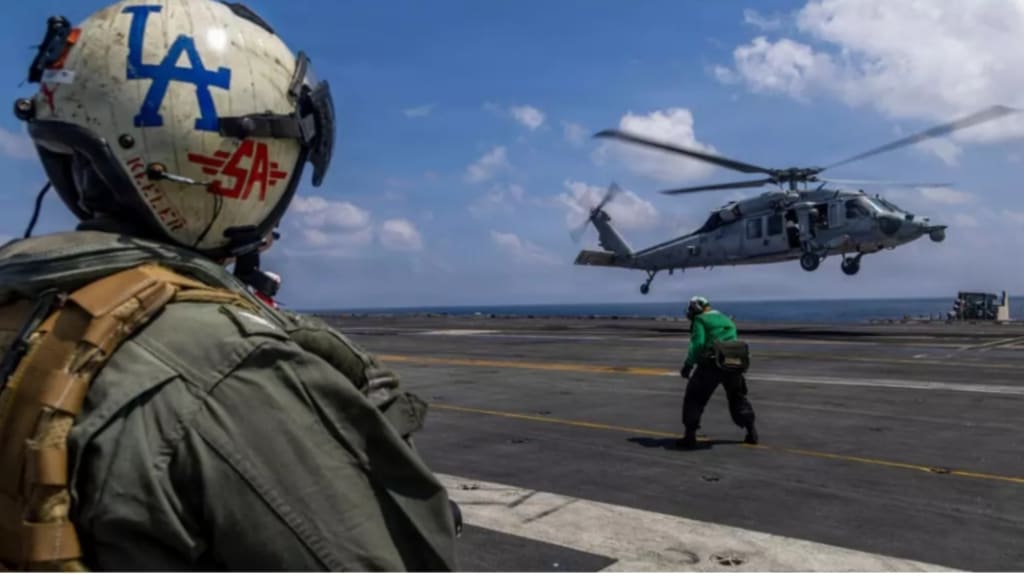
A Show of Force in a Volatile Region
The United States has begun deploying what officials and analysts are describing as a “massive” military armada toward the Middle East, amid rising tensions with Iran. The movement includes aircraft carriers, guided-missile destroyers, submarines, and advanced fighter jets, signaling one of the most significant American military postures in the region in recent years.
While US defense officials insist the deployments are defensive and deterrent in nature, the scale and timing have raised urgent questions across the world: Why now, what exactly is being sent, and how close is the region to open conflict?
What Is Being Deployed?
According to Pentagon briefings and defense analysts, the US military build-up includes several key components:
Aircraft Carriers
At the heart of the deployment are US Navy aircraft carrier strike groups, each carrying dozens of fighter jets, helicopters, and surveillance aircraft. These floating airbases allow the US to project power rapidly without relying on regional airfields.
Warships and Submarines
Guided-missile destroyers and cruisers equipped with Aegis missile defense systems are also part of the armada. These vessels can intercept ballistic missiles, launch long-range cruise missiles, and provide air defense for allies and shipping lanes. Nuclear-powered submarines, often undisclosed in number, add stealth strike capability.
Fighter Jets and Bombers
Advanced aircraft such as F-35 stealth fighters, F-15s, and F-16s are being repositioned to bases across the region. In some cases, long-range strategic bombers have also been placed on heightened readiness.
Together, these assets represent a formidable military presence capable of rapid escalation if ordered.
Why Now? Rising Tensions With Iran
The deployment comes amid escalating tensions between Iran and the United States, fueled by a combination of regional conflicts, proxy warfare, and stalled diplomacy over Iran’s nuclear program.
Key triggers include:
Iranian-backed militias launching attacks on US forces and allies
Threats to commercial shipping in the Red Sea and Gulf of Oman
Iran’s expanding nuclear enrichment activities
Ongoing wars in Gaza and regional spillover risks
US officials argue that the armada is intended to deter Iran from direct confrontation and prevent further destabilization of the Middle East.
Deterrence or Preparation for War?
Washington maintains that the deployment is not a prelude to war, but rather a demonstration of resolve. The logic is simple: overwhelming force discourages aggression.
However, critics warn that such large-scale deployments can be misinterpreted, increasing the risk of miscalculation. In a region where tensions are already high, even a minor incident — such as a drone strike or naval encounter — could spiral rapidly.
Military analysts note that while deterrence has historically prevented full-scale conflict, it also places both sides on a hair-trigger footing.
Iran’s Response and Regional Reactions
Iranian officials have condemned the US military buildup as provocative, accusing Washington of destabilizing the region. State media has framed the armada as evidence of American aggression, while Iranian military leaders have warned that US assets would be vulnerable in the event of conflict.
Meanwhile, regional allies such as Israel, Saudi Arabia, and Gulf states are closely watching developments. Some quietly welcome the US presence as a security guarantee, while others fear being drawn into a broader confrontation.
Strategic Importance of the Region
The Middle East remains strategically vital for several reasons:
Energy security: A significant portion of the world’s oil and gas flows through nearby waterways
Global trade: Shipping routes like the Strait of Hormuz are critical chokepoints
Counterterrorism: US forces operate across the region to counter extremist groups
Great power competition: Russia and China are expanding their influence
Any disruption could have far-reaching economic and geopolitical consequences well beyond the region.
The Role of Signaling and Messaging
Military deployments are as much about messaging as combat readiness. By sending carriers and jets, the US signals both capability and intent — not only to Iran, but to allies and adversaries worldwide.
The challenge lies in balancing strength with restraint. Too little response risks emboldening adversaries; too much risks escalation.
Defense officials stress that diplomatic channels remain open, even as military assets move into place.
What Comes Next?
Much depends on actions taken in the coming weeks. Key questions include:
Will Iran scale back or intensify its regional activities?
Can diplomatic efforts revive talks on nuclear and regional security issues?
Will US allies push for de-escalation or stronger military coordination?
For now, the armada serves as both a shield and a warning — a reminder of how quickly tensions in the Middle East can draw in global powers.
Conclusion
The arrival of US warships and fighter jets near Iran marks a critical moment in an already fragile geopolitical landscape. While framed as a deterrent, the sheer scale of the deployment underscores the seriousness of current tensions.
Whether this “massive” armada succeeds in preventing conflict or becomes a flashpoint itself will depend on restraint, communication, and decisions made on all sides. In a region where history shows how easily crises can escalate, the world is watching closely.
About the Creator
Keep reading
More stories from Aarif Lashari and writers in Earth and other communities.
No 1 for Nuns! Níall McLaughlin Is Architecture’s Discreet Daredevil
Níall McLaughlin: Redefining Architectural Boundaries Níall McLaughlin has long been known as a master of understated yet daring design. From residential homes to cultural landmarks, McLaughlin’s work demonstrates a unique ability to merge functionality with artistry, creating spaces that are both practical and visually arresting.
By Aarif Lasharia day ago in Earth
"That Is a Whole Brigade of Red Flags": Adults Over 30 Reveal the Things Every Younger Person Should Know
Growing up can feel like navigating a maze without a map. Mistakes, missteps, and surprises are part of the journey, but guidance from those who’ve already traveled the path can be invaluable. Recently, a trend has emerged where adults over 30 are sharing the key lessons they wish younger people knew—covering everything from relationships and finances to career choices and personal well-being. The consensus? Life is complicated, but awareness can prevent some of the biggest mistakes. Relationships: Spotting the Red Flags Early One of the most common themes in these shared insights is relationships. Adults repeatedly emphasize the importance of recognizing “red flags” early—behaviors or patterns that signal potential trouble in romantic partnerships or friendships. Comments from social media and discussion threads include advice like: “That person constantly dismisses your feelings? Red flag.” “If someone only shows up when it’s convenient for them, don’t ignore it.” “Pay attention to how someone treats people around them, not just how they treat you.” One adult summed it up bluntly: “That is a whole brigade of red flags. Don’t brush it off because it’s easier to stay.” These warnings highlight that emotional awareness and self-respect are essential skills that often come with experience—but younger people can learn them sooner. Financial Wisdom: Learn It Early Another area where older adults wish they had shared knowledge: money management. Many people over 30 reflect on early financial mistakes, from unnecessary debt to poor saving habits. Key advice includes: Start saving as early as possible, even if it’s a small amount. Understand the impact of credit cards and interest rates. Don’t fall into the “keeping up with friends” trap—lifestyle inflation can be deadly. One adult noted, “I wish someone told me that your 20s are for building security, not impressing people. Your future self will thank you.” The pattern is clear: financial literacy is a skill that pays dividends long before it becomes urgent. Career and Work-Life Balance Adults over 30 also emphasize lessons about work, careers, and ambition. Many regret spending too much time chasing prestige or external validation, rather than finding roles that match their values or talents. Tips shared by experienced workers include: Learn to say no to toxic work environments. Don’t ignore mental health in pursuit of career success. Seek mentorship early, but also trust your own judgment. One common refrain: “Your first job is a learning experience, not a lifetime commitment. Don’t be afraid to pivot.” These insights suggest that career strategy isn’t just about climbing the ladder—it’s about long-term fulfillment and avoiding burnout. Health and Well-Being: Habits Matter Health is another domain where older adults wish they had more guidance in their 20s. Many stress the importance of establishing healthy habits early, rather than assuming youth will protect them indefinitely. Practical advice includes: Exercise regularly, even moderately, to avoid long-term issues. Develop a routine around sleep and nutrition. Address mental health proactively; therapy is not just for crises. An adult shared, “You can’t bank youth. Bad habits compound faster than you think.” These messages reinforce that health is not just physical but also mental, and early attention can prevent decades of struggle. Emotional Intelligence and Communication Another recurring lesson involves emotional intelligence and communication skills. Adults note that misunderstandings, conflict, and resentment often arise from poor communication, something younger people might underestimate. Some advice includes: Learn to express feelings without blame or aggression. Recognize your own triggers before reacting. Practice empathy and active listening—it pays off in friendships, work, and romantic relationships. The emphasis here is clear: emotional maturity can prevent repeated mistakes and improve both personal and professional relationships. Social Media and Perception Many older adults also caution about social media pitfalls. In a world dominated by curated images and constant comparison, it’s easy for younger people to feel inadequate or chase validation. Key tips include: Don’t measure your worth by likes or followers. Take breaks from social media when needed. Remember that people rarely post their struggles online. One reflection captures it perfectly: “Everyone looks like they have it together online, but life isn’t filtered. Don’t let comparison steal your confidence.” The Common Thread: Awareness Saves Time Across these lessons, one theme stands out: awareness is power. Adults over 30 are essentially saying that many mistakes are preventable if younger people pay attention to patterns, trust intuition, and act with foresight. Whether it’s spotting red flags, managing finances, choosing a career, or caring for health, small actions early in life can prevent long-term struggles. The shared wisdom is not about fear or pessimism—it’s about preparing for reality while still enjoying youth. Why Younger People Should Listen Learning from others’ experiences can shorten the trial-and-error period of early adulthood. Younger adults are not expected to avoid mistakes completely, but awareness can: Reduce unnecessary hardship Improve decision-making in relationships, finances, and careers Build emotional resilience Encourage self-reflection and intentional living Adults over 30 often wish they could hand these lessons over like a cheat sheet, highlighting that some knowledge is timeless. Final Thoughts The collective advice from adults over 30 reminds younger people that life is full of lessons—some learned the hard way, others passed down through guidance. Red flags in relationships, financial prudence, career choices, health habits, and emotional intelligence are all areas where early awareness can make a significant difference. In the end, the takeaway is clear: listen, reflect, and take action. Life won’t wait, but the wisdom of those who’ve already lived through its challenges can help younger generations navigate the path more smoothly. By paying attention to the “brigade of red flags” and heeding experienced advice, younger people can make more informed choices, avoid repeated mistakes, and approach adulthood with confidence.
By Muhammad Hassan4 days ago in Earth




Comments
There are no comments for this story
Be the first to respond and start the conversation.