
Where Will We Go After Earth Becomes Uninhabitable?
Where Will We Go After Earth Becomes Uninhabitable?


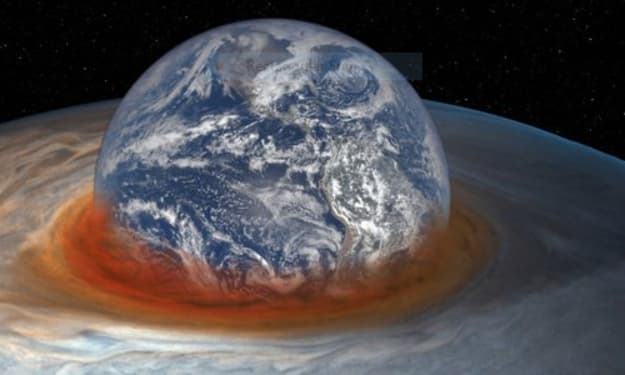
The potential scenario of Earth becoming uninhabitable is a concern for humanity, but it's essential to note that this outcome is not inevitable, and concerted efforts are being made to address environmental challenges and ensure the long-term habitability of our planet. However, discussing the hypothetical situation, if Earth were to become truly uninhabitable due to various factors like catastrophic climate change, extreme pollution, or cosmic events, the human race might have to consider alternative options for survival.
What is the concept of space colonization?
Space colonization (also called space settlement, space humanization, or space habitation) is the concept of permanent, autonomous (self-sufficient) human habitation of locations outside Earth. It is a major theme in science fiction, as well as a long-term goal of various national space programs.
Space Colonization: Space colonization would eventually allow a large portion of the human population to move to other planets, preventing overpopulation and its negative effects. Another valuable benefit of space colonization is the abundance of natural resources available in space.
One possibility is establishing colonies on other celestial bodies within our solar system, such as the Moon or Mars. These locations have been considered potential sites for human settlement due to their proximity to Earth and available resources.
Generation Ships: Definition. According to Hein et al., a "generation ship" is a spacecraft on which a crew is living on-board for at least several decades, such that it comprises multiple generations.Another concept involves constructing massive interstellar spacecraft known as generation ships. These self-sustaining vessels could carry a community of people on a journey to another habitable exoplanet in a different star system. However, this would require an extraordinary level of technological advancement and a journey spanning generations.
What is an example of a generation ship?
Arthur C. Clarke's Rendezvous with Rama (1973) is arguably the best-known example of a generational ship in science fiction. Unlike other fictional treatments of the concept, the vessel in this story was extra-terrestrial in origin!
Orbital Habitats:A space habitat (also called a space settlement, space colony, spacestead, space city, orbital habitat, orbital settlement, orbital colony, orbital stead or orbital city) is a more advanced form of living quarters than a space station or habitation module, in that it is intended as a permanent settlement or green . Instead of settling on another planet's surface, humanity might develop large space stations or orbital habitats. These structures could be constructed in Earth's orbit or around other celestial bodies, providing a controlled environment for human habitation.
Terraforming: Terraformed; terraforming; terraforms. transitive verb. : to transform (a planet, moon, etc.) so that it is suitable for supporting human life. But instead of waiting for natural events to change the martian climate, they are suggesting that humans attempt to "terraform" Mars—to make it more Earth-like.If we encounter a planet or moon with an inhospitable environment, efforts to terraform it could be considered. Terraforming involves modifying a planet's conditions to make it suitable for human life, such as adjusting the atmosphere, temperature, and introducing life-supporting ecosystems.
Underwater Habitats:Underwater habitats are underwater structures in which people can live for extended periods and carry out most of the basic human functions of a 24-hour day, such as working, resting, eating, attending to personal hygiene, and sleeping. Earth's oceans offer a potentially viable habitat for humans in the future. Advanced underwater habitats could be developed to provide shelter from harsh surface conditions while also allowing access to resources from the ocean depths.
Digital Consciousness:The idea that “digital consciousness” is possible is based on a philosophy known as functionalism. According to functionalism, our minds are just functions. For example, although you can add 2+2=4 in your mind, a digital calculator can do the same thing. In a more speculative scenario, future technological advancements might allow humans to transfer their consciousness into digital form, existing within virtual realities or artificial intelligence systems.
It's important to emphasize that while contemplating these options is intriguing from a scientific and speculative standpoint, our primary focus should be on preserving and safeguarding the habitability of Earth. The challenges and complexities associated with interstellar travel or terraforming are immense and would require an unprecedented level of global cooperation and technological advancement. Therefore, it's crucial to address current environmental issues and work together to ensure a sustainable future for our planet.
About the Creator
JHAY EM
Why working out is great for health, but not for weight loss, explained in five minutes.
Are you ready to start losing weight at home?
Ways to Lose Weight Without Exercise.
World-largest: China’s 792 million kWh compressed air energy station now fully operational
Britain must accelerate its transition toward renewable energy sources as geopolitical conflicts continue to drive global energy prices higher, according to leading energy analysts and climate policy experts. The warning comes as wars and political tensions across key energy-producing regions expose the vulnerability of countries still heavily reliant on imported fossil fuels. In recent years, the United Kingdom has made significant progress expanding renewable energy capacity, particularly in offshore wind and solar power. However, experts argue that the pace of the transition remains insufficient to shield the country from the volatility of international energy markets. Conflicts in the Middle East and Eastern Europe have demonstrated how quickly supply disruptions can translate into rising costs for households and businesses. Energy economists say the lesson from recent global crises is clear: the more dependent a country is on imported oil and gas, the more exposed it becomes to geopolitical shocks. Britain imports a substantial portion of its natural gas and refined fuel products, meaning instability in global supply chains can quickly affect domestic energy bills. During periods of international conflict, oil prices often spike due to fears that shipping routes or production facilities could be disrupted. Even rumors of attacks near key energy chokepoints — such as major pipelines or shipping lanes — can cause markets to react sharply. These fluctuations, analysts say, ultimately filter down to consumers through higher electricity and heating costs. Renewable energy sources offer a potential solution to this problem because they rely on domestic resources such as wind and sunlight rather than imported fuels. Once renewable infrastructure is built, operating costs remain relatively stable because there is no need to purchase fuel on global markets. The United Kingdom already operates some of the world’s largest offshore wind farms, and renewable energy now accounts for a significant share of the country’s electricity generation. Government data indicates that wind power alone has become one of the largest sources of electricity in Britain, particularly during periods of strong weather conditions. Despite this progress, energy specialists argue that further investment is essential. Expanding renewable generation capacity requires not only building more wind and solar farms but also upgrading the national electricity grid. A modernized grid would allow energy produced in remote offshore locations to be transmitted efficiently to cities and industrial centers. Energy storage is another critical piece of the puzzle. Because renewable sources like wind and solar are intermittent, large-scale battery systems or alternative storage technologies are needed to ensure a stable supply of electricity during periods when generation drops. Developing these systems will require both technological innovation and sustained financial investment. Some experts also emphasize the importance of diversifying the country’s renewable portfolio. While offshore wind remains a cornerstone of Britain’s energy strategy, solar power, tidal energy, and green hydrogen could also play important roles in the future energy mix. The government has already announced plans to increase renewable capacity dramatically over the next decade. Officials argue that reducing reliance on fossil fuels will not only strengthen national energy security but also help the country meet its climate targets. However, critics say policy uncertainty and slow planning approvals have sometimes delayed renewable projects. Industry leaders have urged authorities to streamline regulatory processes and provide clearer long-term incentives for investors. For many analysts, the link between energy security and climate policy has never been more obvious. Wars and geopolitical tensions have shown that fossil fuel dependence can create economic vulnerability, while domestically produced renewable energy offers greater stability. “The global energy system is changing,” said one energy policy researcher. “Countries that invest early in renewable infrastructure will be better protected from geopolitical shocks and price spikes.” As international conflicts continue to reshape global energy markets, the debate over Britain’s energy future is likely to intensify. For supporters of renewable power, the current moment represents both a warning and an opportunity — a chance to accelerate the transition toward a more secure and sustainable energy system.
By Fiaz Ahmed 5 days ago in Earth
The Politics of Playing Dress-Up
Well, to start off I'd like to say a happy world book day to all who celebrate. I know I haven't really posted anything on my socials about it but I'm not a jubilant kind of person. I lay low most of the time. Let's start off with a popular anecdote from the vaults...
By Annie Kapur5 days ago in Geeks


Comments
There are no comments for this story
Be the first to respond and start the conversation.