
Where the Sun Learned to Rest
A Story of Sunset, Mountains, and the Quiet Conversations of Time


Every evening, when the world began to loosen its grip on noise and hurry, the mountains waited.
They did not wait the way humans wait—tapping feet, glancing at clocks, growing restless with impatience. The mountains waited with the deep, unshakable patience of things that had watched oceans arrive and disappear, forests rise and fall, and generations pass like brief breaths. They waited for the sunset.
The sun had traveled a long way to reach them.
All day, it had marched across the sky with confidence, spilling gold over rivers, warming the backs of grazing animals, and coaxing flowers to open their shy faces. It had shone on cities of glass and steel, on dusty roads and endless fields. Everywhere it went, life stirred and responded. Yet by the time it reached the edge of the world where the mountains stood, the sun was tired.
Its light softened, its blazing heat mellowed into warmth. The sun slowed its descent, as if reluctant to leave, as if it knew that something important always happened here.
The mountains rose like ancient guardians, their peaks jagged and proud, their slopes layered with pine forests, stone, and snow. Some peaks wore white crowns that never melted, even in summer, while others bore the scars of time—cracks, shadows, and quiet valleys carved by centuries of wind and water.
When the sun approached, the mountains greeted it without words. They had no need for speech; they spoke in shadows and silence.
As the sun began to sink, its light spilled across the mountainsides, turning gray stone into molten gold and icy snow into soft pink fire. Shadows stretched long and slow, filling the valleys like dark rivers. The mountains seemed to breathe as the light touched them, each ridge catching a different hue—amber, rose, violet, and finally a deep, royal purple.
“Welcome back,” the mountains seemed to say.
The sun responded by lingering.
It painted the sky with colors that no artist could fully capture. Clouds blushed with crimson and orange, their edges glowing as if lit from within. Birds paused mid-flight, silhouetted against the burning horizon. Even the wind seemed to slow, unwilling to disturb the fragile beauty of the moment.
Long ago, legend said, the sun had once asked the mountains why this place felt different from all others.
“You shine everywhere,” the mountains had answered, “but here, you are remembered.”
The sun had not understood at first. It shone on countless lands, after all. Why would these towering stones remember it more than anyone else?
But over time, the sun began to notice.
Every sunset left its mark on the mountains. Light settled into cracks and crevices, warming stones that had been cold since dawn. Colors clung to the slopes long after the sun dipped below the horizon, as if the mountains refused to let go too quickly. Even when night fell, traces of the sunset remained—a faint glow, a memory etched into rock.
Humans often gathered at the base of the mountains to watch this daily miracle. Travelers stopped their journeys. Shepherds rested beside their flocks. Children pointed at the sky, their voices hushed without being told. Lovers stood shoulder to shoulder, believing—if only for a moment—that time itself had paused for them.
None of them realized that the sunset was not merely an ending.
It was a conversation.
As the sun descended, it shared the stories of the day with the mountains: of oceans glittering under its gaze, of deserts shimmering with heat, of forests whispering in green harmony. The mountains listened, steady and unmoving, offering in return their own tales—of ancient earthquakes, of glaciers that once ruled their heights, of stars they had watched long before humans learned to name them.
“You carry the world on your light,” the mountains seemed to tell the sun.
“And you carry time in your silence,” the sun replied.
At last, the sun slipped behind the highest peak, its final rays clinging stubbornly to the summit as if holding a farewell embrace. The sky dimmed, cooling from fire to ash to deepening blue. Stars emerged one by one, timid at first, then bold.
Night arrived.
Yet the mountains did not grow lonely.
They held the warmth of the sun within their stone hearts, releasing it slowly into the evening air. The valleys filled with quiet, broken only by the distant call of an owl or the soft rush of a hidden stream. Moonlight traced silver lines along ridges where sunlight had danced only moments before.
Far below, a traveler set up camp and looked back at the darkened peaks. He had arrived too late to see the sunset, and regret tugged at him. But as he watched, he noticed something strange—the mountains still glowed faintly, as if remembering the sun.
He smiled, realizing that some things never truly leave; they simply change form.
High above, beyond the reach of sight, the sun continued its journey, already preparing to rise somewhere else. Yet it carried the mountains with it—not in shape or stone, but in memory. It knew that when the day was done again, when its strength waned and its colors softened, the mountains would be waiting.
They always were.
And so, day after day, the sun returned to the mountains at evening—not to disappear, but to rest, to share, and to be understood. The sunset was not an ending written in darkness, but a promise painted in light: that even as things fall away, beauty remains; even as day becomes night, warmth can linger; and even as time moves forward, some meetings are eternal.
In the quiet afterglow, the mountains stood tall, holding the last whispers of gold against the coming dark, while the world below slept—unaware that above them, an ancient friendship had once again been renewed.
About the Creator
Amid European Energy Fears, Coal Creeps Back Into Favour
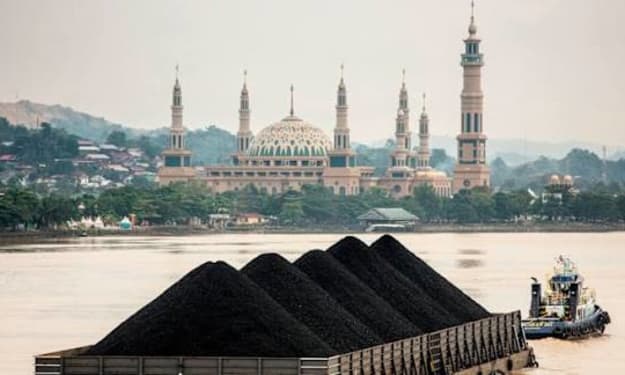
Europe’s energy landscape is shifting as fears over supply security and rising costs drive some countries back toward coal, a fossil fuel many had hoped to phase out entirely. The resurgence comes amid heightened tensions over energy imports, particularly natural gas, as the war in Ukraine and geopolitical friction with Russia have exposed vulnerabilities in the continent’s energy systems. Germany, long seen as a leader in renewable energy adoption, recently announced plans to keep several coal-fired power plants online longer than initially scheduled. Officials cited winter energy demands and the need to maintain a reliable baseload while natural gas supplies remain constrained. Similar considerations are emerging in Poland, the Czech Republic, and other nations that rely heavily on imported energy. “The energy crisis has forced governments to make difficult choices,” said Dr. Klaus Weber, an energy policy analyst at European Energy Institute. “While the climate goals remain important, ensuring citizens have access to electricity and heat this winter has become a more immediate priority.” The return to coal is not simply a response to price spikes. Energy security has become a pressing concern after European reliance on Russian gas pipelines was disrupted, prompting countries to diversify sources and store reserves. Coal, abundant in Europe and globally traded at competitive prices, provides a short-term buffer against shortages. At the same time, rising electricity costs have placed enormous pressure on households and industries. According to recent statistics from the International Energy Agency, European electricity prices surged by nearly 40% in the past year, prompting governments to subsidize energy bills and rethink fuel strategies. Coal-fired generation, though more polluting, offers predictable output and can be ramped up quickly to stabilize grids. Renewable energy advocates have expressed concern that this shift could undermine Europe’s climate leadership. Coal emits roughly twice the CO₂ per unit of energy compared to natural gas, posing challenges to achieving net-zero targets. Critics warn that extending coal use—even temporarily—risks locking in infrastructure that is inconsistent with long-term decarbonization goals. “Every megawatt-hour produced from coal is a step backward for Europe’s climate ambitions,” said Maria López, senior campaigner at Greenpeace Europe. “Governments need to pair any temporary measures with accelerated renewable deployment to avoid backsliding on emissions reductions.” Some nations are attempting to balance these pressures by deploying cleaner coal technologies. Advanced coal plants with carbon capture and storage (CCS) can reduce emissions by capturing a significant portion of CO₂ before it enters the atmosphere. Germany and the Netherlands are investing in pilot projects to integrate CCS into existing power plants, though critics note that large-scale implementation remains costly and complex. Analysts suggest that Europe’s return to coal is likely to be temporary. Once gas supplies stabilize and renewable infrastructure expands, reliance on coal is expected to decline. Yet the episode has highlighted the fragility of energy systems in the face of geopolitical shocks and the tension between short-term energy security and long-term climate goals. Meanwhile, citizens and businesses are feeling the immediate impact. Many households in Eastern and Central Europe face sharply higher heating costs this winter, and industrial manufacturers are warning that energy-intensive production could be scaled back if prices remain high. Policymakers are caught between the urgent need to maintain supply and the imperative to meet climate commitments. The European Union is working on strategies to mitigate these challenges. Measures include expanding LNG import terminals, investing in cross-border electricity interconnectors, and boosting renewable energy capacity. However, the gap between energy supply and demand, exacerbated by geopolitical tensions, means coal may remain a stopgap solution for months to come. Europe’s cautious return to coal underscores a broader reality: energy transitions are never linear. Even as governments and citizens push toward a greener future, external shocks—conflict, supply disruptions, and price volatility—can temporarily alter priorities. The key challenge for policymakers will be ensuring that short-term reliance on fossil fuels does not derail long-term climate ambitions.
By Fiaz Ahmed 2 days ago in Earth
The Politics of Playing Dress-Up
Well, to start off I'd like to say a happy world book day to all who celebrate. I know I haven't really posted anything on my socials about it but I'm not a jubilant kind of person. I lay low most of the time. Let's start off with a popular anecdote from the vaults...
By Annie Kapur4 days ago in Geeks



Comments
There are no comments for this story
Be the first to respond and start the conversation.