
When You Hear Patagonia, You Probably Think About Clothing; And That Is Utterly Wrong.
Here You Have 7 Myths & The True Facts You Should Know About The Real Patagonia.

Recently, Yvon Chouinard, founder and majority owner of Patagonia, dominated the headlines by donating almost all his wealth at once in a world-changing investment in climate action.
But no one headline spoke about the real Patagonia and its true meaning.
Here you have 7 Myths and The True Facts that you should know about the Real Patagonia:
1- Patagonia is not a Brand. Or a Country. Or a Mountain.
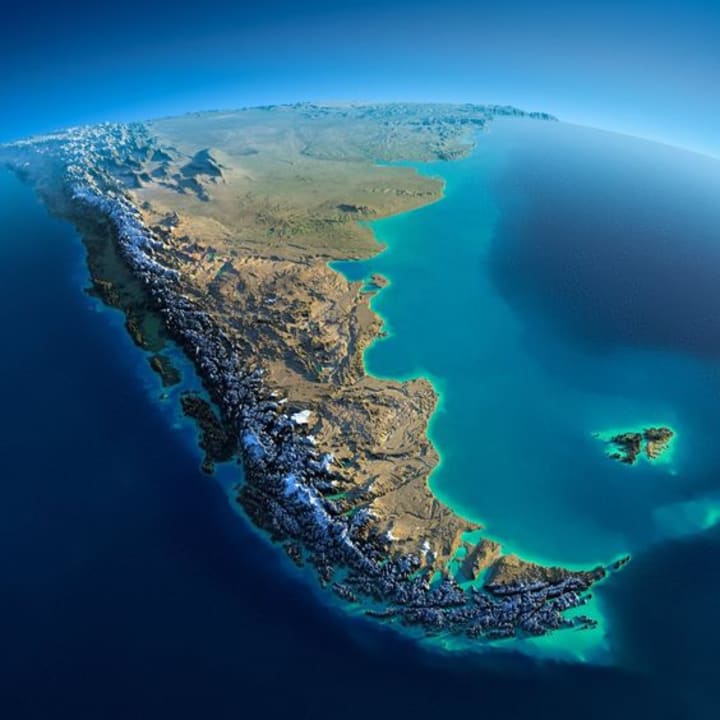
Patagonia is a large geographical region that encompasses the southern end of South America as part of two countries: Argentina and Chile.
And it is one large and wide region.
Draw a straight line from Yosemite National Park to the border between Canada and Alaska. That is how long Patagonia is.
Wide-wise, it is subdivided into two areas:
- The Andean Zone to the WEST: includes the southern section of the Andes Mountain Range to the coast with the Pacific Ocean, with a humid climate, temperate rainforests and lots of mountains, lakes and glaciers.
- The Extra-Andean zone to the EAST: includes the Patagonian plateau to the Atlantic coast, with a desertic climate, steppes and bushy hills.
2- Nobody lives in Patagonia.
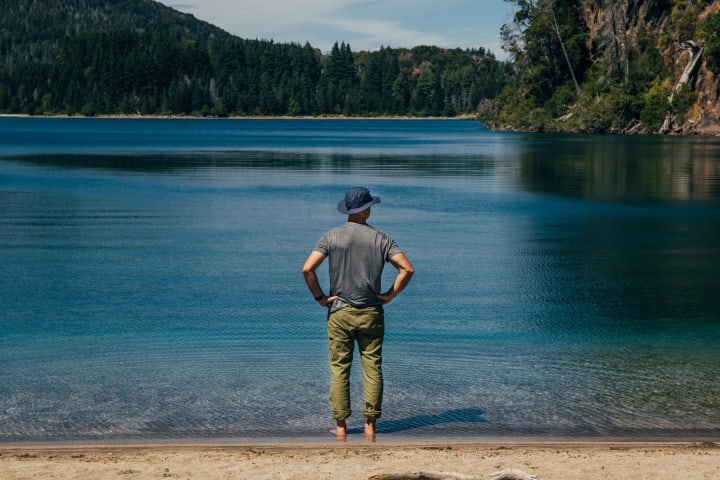
Patagonia has an area of 659,045 square miles with a population of 2,410,804 inhabitants. That equals 3.65 persons per square mile.
Mexico has a similar size, but its density of population is 167 persons per square mile.
Only 48 times higher.
But still, people live here.
3- Patagonia is all about forests, mountains and high-altitude lakes.

Now THAT is a great myth.
The Andes Mountain Range, its peaks, and glacial lakes are clearly the highlight of Patagonia. OK.
But almost ¾ of the region is steppe-like plains with less than 700 mm of water a year. Take a look at this map and figure it out yourself.
Not a lot of green there, isn´t it?
4- Patagonia = I´m always cold

Yes, Patagonia as a whole has a temperate to cold climate.
Now let's remember that its territory is as widespread as going from Yosemite National Park to Alaska but in the southern hemisphere: temperatures decrease markedly from north to south. Thus, on average, southern Patagonia has a temperature of up to 50º (10℃) less than the north.
Patagonia has four well-differentiated seasons meaning is not freezing cold year-round.
On the contrary, lake swimming is a must to cool down in the summertime.
Temperatures in Northern Patagonia usually exceed 68º (20℃) and days above 95º (35℃); and in Southern Patagonia, though not as warm, temperatures stay around 59º (15℃) but may reach 77º (25℃).
Conclusion: no need to wear a puffy jacket and balaclava in the summer season.
Swimsuit, sunglasses and hat, if I may suggest.
5- Print the logo, set the myth.

The highest mountain in Patagonia is NOT the then-turned-brand-logo Mount Fitz Roy and its 11,171 ft (3,405 m).
The highest mountain is in Northern Patagonia and is the least famous Domuyo Volcano at 15,426 ft (4,702 m).
Marketing done right. Misinformation gone wild.
6- It is really difficult to travel to Patagonia.

26 Airports.
That is the total number of airports in Patagonia, between Argentina and Chile.
And you know what? Is also the same number of airports in Mexico.
Not too bad for a region with a density of population 48 times lower, isn´t it?
7- Fernando de Magallanes discovered Patagonia in 1520
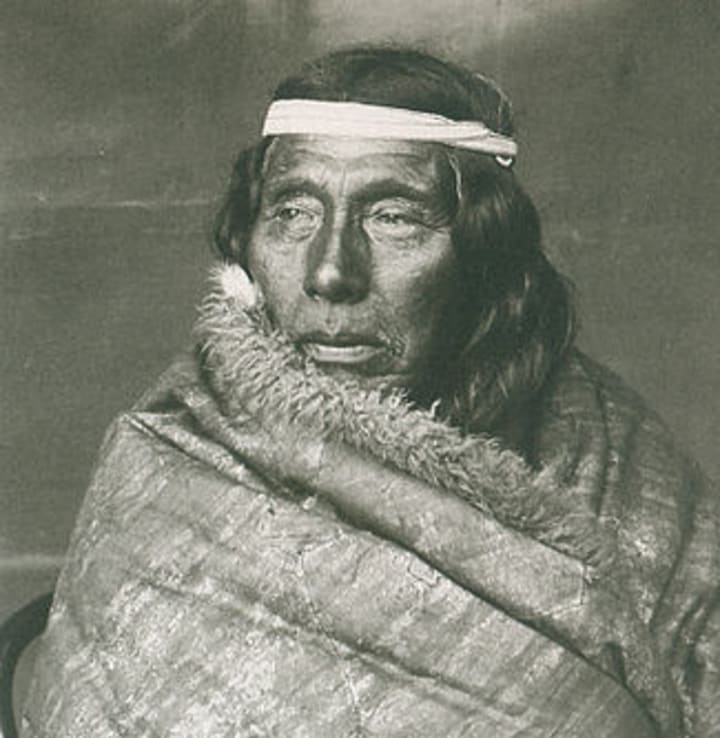
Magallanes and his crew named it Patagonia (named it is the keyword there). But because he met people here: the Tehuelches. This native population seemed to have really big feet, all wrapped up in animal skin. That is why Magallanes and his reporter, Antonio Pigafetta, said they were "Patagones", meaning in Portuguese: big-footed.
So Tehuelches were already here. And some archaeological findings in the area dated to at least the 10th millennium BC.
Nothing to discover for the Portuguese expeditioner.
BONUS TRACK: Yes, there is wi-fi in Patagonia.
----------------------------------------------------------------------------------------
There's more in traveling than just being in motion.
If you want to know more about Patagonia, hook us up on:
About the Creator
Ricky Lanusse
- Patagonian skipping stones professional
Keep reading
More stories from Ricky Lanusse and writers in Earth and other communities.
Spain’s Apocalyptic Floods Expose the Spread of Extreme Weather Denial
It was a typical Tuesday evening for Francisco De Orta, an Argentinian friend of mine who works as a barber in Valencia. Little did Francisco know that a single missed appointment would be the difference between life and death. Because, as he headed back home earlier than usual, the streets of La Torre, Valencia, were just beginning their terrifying transformation into raging rivers.
By Ricky Lanusseabout a year ago in Earth
The Bloop
NOAA detected an ultra-low frequency sound in 1997 that matched no known animal or geological phenomenon In the summer of 1997, an array of underwater microphones operated by the National Oceanic and Atmospheric Administration (NOAA) detected an extremely powerful ultra-low-frequency sound originating from a remote point in the South Pacific Ocean west of South America, and the sound, which was nicknamed "the Bloop" because of the blooping noise it made when sped up to be audible to human ears, was so loud that it was detected on sensors over 3,000 miles apart, making it the loudest underwater sound of unknown origin ever recorded, and the frequency pattern and characteristics of the Bloop did not match any known geological phenomena like volcanic activity or earthquakes, but intriguingly it did show characteristics similar to sounds produced by living creatures, specifically matching the frequency profile of sounds made by marine animals, though the Bloop was many times louder than the loudest sounds produced by the largest known animal, the blue whale, leading to speculation that it might have been generated by an enormous unknown marine animal far larger than any creature known to science.
By The Curious Writerabout 9 hours ago in Earth


Comments
There are no comments for this story
Be the first to respond and start the conversation.