
The Human Side of the Storm: How Weather Radar Changed the Way I See the Sky
A reflection on how a cold machine built to track storms has quietly shaped our sense of safety, curiosity, and collective anxiety in an age of constant forecasting.

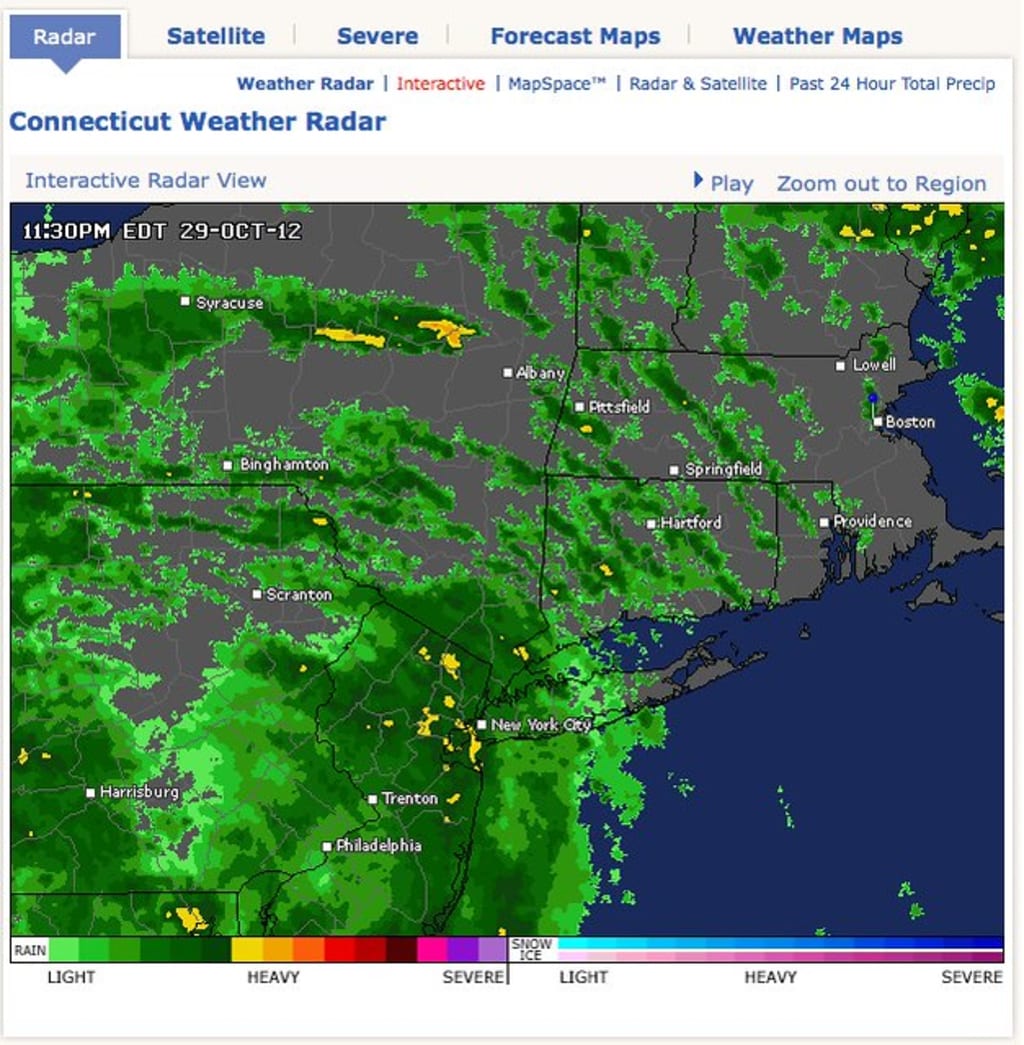
When I was a kid, watching the local meteorologist felt like watching a magician. The radar behind them—a swirl of greens, yellows, and reds—was an enchantment. They’d point, circle, and predict where the storm would move, and somehow, they were always close enough to right. I didn’t know it then, but I was watching the visible language of data before I ever knew what data was. The radar was our oracle, and every flash of color meant something invisible but immediate: wind, rain, and risk.
As an adult, I’ve come to see that weather radar isn’t just technology—it’s a psychological tether. When I open my phone during a thunderstorm, I’m not just checking the weather; I’m looking for a sense of control. The small dopamine hit of a moving storm cell, the reassurance of a blue clearing ahead, the illusion that I can time the world’s chaos to my calendar—all of it makes me feel more prepared than I really am. The modern radar map is a projection of both science and human fear.
Radar’s quiet evolution parallels a bigger story about how we’ve come to live with constant information streams. What once belonged to the broadcast weather center now belongs to everyone with a touchscreen. The loops refresh every few minutes. The data updates in real time. I refresh and refresh again, even though the storm hasn’t moved more than an inch north. I suppose it’s like reloading social media when I’m bored—except instead of a friend’s photo or breaking news, I’m chasing an evolving sky.
There’s irony in how weather radar exposes our limits even as it expands our knowledge. Doppler systems can track raindrops miles away and calculate velocity to the fraction of a second, yet the most basic question—Will it hit my house?—still comes with uncertainty. The core truth of radar is that it measures movement, not destiny. Every pixel on the map is an approximation of nature’s still-unfinished decision. That gap—between data and experience—is where the human mind finds both comfort and frustration.
I remember the first time I saw a radar display up close. It wasn’t on television but in an airport control room during a tour. The display was utilitarian, silent, almost clinical. But standing in that glow, the hum of computers steady behind it, I felt something nearly spiritual. Thousands of miles of atmosphere compressed into a single interface. A living picture of chaos translated into calm geometry. It made me realize that radar isn’t just about detection—it’s about translation. It takes something raw and unseeable and turns it into something communicable, even visual.
Of course, the technology itself came from darker origins. The first weather radar systems emerged out of World War II, when military engineers noticed how rain and storms interfered with aircraft detection. We learned to see the sky differently because we had to survive it—for tactical advantage, for flight, for the illusion of prediction in uncertain times. That dual heritage—born from war but redefined for public safety—still defines how I think about radar today. It’s a symbol of both vulnerability and progress.
Yet there’s an emotional fatigue that comes with total visibility. In the past, you could look outside, see the clouds, and make a judgment call. Now, every storm has a predicted path, a name, a color-coded severity scale. Alerts ping before a single drop of water hits your driveway. We’ve built a culture of preemption: knowing before feeling, reacting before experiencing. In that sense, I sometimes miss the simplicity of uncertainty.
Still, I can’t look away. When severe weather approaches, I open the NOAA map, toggle between radar layers, and zoom in until I can see the exact outline of my neighborhood. The storm becomes personal, almost intimate—my street, my trees, my roof, soon to be under that yellow smear of movement. There’s a tension in that moment between awe and calculation, between surrender and control. I think that’s the real appeal of weather radar: it mirrors the way humans instinctively try to outthink chaos even when chaos wins.
What I’ve grown to realize is that radar tells stories, just not in words. The sudden bloom of colors over the Midwest isn’t just precipitation—it’s a narrative of moisture, collision, instability. The fading arcs near the coast tell of calm returning. Over time, I’ve found myself reading radar maps like I read poetry. They reveal patterns I can’t quite articulate but feel viscerally. The same way a line of verse captures an emotion that can’t be said plainly, a sweep of red across a storm boundary tells me something about power and fragility all at once.
In the end, weather radar has shaped not just how I see storms but how I experience uncertainty itself. I’ve learned that information doesn’t always lead to peace of mind. Sometimes it amplifies our awareness of risk more than it protects us from it. Yet I wouldn’t trade that awareness away. I’d rather see the storm coming and feel small than sit in silence and pretend the sky is calm.
Every time I check the radar now, I’m reminded of something quietly profound: to watch weather unfold is to participate in time itself. The colors fade and form, the system moves, and so do we—waiting, preparing, or simply marveling. Radar doesn’t eliminate the unknown. It just shows us enough of the storm to remember that we live inside something much larger than our forecasts.
About the Creator
Trend Vantage
Covering the latest trends across business, tech, and culture. From finance to futuristic innovations, delivering insights that keep you ahead of the curve. Stay tuned for what’s next!
Keep reading
More stories from Trend Vantage and writers in Earth and other communities.
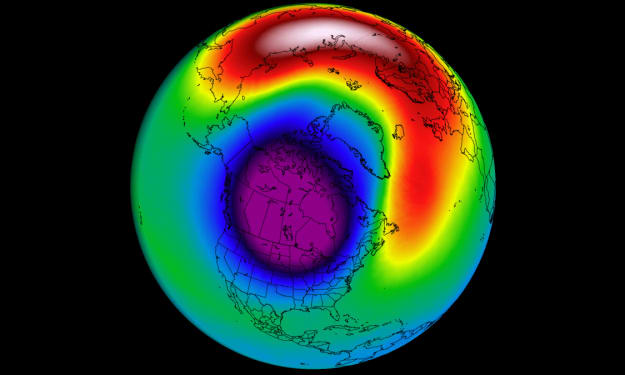
When the Sky Splits Open: Living Through the Next Polar Vortex Collapse
I remember the first time I learned what a “polar vortex” actually was. It was during that brutal winter of 2014, when the air outside made sound brittle and breathing almost felt like swallowing glass. The term had just entered the mainstream — a sleek, scientific label for a phenomenon that had been happening for eons but suddenly carried the power to dominate headlines and freeze half a continent in place. Now, a decade later, every forecast of a potential “vortex collapse” sets off the same chain reaction: social media panic, clickbait maps glowing blue, and a quiet dread that this time might be worse.
By Trend Vantageabout 5 hours ago in Earth
UAE’s New Child Digital Safety Law Puts Parents at Risk of Fines
The United Arab Emirates has rolled out a new Child Digital Safety Law, aimed at safeguarding children from online dangers. But this ambitious law does more than regulate digital platforms — it puts parents and legal guardians directly in the accountability frame, holding them responsible for monitoring their children’s online activities. Failure to comply could result in fines that reach up to AED 1 million, depending on the severity of the violation.
By Muhammad Hassanabout 24 hours ago in Earth
Tidal Barrier to Be 10m Shorter to Save Money
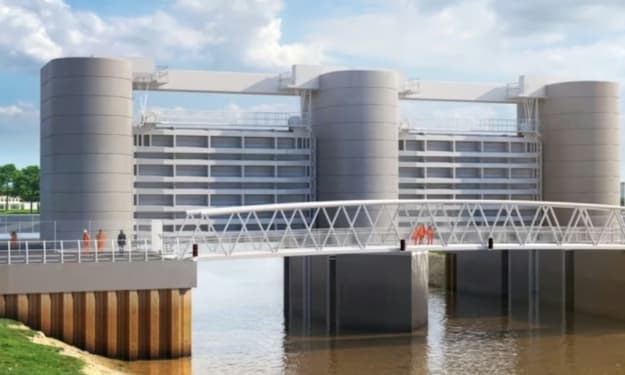
Rethinking Flood Protection in Somerset If you live near the coast, the threat of flooding isn’t just news — it’s a reality you can feel. That’s the situation in Bridgwater, Somerset, a historic market town near the Bristol Channel. For years, plans have been underway to build a tidal barrier to protect homes, businesses, and livelihoods from storm surges. Now, new updates reveal the barrier will be about 10 metres shorter than originally planned, a decision aimed at reducing costs while still keeping the town safe. This announcement has sparked conversations about engineering, budgets, and how communities adapt to climate challenges. Why the Barrier Is Being Shortened The Bridgwater Tidal Barrier was initially designed to be a high-profile flood defence, protecting thousands of properties from tidal surges that travel up the River Parrett. But after a recent design efficiency review, engineers concluded the barrier could be slightly shorter without compromising safety. Reducing the barrier by 10 metres lowers construction complexity, saves money, and reduces long-term maintenance costs. The Environment Agency and local authorities say this approach allows the project to move forward on time and on budget, ensuring the community gets protection sooner rather than later. The Cost Factor Public infrastructure projects like this don’t happen in a vacuum. Rising inflation, global supply chain disruptions, and labor shortages have increased costs for large-scale projects. Officials argue that the revised design is a responsible compromise: it balances cost savings with safety. Somerset Council leaders have welcomed the decision, noting that managing costs wisely helps the project reach completion without compromising protection for residents. Community Voices and Concerns Local engagement has been a key part of the project. Residents have attended consultations and drop-in sessions to see the updated plans and ask questions. Some community members appreciate the cost savings and faster timeline. Others worry whether a shorter barrier will be as effective against future extreme weather events. Questions include: Will the barrier remain strong against increasingly unpredictable storms? Does reducing the height limit future adaptability as climate impacts grow? What effect might it have on local ecosystems and fish habitats? These are valid concerns, reflecting how communities are increasingly involved in climate adaptation decisions. Engineering Flood Defence Today Tidal barriers are not new — Britain has relied on them for decades. London’s Thames Barrier, for instance, has protected the capital since the 1980s. But today, rising sea levels and more frequent storms mean engineers must balance safety, cost, and environmental impact carefully. In Bridgwater, officials say the revised barrier will still protect against 1-in-200-year tidal events. It’s designed to provide robust safety now while remaining adaptable for the future. The Human Side of Flood Protection It’s easy to get lost in numbers and metres, but behind the design decisions are real people. Residents depend on reliable flood protection to feel secure in their homes and communities. For families, businesses, and local services, knowing a barrier is being built — even a slightly shorter one — provides peace of mind. It’s not just a structure; it’s a symbol of resilience and preparedness. Next Steps for the Barrier The Bridgwater project is still under construction, with the revised design undergoing final refinements. Once completed, the tidal barrier will provide long-term protection for thousands of properties and critical infrastructure in Somerset. Officials emphasize that the shortened design does not compromise safety. If anything, staying on budget ensures the project is completed faster, meaning protection arrives sooner for the community. A Lesson in Climate Adaptation The story of the Bridgwater Tidal Barrier is more than engineering or economics. It’s about how communities respond to climate risks and how governments make tough choices balancing safety, cost, and sustainability. The barrier being 10 metres shorter may seem small on paper, but it reflects a larger truth: infrastructure planning today is as much about community engagement, adaptability, and long-term resilience as it is about concrete and steel. By keeping people involved and making informed, cost-effective decisions, Somerset shows how towns can adapt to climate change without sacrificing safety. Conclusion The Bridgwater Tidal Barrier demonstrates that infrastructure projects in the 21st century must adapt to multiple pressures: climate change, financial constraints, and community expectations. While the barrier is slightly shorter than originally planned, it remains a critical line of defence against flooding. More importantly, it highlights the importance of public involvement, transparency, and strategic planning in building a resilient community. For Bridgwater residents, the message is clear: the tide may rise, storms may come, but with smart planning and community engagement, the town will be ready
By Muhammad Hassan7 days ago in Earth


Comments
There are no comments for this story
Be the first to respond and start the conversation.