
When the Sky Speaks: Inside NASA’s Space Alerts That Watch Over Earth
How NASA monitors the silent storms, flying rocks, and cosmic forces that shape life on Earth.

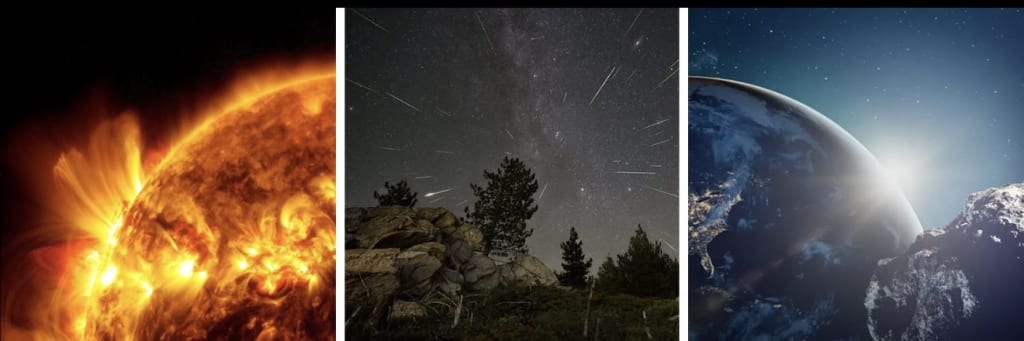
Every night, as we look up at the star-filled sky, it feels quiet timeless and calm. But beyond that peaceful view, space is far from still. It’s alive, filled with invisible storms, flying rocks, and radiant energy waves. At the heart of keeping humanity informed about these cosmic happenings is NASA’s Space Alerts an official system that notifies scientists, governments, and sometimes the public about what’s going on in our near-Earth neighborhood.
For decades, NASA has been Earth’s first line of defense in space awareness. But now, with the rise of digital platforms, NASA Space Alerts have become more open, accessible, and even thrilling for ordinary people fascinated by the mysteries above. Whether it’s a solar flare sending waves of charged particles toward our planet or a massive asteroid passing by, NASA is watching and alerting us every step of the way
A Cosmic Early Warning System
NASA Space Alerts aren’t random notifications. They are based on precise data gathered by satellites, telescopes, and deep space observatories. These alerts are designed to provide early warnings about potential cosmic events that might affect Earth’s atmosphere, communications, and even our safety.
For instance, the Solar Dynamics Observatory (SDO) and Parker Solar Probe constantly monitor the Sun. When a solar flare or coronal mass ejection (CME) is detected, NASA issues an alert to scientists around the world. These alerts help power companies, airlines, and even astronauts take necessary precautions against radiation spikes or communication blackouts
It’s not just about the Sun, though. NASA’s Planetary Defense Coordination Office (PDCO) also monitors asteroids and comets that come close to Earth. When one is detected, the team analyzes its path, speed, and potential risk level. If it comes within a certain distance, an official Near Earth Object (NEO) alert is issued.
In short, NASA Space Alerts are the Earth’s shield a silent guardian keeping an eye on the cosmic traffic above us.
From the Sun to the Stars Every Alert Tells a Story
One of the most remarkable things about NASA’s alerts is how they turn raw data into human understanding. A sudden solar storm, for example, might sound technical, but for space enthusiasts, it’s like watching the weather of the universe unfold.
When a strong solar flare erupts, NASA posts a detailed update: its intensity, the direction of the ejection, and the expected time it will reach Earth. These alerts also include maps of where auroras the northern and southern lights might become visible.
In fact, thanks to NASA’s alerts, photographers in regions like Alaska, Canada, and Northern Europe often prepare for rare aurora events caused by solar activity. It’s science meeting wonder a reminder that space isn’t distant; it’s connected to our everyday sky.
Sometimes, the alerts carry a more serious tone. For instance, when a medium-sized asteroid passed between the Earth and the Moon in 2023, NASA’s PDCO quickly published tracking data, ensuring that astronomers worldwide could observe it. Within hours, the story made global headlines.
NASA doesn’t just alert scientists; it inspires millions. Each notification reminds us that even though we are small in the grand cosmic scale, we are not powerless because we’re watching, learning, and preparing.
Why NASA’s Alerts Matter More Than Ever
In an age where space exploration is expanding rapidly, NASA’s Space Alerts have become essential not just for scientists, but for global coordination. SpaceX, Blue Origin, and other private companies rely on NASA’s data to protect their satellites and crewed missions. Governments use these alerts for aviation safety and communication systems.
Even on Earth, a strong solar storm can disrupt GPS navigation, mobile networks, and electricity grids. That’s why these alerts don’t just serve curiosity they protect our modern world.
Moreover, NASA is now using AI driven models and machine learning tools to predict solar flares and asteroid paths more accurately. This means the alerts are becoming faster, smarter, and more precise allowing humanity to respond before trouble arrives.
The Human Side of the Sky
Behind every alert, there’s a team of scientists, engineers, and researchers working 24/7 at NASA centers like the Goddard Space Flight Center and Jet Propulsion Laboratory (JPL). They are the invisible heroes who decode the language of space and translate it into something humans can act upon.
When the Sun bursts or an asteroid streaks by, they’re not just issuing data they’re telling the story of the universe in real-time. Their work reminds us that the cosmos isn’t chaotic; it’s a living, breathing system one that we’re slowly beginning to understand.
Staying Connected to the Cosmos
NASA Space Alerts are now more accessible than ever. Anyone can follow updates on NASA’s official website, Twitter (X), and even through apps like NASA Eyes on Asteroids. These platforms allow you to track real-time cosmic events from meteor showers to asteroid flybys.
And perhaps that’s what makes NASA’s Space Alerts so powerful. They don’t just inform us; they connect us to something greater. Every notification is an invitation to look up, to wonder, and to remember that we’re part of a vast, beautiful, and ever-changing universe.
Final Thoughts
Space isn’t silent it speaks through light, energy, and motion. And NASA’s Space Alerts are the translators of that cosmic conversation. Whether it’s a glowing aurora or a passing asteroid, these alerts remind us that our sky is alive dynamic, unpredictable, and full of stories waiting to be told.
In a world obsessed with earthly news, NASA’s alerts are a gentle nudge to look beyond the horizon. Because sometimes, the most important news doesn’t happen on Earth it happens above it.
Author’s Note:
This story is completely mine but with a little bit of help from AI.
About the Creator
Izhar Ullah
I’m Izhar Ullah, a digital creator and storyteller based in Dubai. I share stories on culture, lifestyle, and experiences, blending creativity with strategy to inspire, connect, and build positive online communities.
Keep reading
More stories from Izhar Ullah and writers in Earth and other communities.
The Rock That Wasn’t a Rock: A Journey Through 724 Million Kilometers of Mystery
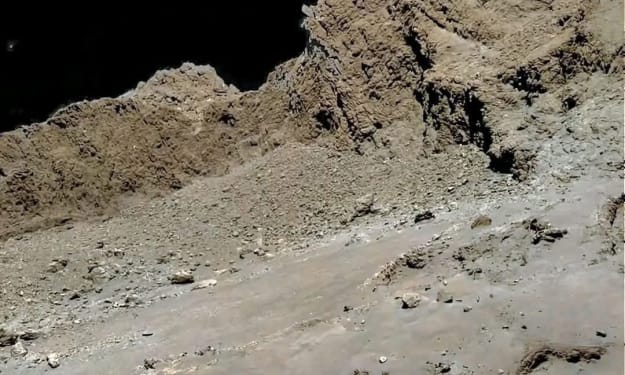
When we look up at the night sky, we see twinkling dots that seem calm and distant. But hidden among those stars are travelers ancient, silent wanderers that have been moving through the darkness for billions of years. This is the story of one such wanderer a story that began on Earth but ended 724 million kilometers away, on the surface of something that wasn’t what scientists thought it was.
By Izhar Ullah3 months ago in History
Police Warn Against ‘Ridiculous’ Parking at Beauty Spot Amid Snow Disruption
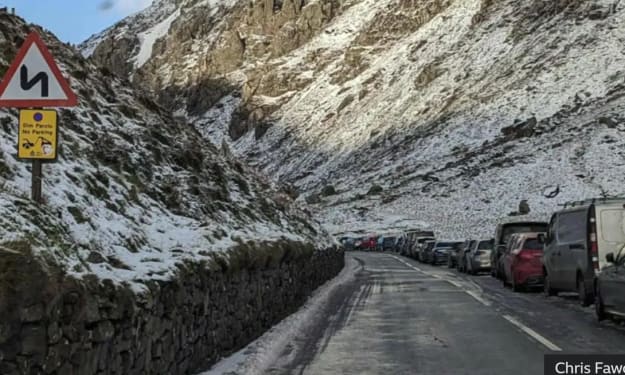
Heavy snowfall may transform beauty spots into winter wonderlands, but it also brings serious risks when visitors ignore basic safety and parking rules. Police have issued a strong warning against what they describe as “ridiculous” parking at a popular beauty spot, after snow disruption led to blocked roads, stranded vehicles, and delayed emergency access. As wintry conditions continue to affect travel, authorities are urging the public to prioritise safety over scenic photographs, reminding drivers that poor parking decisions can have life-threatening consequences during severe weather. Snowfall Turns Scenic into Hazardous The recent spell of snow attracted large numbers of visitors eager to enjoy picturesque landscapes blanketed in white. Hillsides, national parks, and rural viewpoints quickly became hotspots for walkers, families, and amateur photographers. However, police say the surge in visitors coincided with widespread parking chaos. Cars were left abandoned on narrow roads, grass verges, gateways, and even blocking access routes meant for emergency vehicles and local residents. What may appear to drivers as a harmless decision to “park for just a few minutes” can quickly escalate into a major safety issue—especially when snow and ice reduce road space and visibility. Police Response and Public Warning Local police forces have taken to social media and public statements to express frustration at the situation. Officers described some parking behaviour as not only irresponsible but dangerous, particularly given the weather conditions. Police warned that emergency vehicles, including ambulances and mountain rescue teams, were struggling to reach areas due to blocked roads. In severe weather, response times are already under pressure, and illegally parked vehicles can mean the difference between life and death. Authorities have also made it clear that enforcement action will be taken where necessary. Drivers risk fines, towing, and penalty points if their vehicles obstruct roads or endanger others. Impact on Emergency Services One of the most serious consequences of poor parking during snow disruption is its impact on emergency services. Narrow rural roads, already difficult to navigate in icy conditions, become completely impassable when cars are parked irresponsibly. Fire crews, paramedics, and rescue teams rely on clear access routes, particularly in popular beauty spots where accidents such as slips, falls, or stranded walkers are more likely in winter conditions. Police stressed that emergency vehicles do not have the luxury of “finding another way around” when roads are blocked. Delays caused by inconsiderate parking put both responders and the public at risk. Local Residents Left Frustrated It is not only emergency services that are affected. Residents living near popular beauty spots often bear the brunt of snow-related disruption. Driveways are blocked, access to homes becomes difficult, and essential journeys for work, medical appointments, or supplies are delayed. Many locals report feeling ignored by visitors who treat rural communities like seasonal attractions rather than lived-in areas. During winter weather, this frustration is magnified, as residents may already be dealing with power outages, poor road conditions, and limited access to services. Police have echoed these concerns, reminding visitors that beauty spots are often surrounded by working communities, not just open spaces for leisure. Why Snow Makes Parking More Dangerous Snow significantly reduces road safety margins. It narrows carriageways, hides road markings, and makes verges unstable. A car parked partly on a road might seem manageable in normal conditions, but in snow it can create blind corners, force vehicles into oncoming traffic, or cause skidding accidents. Additionally, snowploughs and gritters require space to operate effectively. Poorly parked vehicles can prevent these essential services from clearing roads, prolonging disruption for everyone. Authorities warn that even experienced drivers can underestimate how quickly conditions can change in winter weather. Social Media and the “Snow Day” Effect Police have also pointed to social media as a contributing factor. Viral images of snow-covered landscapes often encourage spontaneous trips without proper planning. People see beautiful photos and head out without considering parking availability, road conditions, or weather warnings. This “snow day” mentality can overwhelm rural infrastructure not designed for large volumes of traffic, particularly during adverse weather. Police urge visitors to check local advice before travelling and to be prepared to turn back if conditions are unsafe. Advice for Safe Winter Visits In response to the ongoing disruption, authorities have shared clear guidance for anyone planning to visit beauty spots during snowy conditions: Avoid unnecessary travel during severe weather warnings Park only in designated areas, never on roads or verges Do not block gateways, tracks, or emergency access routes Check weather and road conditions before setting off Be prepared to leave if parking is unavailable Police emphasise that no photograph or short walk is worth risking lives or causing serious disruption. Enforcement and Accountability While officers prefer to rely on public cooperation, they have confirmed that enforcement will be stepped up if irresponsible behaviour continues. Vehicles may be ticketed or removed, particularly if they pose a danger or obstruction. Authorities stress that enforcement is not about spoiling enjoyment but about ensuring public safety. Winter conditions demand higher levels of responsibility from drivers, not less. A Shared Responsibility Snow transforms landscapes, but it also tests public behaviour. Police warnings against “ridiculous” parking are not just expressions of frustration—they are urgent reminders that safety must come first. Enjoying nature is a privilege, not a right, especially during extreme weather. By parking responsibly and respecting local communities, visitors can help ensure that beauty spots remain accessible, emergency services remain effective, and winter days do not turn into preventable disasters. As snow disruption continues, the message from police is clear: think before you park, or don’t park at all
By Muhammad Hassan6 days ago in Earth


Comments
There are no comments for this story
Be the first to respond and start the conversation.