
When the River Forgot How to Flow
As the Thames dried up in sections for the first time in recorded history, scientists discovered the river’s memory wasn’t just water—it was alive


In July of 2026, Londoners woke to a city changed. The headlines read like climate fiction, but they were real.
THAMES RIVERBED EXPOSED IN MULTIPLE SECTIONS NEAR READING AND OXFORD.
For the first time since England began recording its rivers, the mighty Thames—Britain’s heartbeat—had stopped flowing in several key tributaries. People walked where boats once glided. Fish flailed and died in puddles. And in a twist both poetic and horrifying, ancient clay pipes and Viking pottery began appearing in the cracked beds, as if history itself was gasping for water.
It wasn’t a drought. Not officially. Rain had fallen weeks earlier. Reservoirs were not yet empty.
This was something stranger.
And, as it turned out, more intelligent.
The River That Remembered
Dr. Yusuf Patel, a hydrologist from Imperial College London, was the first to notice something curious. Water levels hadn’t just dropped—they’d retreated in specific patterns. Not uniformly. Not randomly.
“Some sections dried completely while others remained strangely stable,” he said. “It was as if the river had chosen where to stop flowing.”
Using topographic modeling and AI-assisted historical maps, Dr. Patel compared this drying pattern to older versions of the Thames. What he found shocked him.
The river had withdrawn exactly along the lines of its 11th-century flow—before dams, canals, and modern rerouting. It had abandoned the artificial course imposed by centuries of human engineering and tried to reclaim its original path.
In effect, the Thames had chosen to rewind itself.
River as Organism
The discovery sparked furious debate in the scientific world. Could a river behave like an organism? Could it “remember” its older course? Was this a geological fluke or something more profound?
Professor Eleanor Byrne, a geobiologist from the University of Leeds, proposed a radical theory: fluvial memory.
“All living systems carry embedded memories,” she argued. “Cells remember trauma. Trees remember fire. Why not rivers?”
Her team analyzed sedimentary layers, mineral alignments, and microbial populations in the abandoned and active riverbeds. What they found was stunning: in the sections where the Thames had dried up, microbial life had already shifted behaviors weeks earlier—as if anticipating the river’s departure.
“It’s as if the riverbed prepared to be forgotten,” Byrne said.
The river had begun to erase itself—intentionally, silently, and with a strange dignity.
The Human Trigger
While theories brewed, the practical question remained: Why now?
A joint study between the British Geological Survey and the Environment Agency revealed a disturbing chain of events. Over the past five years, low-impact urban water siphoning projects—designed to be sustainable—had quietly fractured the river’s underground water table.
Each siphon, legally approved, pulled only a small amount of water from the aquifer. But thousands of them, spread across the Thames Basin, had collectively disrupted the subterranean flow. Like hairline fractures in a foundation, they changed pressure points that anchored the river’s path.
In simple terms: The Thames wasn’t drying up—it was bleeding out beneath the surface.
The river responded by retreating to memory, flowing where ancient underground channels still remained intact. It was the river’s version of survival.
The Death of Navigation
The consequences were swift and brutal.
• Commerce halted. Barges carrying freight from Oxford to London were stranded mid-route.
• Tourism collapsed. Boat tours were suspended indefinitely.
• Cultural panic surged. For the first time in generations, the city’s identity felt broken.
Parliament scrambled to respond. Emergency water-conservation acts were introduced. Media turned the Thames into a martyr.
But beneath the political scramble was an emerging emotional truth: Britain had taken the river for granted.
Echoes from the Mud
As archaeologists flocked to the exposed sections of the Thames, more than pottery was unearthed. In one section near Henley, a perfectly preserved wooden bridge from the 13th century emerged, long believed lost. In another, a bundle of Roman coins lay nestled beside skeletal remains.
It was as though the river, in leaving, had offered its final archive—a memory dump of everything it had witnessed and buried.
Children wrote poems in school titled “The River That Cried.” Artists painted maps where the Thames ran backward. An AI-generated symphony, “Flow No More,” went viral on YouTube, built entirely from the altered frequencies of river sonar recordings.
And in labs across Britain, scientists began whispering a new phrase:
“Eco-cognition.”
A Living System in Protest
Dr. Patel’s second report confirmed it. The Thames wasn’t dead. It was alive—and resisting.
“Just as glaciers retreat in pain, rivers can reorganize under threat,” he wrote. “They are not passive channels. They are dynamic, semi-conscious systems of flow.”
This led to a new classification of rivers in scientific taxonomy: Active Hydrological Memory Systems (AHMS). The Thames became the world’s first.
Activists demanded legal personhood for it, echoing rights granted to rivers in New Zealand and India. By October, London’s mayor had agreed to fund a Thames Restoration Ethics Committee. It was mostly symbolic—but symbols mattered now.
Attempts to Reconnect
Restoration began gently.
Instead of re-routing water forcibly, a team of environmental engineers developed pulse-flow therapies—slow rehydration protocols based on the river’s historical heartbeat. Using ancient maps and acoustic modeling, they played sounds of the river’s old flow beneath the surface through embedded speakers.
At first, nothing happened. But then, in a section near Marlow, trickles returned.
Where microphones had once recorded silence, now came the sound of water lapping against stone.
It wasn’t much.
But it was forgiveness.
When London Wept
The emotional climax came in December 2026.
As if in response to months of reverence, reform, and ecological apology, the central Thames began flowing again—not in full, but enough to fill the riverbanks through Westminster.
People gathered on bridges. Children threw pebbles. One elderly woman played a violin from a dock. The notes were swallowed by water for the first time in months.
A BBC helicopter broadcast it live, calling it “The River’s Return.”
The Thames wasn’t healed.
But it was listening again.
Final Reflections
Today, new legislation known as the River Memory Act governs how Britain interacts with its waterways. It recognizes rivers not only as ecosystems but as historical intelligences that must be treated with continuity and respect.
The Thames remains fragile, monitored hourly, its pulse tracked like a patient recovering from trauma. Schoolchildren now learn its original course, alongside its modern one.
And if you stand by its banks at dawn, you might hear the low hum of a speaker playing an old river’s lullaby—asking forgiveness in a language only water understands.
Because the river didn’t forget. It remembered more than we ever knew.
About the Creator
rayyan
🌟 Love stories that stir the soul? ✨
Subscribe now for exclusive tales, early access, and hidden gems delivered straight to your inbox! 💌
Join the journey—one click, endless imagination. 🚀📚 #SubscribeNow
The Problem with Invasive Plants: Identification and Responsible Removal
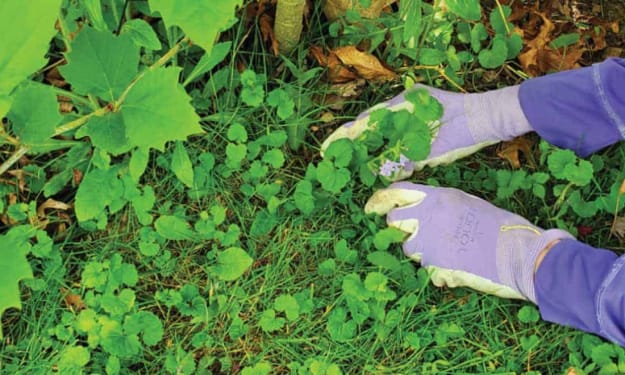
This scenario plays out in gardens across the continent. Many invasive plants started as intentional garden introductions, valued for their beauty, vigor, and ease of growth. Those same qualities—rapid spread, adaptability, and resilience—make them ecological threats when they escape cultivation.
By Emma Wallace2 days ago in Earth


Comments (1)
This is fascinating stuff. It's crazy to think the Thames chose to revert to its old path. I've seen rivers change course due to human interference, but this is something else. It makes me wonder what other secrets our waterways hold. Do you think this is a one-off or could other rivers exhibit similar behavior? It'd be interesting to study more cases like this.