
When Animals Use Tools: Problem-Solving Minds of the Wild
Tools aren’t just for humans — many animals craft, select, and use them with surprising skill.

Chimpanzees Using Sticks to Fish for Termites
Chimpanzees are often considered the smartest non-human animals, and one of their most famous abilities is using sticks to fish for termites. In the wild, they will find a suitable stick, strip off the leaves, and then insert it into termite mounds.
Once the termites latch on to the stick, the chimpanzee pulls it out and licks off the insects. This behavior is not random — it’s passed down from older chimps to younger ones, meaning it’s a form of cultural learning.
Chimpanzees also use leaves to soak up drinking water and rocks to crack open nuts. Their problem-solving skills show that tool use isn’t exclusive to humans, and intelligence in the wild comes in many forms.
Sea Otters Using Rocks to Break Shells
Sea otters are known for floating on their backs while eating — but it’s what they do with rocks that makes them extraordinary.
They often tuck a favorite rock under their arm and use it as a personal tool to crack open clams, sea urchins, and mussels. They smash the shellfish against the rock until it breaks open.
Some sea otters keep the same stone for years, and scientists have observed them using flat stones as anvils placed on their chests while they float. This consistent and deliberate use of tools shows a high level of cognitive planning and memory.
Crows Crafting Hooks
Crows are part of the corvid family — a group of birds known for their exceptional intelligence. New Caledonian crows have taken tool use to another level by crafting hooks from twigs or leaves.
They use these hooks to fish out insects or larvae from tight spots like tree bark or crevices. Some even bend wire into functional hooks when given the opportunity in lab experiments — a sign of abstract problem-solving.
What makes this even more remarkable is that crows don’t learn these skills by accident. Young crows watch adults and learn from example, proving that teaching and learning exist in the wild.
Elephants Using Branches as Fly Swatters
Elephants are known for their memory, emotion, and empathy, but they also use tools. In the wild, elephants have been seen breaking off tree branches and using them to swat flies off their bodies.
They also dig holes to access water and plug them with bark or leaves, returning later for a drink. These behaviors show foresight and adaptation to the environment.
What’s more, captive elephants have been observed moving stools or boxes to stand on them and reach food — a clear sign of strategic thinking beyond instinct alone.
Octopuses Using Coconut Shells as Armor
Octopuses are masters of escape and camouflage, but some species, like the veined octopus, take it a step further by carrying coconut shells for defense.
They’ll find two halves of a discarded coconut, carry them across the sea floor, and assemble them when needed to create a shelter or protective casing.
This behavior is one of the clearest examples of tool use in invertebrates. Unlike instinctive hiding, this act involves collecting, transporting, and assembling parts of an object — showing planning and foresight.
Dolphins Covering Snouts with Sponges
In Shark Bay, Australia, some bottlenose dolphins use sea sponges to protect their snouts while foraging on the sea floor. They place the sponge on their nose like a glove and use it to dig through sharp rocks and sand without injury.
This behavior is mostly seen in female dolphins and passed down from mother to daughter, proving a cultural tradition — one of the few known in marine mammals.
This adaptation helps them access food sources other dolphins can’t reach, showing innovation and the ability to solve problems using tools from their environment.
Wrasse Fish Using Rocks as Anvils
Tool use in fish was once considered impossible, but the orange-dotted tuskfish, a type of wrasse, proved otherwise.
This fish has been observed carrying clams in its mouth, then smashing them against rocks until the shell breaks. It does this repeatedly and deliberately, often choosing specific rocks as “anvils”.
This is one of the first confirmed examples of tool use in wild fish, and it challenges the idea that only mammals and birds are capable of intelligent problem-solving.
Community
Tool use in animals isn’t just about survival — it’s a window into their intelligence, culture, and creativity. From crafting hooks to saving favorite stones, these actions show that animals think ahead, learn from others, and solve problems in unique ways.
They remind us that intelligence comes in many forms — not just in labs, but in forests, oceans, and even in your backyard. Every twig, stone, and sponge used by an animal tells a story of evolution, adaptation, and connection.
If this article amazed you, share it with someone who still thinks humans are the only “smart” species. The wild has its own inventors — and they don’t need hands to prove it.
About the Creator
Amid European Energy Fears, Coal Creeps Back Into Favour
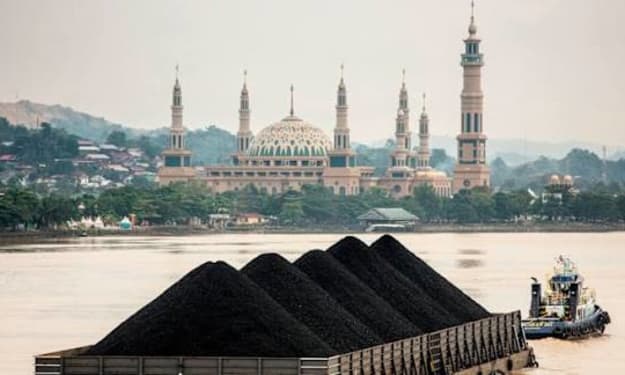
Europe’s energy landscape is shifting as fears over supply security and rising costs drive some countries back toward coal, a fossil fuel many had hoped to phase out entirely. The resurgence comes amid heightened tensions over energy imports, particularly natural gas, as the war in Ukraine and geopolitical friction with Russia have exposed vulnerabilities in the continent’s energy systems. Germany, long seen as a leader in renewable energy adoption, recently announced plans to keep several coal-fired power plants online longer than initially scheduled. Officials cited winter energy demands and the need to maintain a reliable baseload while natural gas supplies remain constrained. Similar considerations are emerging in Poland, the Czech Republic, and other nations that rely heavily on imported energy. “The energy crisis has forced governments to make difficult choices,” said Dr. Klaus Weber, an energy policy analyst at European Energy Institute. “While the climate goals remain important, ensuring citizens have access to electricity and heat this winter has become a more immediate priority.” The return to coal is not simply a response to price spikes. Energy security has become a pressing concern after European reliance on Russian gas pipelines was disrupted, prompting countries to diversify sources and store reserves. Coal, abundant in Europe and globally traded at competitive prices, provides a short-term buffer against shortages. At the same time, rising electricity costs have placed enormous pressure on households and industries. According to recent statistics from the International Energy Agency, European electricity prices surged by nearly 40% in the past year, prompting governments to subsidize energy bills and rethink fuel strategies. Coal-fired generation, though more polluting, offers predictable output and can be ramped up quickly to stabilize grids. Renewable energy advocates have expressed concern that this shift could undermine Europe’s climate leadership. Coal emits roughly twice the CO₂ per unit of energy compared to natural gas, posing challenges to achieving net-zero targets. Critics warn that extending coal use—even temporarily—risks locking in infrastructure that is inconsistent with long-term decarbonization goals. “Every megawatt-hour produced from coal is a step backward for Europe’s climate ambitions,” said Maria López, senior campaigner at Greenpeace Europe. “Governments need to pair any temporary measures with accelerated renewable deployment to avoid backsliding on emissions reductions.” Some nations are attempting to balance these pressures by deploying cleaner coal technologies. Advanced coal plants with carbon capture and storage (CCS) can reduce emissions by capturing a significant portion of CO₂ before it enters the atmosphere. Germany and the Netherlands are investing in pilot projects to integrate CCS into existing power plants, though critics note that large-scale implementation remains costly and complex. Analysts suggest that Europe’s return to coal is likely to be temporary. Once gas supplies stabilize and renewable infrastructure expands, reliance on coal is expected to decline. Yet the episode has highlighted the fragility of energy systems in the face of geopolitical shocks and the tension between short-term energy security and long-term climate goals. Meanwhile, citizens and businesses are feeling the immediate impact. Many households in Eastern and Central Europe face sharply higher heating costs this winter, and industrial manufacturers are warning that energy-intensive production could be scaled back if prices remain high. Policymakers are caught between the urgent need to maintain supply and the imperative to meet climate commitments. The European Union is working on strategies to mitigate these challenges. Measures include expanding LNG import terminals, investing in cross-border electricity interconnectors, and boosting renewable energy capacity. However, the gap between energy supply and demand, exacerbated by geopolitical tensions, means coal may remain a stopgap solution for months to come. Europe’s cautious return to coal underscores a broader reality: energy transitions are never linear. Even as governments and citizens push toward a greener future, external shocks—conflict, supply disruptions, and price volatility—can temporarily alter priorities. The key challenge for policymakers will be ensuring that short-term reliance on fossil fuels does not derail long-term climate ambitions.
By Fiaz Ahmed 7 days ago in Earth



Comments
There are no comments for this story
Be the first to respond and start the conversation.