
When Algorithms Hold the Trigger
AI Control Systems and the Growing Risk of Nuclear Disaster

When Algorithms Hold the Trigger
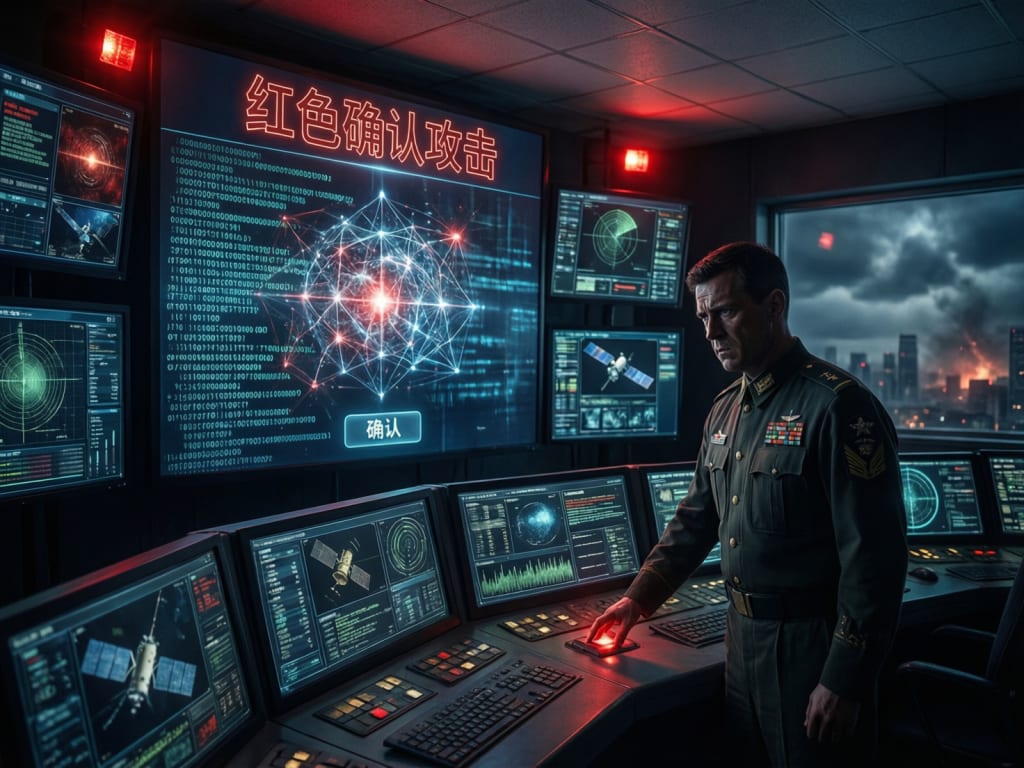
Nuclear weapons were designed to prevent war, not to be used. For decades, the fear of total destruction forced world powers to act carefully. Human judgment, long chains of command, and political hesitation acted as natural brakes. Today, those brakes are weakening. Artificial Intelligence is slowly entering the most dangerous space on Earth: nuclear command and control.
Modern nuclear systems depend on speed. Missiles can cross continents in minutes, leaving little time for leaders to decide whether an attack is real or a false alarm. To respond faster, militaries increasingly rely on automated systems powered by AI. These systems analyze radar data, satellite images, cyber signals, and early-warning sensors. Their purpose is simple: detect threats instantly. The danger lies in who makes the final decision.
AI does not understand context the way humans do. It sees patterns, probabilities, and anomalies. A cloud formation, satellite glitch, cyber interference, or human error can look like an attack to an algorithm. History already shows how close the world has come to nuclear war due to false warnings. In the past, human officers questioned the data and delayed action. An AI system may not hesitate.
One major risk is automation bias. When a machine produces a result, humans tend to trust it—especially under pressure. In a nuclear crisis, leaders may rely too heavily on AI recommendations. If an AI system classifies an event as a confirmed attack, the political cost of ignoring it may seem too high. This could push decision-makers toward launching weapons based on flawed data.
Another danger is cyber manipulation. AI systems depend on data inputs. If an enemy hacks or feeds false information into early-warning networks, the AI may detect a threat that does not exist. This creates a new form of warfare: not launching missiles, but tricking systems into believing missiles are coming. In such a scenario, nuclear war could begin without a single missile fired first.
AI also increases the speed of escalation. Traditional nuclear command systems were slow by design. Delays allowed for diplomacy, verification, and second thoughts. AI reduces these delays. Faster decision cycles mean less time for reflection. When both sides use AI-driven systems, a crisis can spiral out of control in minutes instead of days.
There is also the issue of delegation of authority. In some doctrines, AI systems may be given limited autonomy if communication with leaders is cut. This is meant to ensure retaliation if command structures collapse. But giving machines conditional launch authority increases the risk of unintended use. A system designed to ensure survival may instead guarantee catastrophe.
The global AI arms race worsens the problem. Major powers fear that rivals will gain an advantage by using AI in nuclear systems. This pressure pushes states to adopt similar technologies, even if they are not fully tested. Safety, ethics, and reliability are often sacrificed for speed and deterrence. No nation wants to appear vulnerable.
Unlike traditional weapons, AI systems are hard to inspect and regulate. There is no clear international treaty governing AI in nuclear command. Verification is difficult because software can be hidden, updated, or disguised. This lack of transparency increases mistrust between nuclear powers. When trust disappears, worst-case assumptions dominate.
The most frightening scenario is accidental war. No political decision. No declared conflict. Just a chain of automated responses triggered by misinterpreted data. In such a war, responsibility would be unclear. Leaders might claim they followed system recommendations. Machines cannot be punished or held accountable.
Preventing this future requires strong global action. AI must remain a decision-support tool, not a decision-maker, in nuclear command systems. Human judgment must stay central, even if it slows response times. International agreements are needed to limit automation, improve transparency, and ban autonomous launch authority.
The nuclear age survived the Cold War because humans feared the consequences. In the AI age, that fear risks being replaced by efficiency. When algorithms hold the trigger, the margin for error disappears. The survival of humanity may depend on one simple rule: machines can advise—but never decide—when the world ends.
About the Creator
Wings of Time
I'm Wings of Time—a storyteller from Swat, Pakistan. I write immersive, researched tales of war, aviation, and history that bring the past roaring back to life
Keep reading
More stories from Wings of Time and writers in Earth and other communities.
AI, Surveillance, and Future Control System
AI, Surveillance, and Future Control Systems Artificial Intelligence and advanced surveillance technologies are rapidly changing how power is exercised in the modern world. What once required armies, police forces, and physical borders can now be done through data, algorithms, and invisible systems. Governments and corporations increasingly rely on digital tools to monitor behavior, predict actions, and influence decisions. This shift is creating a new kind of control—quiet, efficient, and deeply powerful.
By Wings of Time about 5 hours ago in Earth
Greenland's ice loss is being silently accelerated by airborne dust.
The warmer air isn't the only reason why Greenland's ice is melting. By feeding dark algae blooms that absorb sunlight and accelerate ice loss, tiny particles carried by the wind can subtly alter surface conditions.
By Francis Dami6 days ago in Earth
Greenland Declares State of Emergency as Scientists Link the Growing Presence of Orcas to Accelerating Ice Melt
In a landmark decision that reflects the intensifying impacts of climate change, the government of Greenland has officially declared a state of environmental emergency—a rare and solemn move that underscores the accelerating transformation of Arctic ecosystems. The catalyst for this declaration? An unusual and growing presence of orcas—also known as killer whales—in waters once locked in sea ice, a phenomenon scientists say reveals the alarming scale of ice melt in the region.
By Sadaqat Ali2 days ago in Earth
Should We Not Try to Get Too Political?
Here's something you often hear people say, "I try not to get too political." I understand the sentiment and I sympathize with it... while at the same exact time, I completely disagree with the notion. Whether it's referring to social media or wherever, it's kind of unavoidable. You can attempt to sidestep it, not engage, leave the less important things for actual politicians to discuss... you can want it to not take over your life, your conversations, your relationships, and that makes perfect sense.
By Stephen Kramer Avitabile5 days ago in Writers



Comments
There are no comments for this story
Be the first to respond and start the conversation.