
When a young musician discovers the mysterious disappearance of bees in her town, she embarks on a musical quest to restore harmony to the ecosystem
The song of the bees

Once upon a time in the picturesque town of Harmonyville, nestled amidst blooming meadows and vibrant gardens, lived a young musician named Melody. Her heart beat in rhythm with the melodies she played on her violin, and she found solace in the enchanting sounds of nature.
One sunny morning, as Melody strolled through the town square, she noticed something amiss. The usually bustling flower beds stood silent, devoid of the gentle buzz of bees. Puzzled, she inquired among the townspeople and discovered that the bees had mysteriously disappeared, leaving behind a void that threatened the delicate balance of the ecosystem.
Deeply concerned, Melody decided to take matters into her own hands. She believed that music held a special power, capable of touching hearts and connecting souls. She resolved to embark on a musical quest to restore harmony to her town and bring back the bees.
With her violin in hand, Melody set out on a journey across meadows, forests, and fields. Along the way, she encountered various creatures affected by the absence of bees. The flowers drooped, unable to be pollinated, and the fruits withered on the trees. Birds struggled to find nectar, and farmers worried about their crops.
Inspired by the plight of these beings, Melody composed melodies that echoed the buzzing of bees and the beauty of nature. She played under the starlit skies, at sunrise over misty mountains, and by babbling brooks. Each note she played carried a message of love, gratitude, and hope for the return of the bees.
Word of Melody's quest spread far and wide, reaching the hearts of people from different walks of life. Farmers, gardeners, and children joined her, forming a community united by a shared passion for nature's harmony. Together, they planted colorful wildflowers and created bee-friendly habitats throughout the town.
As the music of Melody's violin resonated through the air, a magical transformation began. Vibrant blooms emerged, perfuming the town with their sweet fragrance. Bees, drawn by the familiar melodies, returned in buzzing swarms, pollinating the flowers and bringing life back to Harmonyville.
The townspeople rejoiced, witnessing the power of collective action and the profound impact of their efforts. Melody's musical quest had not only saved the bees but also reawakened their own connection to nature. They realized that their actions, no matter how small, could create a ripple effect of positive change.
News of Harmonyville's miraculous revival spread across the land, inspiring other communities to take action. The song of the bees became a symbol of hope, reminding people of the intricate web of life and the importance of protecting the environment.
Melody continued to play her violin, composing melodies that celebrated the beauty of the natural world. The bees danced to her music, and the town thrived in harmony once again. The legacy of Melody's quest and the power of collective action echoed through generations, reminding humanity of its responsibility to protect and nurture the Earth.
And so, the song of the bees carried on, a timeless melody that whispered in the hearts of all those who listened, urging them to live in harmony with nature and safeguard the delicate balance of the ecosystem foClimate change is a global challenge that requires both individual and government responsibility to address effectively. Each entity plays a distinct role in mitigating the impacts of climate change and ensuring a sustainable future for our planet.
Individual Responsibility:
Individuals have a significant role to play in combating climate change through their everyday actions and choices. Here are some ways individuals can take responsibility:
Sustainable Lifestyle Choices: Individuals can adopt sustainable practices in their daily lives, such as conserving energy, reducing water usage, practicing responsible waste management, and adopting eco-friendly transportation options like biking or using public transportation.
Renewable Energy: Individuals can opt for renewable energy sources like solar or wind power for their homes. By reducing reliance on fossil fuels, individuals contribute to the reduction of greenhouse gas emissions.
Sustainable Consumption: Making conscious choices about what we consume can have a positive impact. This includes supporting local and sustainable food production, reducing meat consumption, and opting for products with minimal environmental footprints.
Education and Awareness: Individuals can spread awareness about climate change and its impacts by educating others and participating in community initiatives. By engaging in conversations, individuals can inspire others to take action and collectively work towards solutions.
Government Responsibility:
While individual actions are crucial, governments have a crucial role in shaping policies and creating a conducive environment for sustainable practices. Here's how governments can take responsibility:
Policy and Regulation: Governments can enact comprehensive policies and regulations to limit greenhouse gas emissions, promote renewable energy, and encourage sustainable practices across industries. This includes setting emission reduction targets, implementing carbon pricing mechanisms, and providing incentives for renewable energy adoption.
International Cooperation: Governments can actively participate in international climate negotiations and agreements, such as the Paris Agreement, to foster global cooperation in addressing climate change. By collaborating with other nations, governments can share knowledge, resources, and best practices to tackle the issue on a global scale.
Investment in Research and Development: Governments can allocate resources for research and development of clean technologies, sustainable agriculture practices, and climate adaptation strategies. This promotes innovation and provides solutions to combat climate change effectively.
Infrastructure and Transportation: Governments can invest in sustainable infrastructure development, including public transportation networks, bike lanes, and renewable energy grids. By prioritizing green infrastructure, governments can reduce carbon emissions and promote sustainable urban development.
Education and Public Engagement: Governments can invest in educational campaigns and public engagement initiatives to raise awareness about climate change and encourage citizens to take sustainable actions. This includes integrating climate change education into school curricula and promoting public participation in decision-making processes.r generations to come.
About the Creator
Keep reading
More stories from writers in Earth and other communities.
What Went Right This Week: The Good News That Matters
In a world often dominated by breaking news alerts, crises, and uncertainty, it can be easy to overlook the positive developments quietly shaping our lives. Yet every week brings stories of progress, resilience, and human ingenuity that deserve attention. From breakthroughs in health and science to acts of kindness and environmental wins, good news still happens—and it matters.
By Aarif Lashari5 days ago in Earth
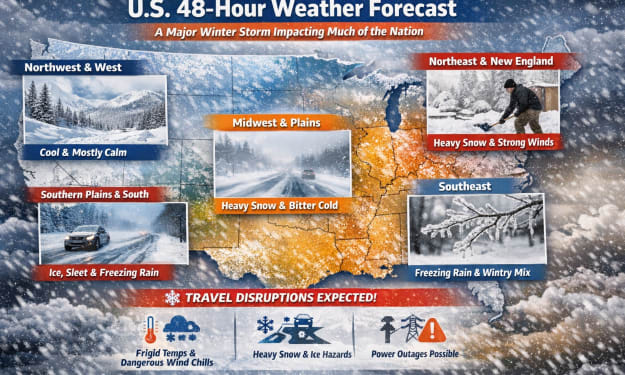
US weather forecast
General Nationwide Pattern (Next 48 Hours) 1. Widespread Winter Storm Across Much of the U.S. A powerful winter storm is forecast to affect large swaths of the country through the next two days. It is expected to bring heavy snow, ice, freezing rain, and dangerously cold temperatures from the Southern Plains into the Midwest, East Coast, and parts of the Southeast.
By USA daily update 5 days ago in Earth
🅼🅸🅳🅽🅸🅶🅷🆃 🆂🅽🅰🅲🅺🆂
"It's 10 in Tuscon! We all know what that means... It's Time for Midnight Snacks with your man, Gerald Gee! Ready to spend the night together? Me too! I'm full of snacks and can't wait to regurgitate them all back into your hungry ears. Crack a brew! Pop some corn! Anything to get ready for one hell of a show where the talk maybe cheap but the words cut deep...
By Lamar Wiggins7 days ago in Fiction



Comments
There are no comments for this story
Be the first to respond and start the conversation.