
What Would Happen if the World Lost Oxygen For 5 Seconds?
Without oxygen would earth as we know it collapse?
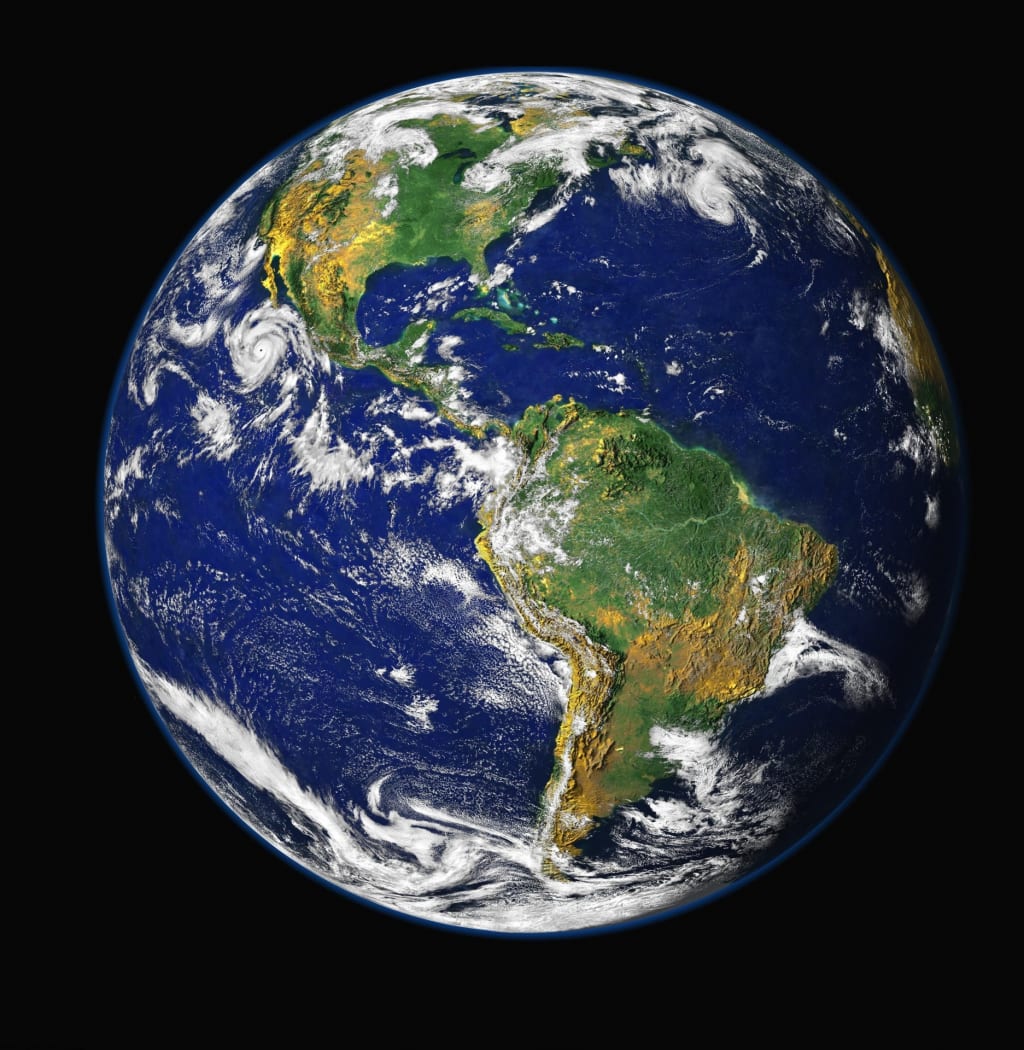
Consider the scenario where Earth temporarily loses its oxygen supply, but only for a fleeting five-second period. Would we simply halt our breath during this brief interlude, and what repercussions would this have on both the atmosphere and the environment? In the forthcoming discussion, we will meticulously explore the precise sequence of events that would transpire if our planet were devoid of oxygen for a mere five seconds.
Before we delve into this contemplation, take a moment to appreciate the gratification of a deep breath. The air you just inhaled primarily consists of oxygen, comprising roughly 21% of our atmosphere, while nitrogen makes up the predominant 78%. Despite not being the most abundant gas in our atmosphere, oxygen holds paramount importance. Devoid of oxygen, the existence of plants, animals, water, and humanity itself would be severely compromised.
Five seconds may not seem like an extended period to endure without oxygen, given that most individuals can endure at least thirty seconds without taking a breath. As a result, your body might not even discern this fleeting absence, and your breathing would seemingly remain normal. However, the repercussions on everything else would be profound.
In a mere five seconds, our planet's appearance would undergo a complete transformation. Bid farewell to structures like the Hoover Dam and the Pantheon dome, along with anything constructed from concrete, as these edifices would instantaneously crumble. Oxygen plays a pivotal role as a binding agent for concrete, and in its absence, concrete essentially reverts to dust. Speaking of structures, any untreated metal would promptly fuse together. This is due to the layer of oxidation on metals, which prevents them from welding without the presence of oxygen. In the event that you happen to be lounging on a beach at this precise moment, anticipate a severe sunburn, for the ozone layer, our shield against the sun's harmful UV rays, is predominantly composed of oxygen. Removing oxygen would render Earth significantly vulnerable to these rays.
Furthermore, losing oxygen would trigger an abrupt loss of 21% of our atmospheric air pressure. Such a drastic change in air pressure is akin to plummeting from sea level to an elevation of 2,000 meters instantaneously. Our ears would not have adequate time to adapt to this dramatic shift.
Is this scenario becoming a bit unsettling? Well, it should, as the absence of oxygen would entail several dire consequences. Without oxygen, combustion processes would grind to a halt, extinguishing fires and rendering vehicles reliant on combustion engines inoperative. This would result in planes falling from the sky and millions of cars abruptly coming to a standstill. In addition, the sky would darken significantly, as sunlight scatters off particles in the atmosphere. With fewer particles to reflect sunlight due to the absence of oxygen, the sky would appear ominously dark.
As if these effects weren't enough, the Earth's crust, which consists of 45% oxygen, would crumble and continue to disintegrate until little remains. This catastrophic event would send all of humanity and the planet itself into a tumultuous freefall.
Given the dire and potentially apocalyptic consequences we've explored in this hypothetical scenario, it becomes paramount to underscore the speculative nature of this thought experiment. The likelihood of such a nightmarish event unfolding in reality is exceedingly low, if not impossible. It is essential to find solace in the fact that our world continues to provide us with a stable and life-sustaining environment, characterized by the reassuring presence of 21% oxygen in our atmosphere. This serves as a poignant reminder of the remarkable equilibrium that has allowed life to flourish on Earth, offering us the privilege of breathing freely and without the constant dread of impending catastrophe.
About the Creator
Neice Epic
Writing articles to help fellow readers learn about new topics!
Keep reading
More stories from writers in Earth and other communities.
Super Intelligent Aliens
For centuries, humanity has gazed at the night sky with a mixture of wonder and curiosity. The question of whether we are alone in the universe has fascinated philosophers, scientists, and storytellers alike. With recent advancements in astronomy, artificial intelligence, and space exploration, the possibility of extraterrestrial life no longer belongs solely to science fiction. Among the many hypotheses about alien life, one of the most unsettling is the existence of super intelligent aliens—beings whose intellectual, technological, and strategic capabilities far surpass those of humans. While the idea may seem speculative, the potential threat posed by such entities raises serious concerns about human survival, autonomy, and the future of civilization.
By Ibrahim Shah 3 days ago in Earth
Learn to Be Alone...
We often find that people are told to stop making 'X, Y and Z' their personality. Well, this only arose in the social media age as especially women's interests: reading, dramas, art etc. was heavily criticised as being 'useless'. It is historically well-documented that though many men require the work of women, whether it be through unpaid labour or entertainment, they also refuse to acknowledge it is important. This is why since it has been something of recognition, they have been complaining of a 'loneliness epidemic' now that women are withholding access.
By Annie Kapur7 days ago in Psyche
Writing About Writing: The Rainbow Trap
The good thing about living in modern times is that LGBTQ representation in media is increasing. Not just in niche and Independant media, either, but also in mainstream media. Books, movies, TV shows, comics... they're finally catching on that LGBTQ+ people form a significant part of their audience, and deserve to see themselves on screen and in fiction, not just as victims in documentaries and true crime shows.
By Natasja Rose6 days ago in Writers


Comments