
What Was Happening on Earth Before Dinosaurs Roamed
Interesting

Billions of years ago, our entire solar system was nothing more than a vast cloud of dust and gas floating in the expanse of space. This tranquil existence was disrupted by an unknown event, the cause of which still puzzles scientists. Some hypothesize that a distant star might have exploded in a supernova, sending shockwaves that set this Dust Cloud into motion. As the cloud began to spin faster, the dust and gas within it were drawn towards the center, forming a dense, rotating disc known as a solar nebula. The gravitational forces at the center of this disc became so intense that hydrogen atoms began to collide with each other, creating helium and releasing enormous amounts of energy. This cataclysmic process ultimately led to the birth of our Sun approximately 4.6 billion years ago.
The formation of the Sun consumed more than 99% of the material in the original Dust Cloud, but the remaining matter didn’t just vanish. Instead, it began to coalesce, forming various shapes. As the solar nebula continued to spin, these clumps of matter collided and stuck together. Some of these clumps grew large enough to have their own gravitational pull, attracting even more material. This is how the planets, including our Earth, came into existence.
However, the Earth of that time would have been unrecognizable to us. It was nothing like the blue and green planet we know today. Instead, it was a searing hot mass, largely composed of magma—molten rock—so intense that it could melt stones. Over the course of several hundred million years, Earth gradually began to cool down. As it did, its outer crust started to solidify. Volcanic eruptions were common, releasing water vapor, ammonia, and carbon dioxide into the early atmosphere. Slowly, oceans began to form from this water vapor, creating a primordial environment that was ripe for the emergence of life.
For a long time, Earth remained a desolate world, devoid of any living beings. But eventually, simple life forms began to emerge in the oceans. These were single-celled microbes, the ancestors of all life forms that would follow, including humans. These early organisms left behind traces in rocks that are about 3.7 billion years old. These traces include a type of carbon molecule that is a hallmark of life.
Around 2.4 billion years ago, a significant evolutionary leap occurred with the development of cyanobacteria. These were the first organisms capable of photosynthesis—using sunlight to make food from water and carbon dioxide—and in the process, they released oxygen into the atmosphere. This oxygenation event had a profound impact on the planet, making it difficult for many anaerobic microbes, which couldn’t tolerate oxygen, to survive.
During this time, a symbiotic relationship between different microbes led to the formation of more complex cells. One microbe began living inside another, forming small structures within the cell called organelles, each with a specific function. One such organelle, the mitochondrion, became essential for converting food into energy. For the first time, DNA was housed within a distinct part of the cell called the nucleus. These complex cells, known as eukaryotic cells, marked a significant step in the evolution of life, paving the way for the development of more advanced organisms.
As Earth’s biological complexity increased, so did its geological changes. Around 1.2 billion years ago, almost all of Earth’s landmasses coalesced into a supercontinent called Rodinia. This massive land formation was surrounded by a vast ocean, making Earth resemble a giant land and sea puzzle. Unlike the vibrant, green continents we see today, Rodinia was barren and rocky, with no plants or animals on land. In this harsh environment, early life forms like algae thrived in the oceans.
The eventual breakup of Rodinia led to significant changes in Earth’s climate and ocean currents, creating new coastlines and environments that fostered the diversification of life. Cells began to group together, eventually evolving into the first animals around 800 million years ago. Among the earliest animals were sponges, but by around 580 million years ago, other forms of life began to appear, including fronds, ribbons, and quilt-like organisms. However, the Earth was not yet done with its evolutionary experiments.
About 40 million years later, during the Cambrian Period, oxygen levels rose, leading to the emergence of new life forms that would replace the earlier ones. This period is known for the rise of bizarre, invertebrate creatures that seem otherworldly by today’s standards. These strange creatures were the ancestors of modern mollusks and crustaceans. For example, Hallucigenia was a peculiar creature with seven or eight pairs of spindly legs and an equal number of spiky protrusions along its back. Another was Anomalocaris, a large predator over three feet long, which dominated the oceans of its time.
As Earth continued to evolve, so too did the complexity of life. The supercontinent Rodinia eventually gave way to new land formations, and with the increase in oxygen, life on Earth began to flourish. Over millions of years, the planet transformed from a barren, scorching hot wasteland into a world teeming with life, setting the stage for the incredible diversity of organisms that inhabit Earth today.
About the Creator
Keep reading
More stories from Sibusiso Khumalo and writers in Earth and other communities.
How to navigate loneliness, according to neuroscience
From a young age, society often conditions us to view solitude as a negative trait. We’re taught to perceive someone who is alone as a "loner," someone who might be unlikable or lacking the qualities needed to integrate into a group. This early stigma shapes our understanding, making us believe that being alone equates to something being wrong with us. When loneliness sets in, it can lead to rumination, catastrophizing social situations, and becoming trapped in negative thought patterns. These thoughts not only influence behaviors but also have tangible effects on our brains and bodies. However, it's possible to expand our perceptions, feel more connected, and overcome the isolating experience of loneliness.
By Sibusiso Khumaloabout a year ago in Humans
Why the Dutch Embrace Floating Homes: Living on Water in a Changing World
In a country where much of the land lies below sea level, the Dutch have developed a unique relationship with water. The Netherlands, famous for its picturesque canals, windmills, and tulip fields, faces constant threats from floods and rising sea levels. In response, floating homes — or “drijvende huizen” — have emerged as a practical, sustainable, and even stylish solution. These homes, gently resting on water, are no longer just a niche idea; they are a reflection of Dutch ingenuity, resilience, and lifestyle innovation.
By Ayesha Lashariabout 12 hours ago in Earth
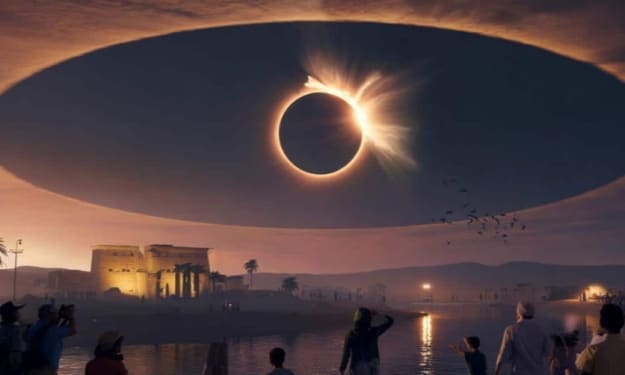
Day Will Turn to Night: Astronomers Officially Confirm Date of the Longest Solar Eclipse of the Century
Astronomers have officially confirmed the date of what is expected to be the longest solar eclipse of the century, an extraordinary celestial event that will temporarily turn day into night across parts of the world. The rare phenomenon is already generating excitement among scientists, space enthusiasts, and the general public.
By Aarif Lashariabout 2 hours ago in Earth



Comments (2)
Interesting
Nice article