
What is the magic of an island? Surviving on the island in just 5,000 years, the mammoth lost weight from 6 tons to 2 tons
Island Rules: Big animals get smaller, small animals get bigger!

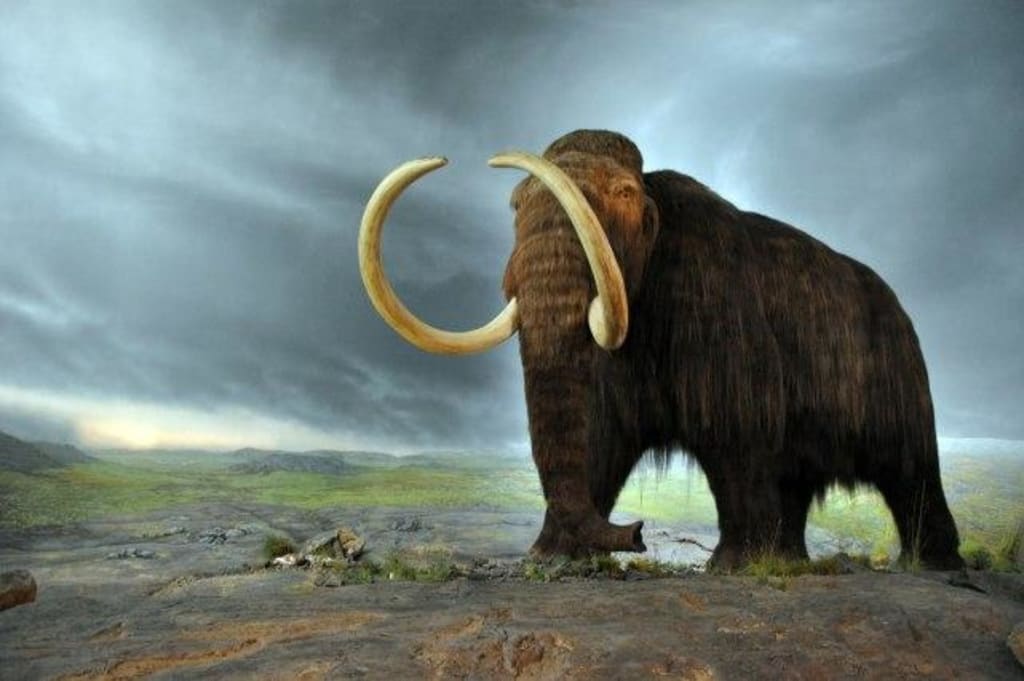
Before humans made their fortunes, mammoths, the behemoths covered in hair, were probably the most widely distributed mammals on the planet. They shuttled between the Eurasian continent and North America, which can be said to be the most important, Most Influential Mammal.
As you may have heard, these epochal species did not wait for the dawn, before the end of the last ice age, some 10,000 years ago, and they went extinct.
However, this is not the case, and while the global mammoth is heading towards extinction, a small group of the species has survived. They entered Wrangel Island, 200 kilometers away, from the Siberian coastline when the ice age came, and then got stuck on it as the ice age ended.
In the "post-mammoth" era, this group of mammoths trapped on Wrangel Island did not really become extinct until about 3,700 years ago. At this time, the Yin Shang Dynasty in China had just overthrown the Xia Dynasty, and the real history of recording history in writing began. era.
If humans entered Wrangel Island at this time, this group of interesting animals might be recorded, but humans did not have enough technology to enter the island until 3,000 years ago, when all mammoths were extinct.
However, to the surprise of modern paleontological researchers, the mammoths on Wrangel Island were far from the mammoths we are familiar with. They only grew to about 1.8 meters and weighed only about 2 tons. , while continental mammoths can grow to 3.2 meters and weigh more than 6 tons.
The mammoths stranded on the island appear to have taken only 5,000 years to slim down themselves into 'miniature mammoths'.
For biological evolution, 5,000 years is just a blink of an eye, so what is it that makes mammoths change so amazingly in such a short period of time?
Island Rules: Big animals get smaller, small animals get bigger!
You may have heard of Komodo dragons before, which can grow up to 3 meters and weigh over 130 kilograms, making them the largest lizards in the world.
You may also have heard of elephant birds, which can be over 3 meters tall, weigh up to 500 kilograms, and are almost twice the size of their continental cousins, which did not become extinct until 1,000 years ago.
What the two species have in common is that they both live on isolated islands, which seem to have made them bigger, the exact opposite of the island mammoth.
In 1964, a Ph.D. graduate named J. Bristol Foster first described the change in body size of island animals. Simply put, small animals become larger after being isolated on islands, which is now the case. It is called "island gigantism", and the isolation of larger animals that cause them to become smaller is sometimes called "island dwarfism."
He personally believes that this is the rule for animals to survive on islands, and he also gives why creatures evolve in this way.
He believes that in an island environment, small creatures will face fewer predators and competitors, giving them enough room to grow larger.
But large animals like elephants don't need to worry too much about predators or competitors—their main concern is lack of resources to sustain themselves.
So for these naturally large animals, the smaller habitat means they have to be smaller to survive.
This explanation seems plausible, but in fact the size of island creatures is much more complex than this.
Island animals that don't play cards according to the routine
In 1978, another young biologist named Ted Case discovered that some organisms did not evolve according to this rule.
He has personally studied a large iguana, the chickwalla, and, in order to gather more data, it has searched the islands of the Americas for sightings of the chickwalla.
According to the island rules we mentioned earlier, the chuckwalla should get bigger on the island, but Case found that the island doesn't make the chuckwalla bigger every time. Some islands got smaller.
In addition to this, Case found an interesting phenomenon in which he studied the island of Angel de la Guarda in chuckwalla.
Open UC browser to see more wonderful pictures
The half-meter-tall Minorca giant rabbit, source: NobuTamu
On the island, there are still two kinds of rattlesnakes - the red diamond rattlesnake and the spotted rattlesnake, which do not evolve according to the island rules.
On the mainland, the red diamond rattlesnake is twice the size of the spotted rattlesnake, but on Angel de la Guarda, the opposite is true, where the spotted rattlesnake is almost twice the size of the red diamond rattlesnake.
These two animals that share the same ecosystem, according to island rules, should both grow bigger at the same time, but the truth is that one gets bigger and the other gets smaller.
In later research, Case found that the spotted rattlesnake was more divergent from its mainland relatives than the red diamond, meaning that the spotted rattlesnake isolated and evolved on its own earlier on the island.
This allows the spotted rattlesnake to integrate into the island ecosystem faster. It makes itself bigger through island rules, while the red diamond rattlesnake landed later, and their living space has been occupied by another kind of rattlesnake, so they can only quickly become smaller. body size to adapt to new environments to find their niche.
Case redefined the island rule for his new discovery, arguing that the central factor driving changes in an organism's size is energy expenditure, with all changes stemming from an animal's energy needs and how much it can get at any given time. energy.
In terms of energy consumption, each animal size has its own distinct advantages and disadvantages. When it comes to competing for resources, larger animals are better at storing energy for emergencies.
But small animals need fewer resources to begin with, and at the same time they are more capable of reproducing, which means small animals are better able to cope with environmental crises and survive dramatic changes.
In short, whether the animals on the island got bigger or smaller had less to do with their original size and more to do with what kind of support the existing ecosystem on the island was able to offer.
The fact that the energy demand causes dramatic changes in animals doesn't just happen on islands, it happens anywhere, it's just islands that magnify the results because there's a single determinant of how much energy an organism can get.
In addition, energy requirements are not only affected by body size, but other characteristics are also affected by this, just because body size changes more easily, which is why the mammoth lost 4 tons in just 5,000 years.
at last
So far, there has been a lot of controversy about whether it's "island gigantism" or the so-called island rule, but personally, I still believe that it's energy that controls it all, after all, the activities of living things are driven by energy.
I don’t know if you have ever thought about where is the largest isolated island on earth? How would creatures evolve on such an isolated island?
In fact, there is a perfect giant island on the earth, that is, the South Pole, and the ocean around it.
There is an ocean current that surrounds the entire continent from west to east in the Antarctic waters. This is the strongest ocean current on earth and is the main reason why Antarctica is so cold. It isolates external resources from entering the Antarctic waters.
At the same time, deep-sea animals tend to develop larger sizes, which is called "deep-sea gigantism", so some people believe that there may be giant animals that are undiscovered and beyond imagination in the world in the Antarctic waters.
About the Creator
sondra mallen
Share a little bit of science every day
Keep reading
More stories from sondra mallen and writers in Earth and other communities.
What happens to whales that die of natural aging, do they really drown? It's actually more frustrating than drowning
As we all know, mammals are a group of organisms that evolved on land, but in this group, there are some branches that do not satisfy land, that is, marine mammals, they choose to return to the ocean.
By sondra mallen3 years ago in Earth
US Mortgage Rates Slide to One of Lowest Levels Since 2022
If you’ve been keeping an eye on the U.S. housing market, you’ve probably noticed some welcome news: mortgage rates have slid to one of their lowest levels since 2022. After years of steadily rising borrowing costs that pushed homeownership out of reach for many, this drop is providing a breath of fresh air for both prospective buyers and homeowners looking to refinance. But before you celebrate too quickly, it’s worth taking a closer look at what this actually means—and what it doesn’t. A Quick Look at the Numbers According to the Mortgage Bankers Association (MBA) and national rate surveys, the average 30‑year fixed mortgage rate has fallen to about 6.18%, marking the lowest reading in nearly two years. Adjustable-rate mortgages are down as well, with five-year ARMs hovering around 5.42%. At first glance, that might not seem like a huge change—but for anyone planning to buy a home, even a fraction of a percentage point can save hundreds of dollars each month. And over a 30-year loan term, those savings can easily add up to tens of thousands of dollars. For context, mortgage rates surged from pandemic-era lows below 3% to highs above 7% by 2023–2024. This recent dip is the first significant decline many buyers have seen in years. Why Are Rates Dropping? Mortgage rates aren’t set in a vacuum—they’re closely tied to economic indicators, including Treasury yields, Federal Reserve policy, and investor expectations about inflation and growth. Here are the main reasons for the recent drop: Falling Treasury Yields: Mortgage rates often track the 10-year Treasury yield. When investors flock to safer assets, demand for Treasuries rises and yields fall, which often translates to lower mortgage rates. Federal Reserve Policy: While the Fed doesn’t directly set mortgage rates, its stance influences market expectations. Hints at rate cuts or a slower pace of hikes can reduce borrowing costs over the long term. Government Support for Housing Finance: Programs and policies from Fannie Mae, Freddie Mac, and other federal initiatives help maintain liquidity in the mortgage market, which can also help push rates down. What This Means for Homebuyers For buyers, lower mortgage rates are essentially a ticket to increased affordability. Here’s how: More Buying Power: Lower rates mean smaller monthly payments for the same loan amount, letting buyers stretch their budgets or afford a larger home. Refinancing Opportunities: Homeowners with high-rate mortgages from recent years may finally find it worthwhile to refinance, cutting costs and freeing up money for other expenses. Encouragement for First-Time Buyers: After years of sky-high borrowing costs, first-time buyers may feel motivated to enter the market again. Still, it’s important to note that rates are just one piece of the puzzle. Housing prices, down payments, and availability remain critical factors for anyone looking to buy. Challenges Remain Even with rates dropping, the housing market isn’t without its hurdles: Tight Inventory: Many regions continue to face a shortage of homes for sale. Less supply means competition remains high, even if financing is cheaper. High Home Prices: Prices in many metro areas are still elevated, so lower rates only go so far in making homes affordable. Economic Uncertainty: Inflation, labor market fluctuations, and other economic factors could still influence mortgage rates and affordability in the months ahead. In short, the rate drop is a positive development—but it doesn’t solve all of the housing market’s challenges. Who Benefits Most? The recent decline in rates is particularly meaningful for: Prospective Homebuyers: They can lock in more affordable monthly payments and better long-term financing. Homeowners with High-Rate Mortgages: Those with older, higher-rate loans may save money through refinancing. Investors and Real Estate Professionals: Lower rates can increase demand and stimulate market activity, providing opportunities in sales, rentals, and property investments. Looking Ahead Analysts have mixed opinions about where rates will go next. Some predict rates could dip below 6% by the end of 2026, while others warn that inflationary pressures and economic uncertainty could keep them relatively stable. What seems clear, however, is that lower rates are likely to provide at least temporary relief for many Americans trying to navigate a challenging housing landscape. Takeaways for Buyers and Homeowners Act Wisely: If you’re in the market to buy or refinance, now may be a good time to explore your options—but don’t rush without considering other costs like property taxes, insurance, and fees. Keep an Eye on Prices: Even with lower rates, affordability depends on home prices and supply in your area. Plan for the Long Term: Use lower rates to strengthen your financial position, not just as a short-term fix. Conclusion The slide in U.S. mortgage rates to one of the lowest levels since 2022 is a rare and welcome reprieve for buyers and homeowners. It offers an opportunity to save money, improve financial flexibility, and, for some, finally step into homeownership after years of elevated costs. However, lower rates alone won’t fix the housing market. Tight inventory, high prices, and broader economic pressures remain hurdles for many Americans. That said, for those prepared to act strategically, this moment may represent a meaningful opportunity in an otherwise challenging landscape.
By Muhammad Hassan5 days ago in Earth


Comments
There are no comments for this story
Be the first to respond and start the conversation.