
What happens to whales that die of natural aging, do they really drown? It's actually more frustrating than drowning
dead whale

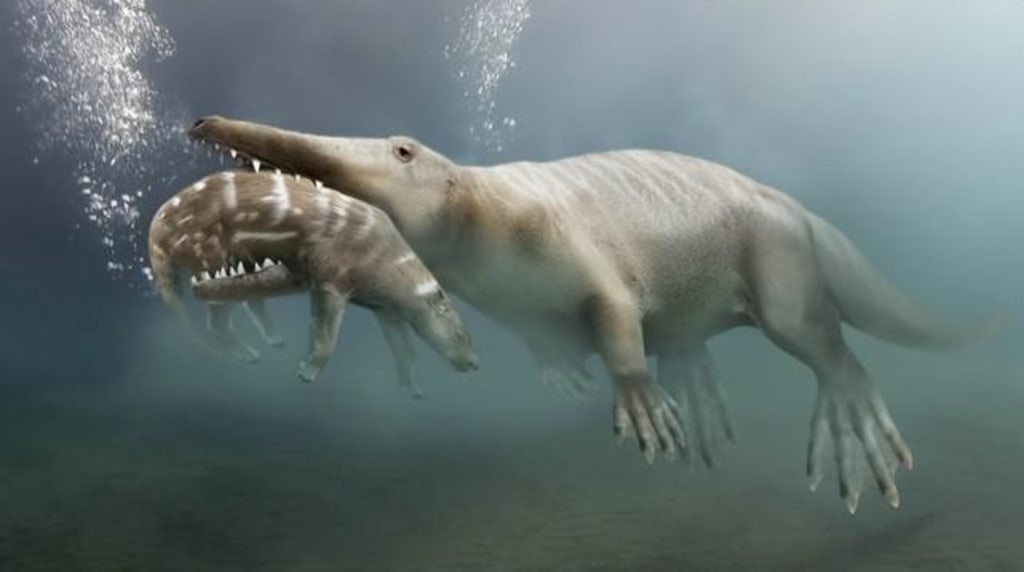
As we all know, mammals are a group of organisms that evolved on land, but in this group, there are some branches that do not satisfy land, that is, marine mammals, they choose to return to the ocean.
Of all the marine mammals, cetaceans (whales and dolphins) are the most adapted to the marine environment, having evolved to not need to return to shore to feed offspring like other marine mammals.
In fact, due to the relatively large size of cetaceans - blue whales are even considered to be the largest animals ever on earth, they are completely unable to return to land, and if they stay on land, they will be crushed to death by their own weight .
The reason why cetaceans are different from other marine mammals is that they are the first to enter marine mammals. About 50 million years ago, the ancestors of cetaceans set their sights on the ocean.
As another branch of marine mammals, pinnipeds (sea lions, seals, etc.), their ancestors went to the sea at least 20 million years later than cetaceans, so pinnipeds can still enjoy the sun on the beach.
In the ocean, cetaceans are mostly the top predators. They basically have no natural predators, especially whales. They are large and basically no predators are willing to take risks.
In fact, due to the lack of predators in the ocean, whales are very "defiant", they will not even avoid large moving objects such as ships, so about 20,000 whales are killed by ships every year, which is currently the main way of death for whales one.
However, because of the lack of natural predators, even though many whales have long lifespans, they are still more likely to live to natural death than other wild animals.
So what happens to those whales that are dying? Is it really going to be drowned as many say?
Whales still breathe with their lungs
Before discussing this issue, we have to briefly understand how whales breathe. As marine mammals, whales retain their original respiratory system. They do not use gills to absorb oxygen in water like fish, but use lungs to absorb oxygen in the air. of oxygen.
Many people may have wondered why whales that have lived in the ocean all their lives have not evolved gills?
It turns out that even in the water, the lungs are more advanced and more useful than the gills, and the reason whales are able to grow so big—so much bigger than the largest fish—is that they use their lungs to breathe.
A key factor that limits the size of animals is the oxygen content. This is because more energy is required to drive a larger body. The dissolved oxygen in seawater is very limited, about 4.59‰~8.72‰, but the air contains 21% oxygen .
Getting marine animals to breathe air is not an easy task, and whales have changed a lot for this.
First, the whale's esophagus and airway have been completely detached to avoid affecting the respiratory system when feeding underwater.
The part of the whales that we usually see that sprays water on their backs is equivalent to their noses, but it is a little different from what many people imagine. The water they spray is not actually swallowed when they eat, but flows into the respiratory tract when diving. , even though they seal their nostrils with their muscles, some water still gets in.
Second, whales have super high levels of hemoglobin and myoglobin.
Hemoglobin and myoglobin store oxygen in the blood and muscles, respectively. Higher levels mean they can store more oxygen at a time, which helps them dive into the water to prey.
Human blood is only about 30% hemoglobin, while whales can have more than 60% hemoglobin, so when whales breathe, most of their oxygen is absorbed, and most of the oxygen we inhale will be exhaled together.
These adaptive characteristics allow whales to have a strong ability to hold their breath. It is believed that the whales with the strongest breath hold can stay underwater for 2 hours on a single breath.
But animals that breathe with lungs, no matter how optimized their bodies are, they can't stay out of the water forever. Will those old and frail whales sink and drown themselves because they can't swim?
Do old whales really drown?
In fact, it's just an Internet myth that old whales can drown. No one has ever seen a whale drown without human intervention, and no stranded whale has been autopsied to reveal that the cause of death was drowned.
Whales do, however, drown, but some are juveniles because they are entangled in the lines of fishing nets or buoys.
The reason we think older whales drown is that they have to keep expending energy to get to the surface. In fact, adult whales don't need to swim too hard to stay afloat and breathe air. Some species of whales simply Floating and motionless sleep, just like some master swimmers can lie directly on the water to sleep.
The ones that really need to swim hard to surface are the newborn calves because they don't have much body fat and don't provide much buoyancy, so they sink without wiggling their tails for a while.
Because baby whales are not small, they have few natural predators in the ocean, but a lot of swimming can tire the baby whales, making them weak and vulnerable to infection or attack.
In general, even if whales need to breathe air, there is a high probability that elderly whales will not drown.
Like other top predators on land, the most likely cause of death for an elderly whale is that it fails to catch prey and then slowly loses power in starvation, at which point some whales are washed ashore (or stranded), In fact, many of the stranded dead whales did die of starvation, not suffocation.
What happens to a dead whale?
Now no one knows what happens to a whale in the final stages of its death because no one has ever seen it.
However, there are still many research teams who have seen abnormally dead whales, that is, after those accidentally stranded whales returned to the ocean, many of them did not survive.
The death process of a whale is probably like this:
When the whales lose power completely - probably not really dead at this point (I haven't been able to find research on whether whales are dead when they sink), they start to sink without any struggle.
The sinking cycle can last anywhere from a few hours to a few days, after which many whales float up due to the action of microorganisms that fill their bodies with gas.
From this point of view, the whales that have just died do not seem to attract too many other animals to eat them. Maybe in the cognition of many animals, whales are not inherently food.
After the whales re-floated, the first ones to move their mouths were all kinds of seabirds. They would settle directly on the whales and eat a few bites when they were hungry. At the same time, marine animals such as sharks would also come over to share a piece of the pie.
When the gas is expelled from the whale, the whale sinks again, a condition many people like to call a whale fall.
Not surprisingly, when a whale sinks completely to the bottom of the ocean, it becomes food for benthic creatures, but it is surprising that a single whale fall can support an entire ecosystem for decades.
Since sunlight can only penetrate about 200 meters into seawater, seafloor organisms beyond this depth cannot rely on the energy input of the sun as the support for the entire ecosystem like terrestrial organisms.
These creatures either build ecosystems based on hydrothermal vents, which are the main way of life under the sea, or on whale carcasses.
Marine researchers now know very little about the ecosystems created by whale fall, but it is certain that such ecosystems are also quite rich in species.
at last
The death of a whale is like the creation of a small universe, allowing many life forms to survive entirely on it for decades. But for whales, the whole process is still very frustrating.
In the process of sinking, floating, and sinking, the dead whales were eaten by marine creatures at all levels, which is a bit desolate to think about.
But then again, this may also be the best destination for life in nature!
About the Creator
sondra mallen
Share a little bit of science every day
Keep reading
More stories from sondra mallen and writers in Earth and other communities.
What kind of dog is the wild Tibetan mastiff, and how are they domesticated?
This is the smallest pet dog breed in the world, known as Chihuahuas, they are as small as 15cm and weigh only 1-3kg. Here's what a Chihuahua looks like when it's standing next to a large dog:
By sondra mallen3 years ago in Earth
The Plant That Thrives Without Water, Loves Heat, and Turns Any Yard Into a Butterfly Haven
As climate change reshapes weather patterns and water scarcity becomes a growing concern, gardeners around the world are rethinking what they plant. The era of thirsty lawns and delicate flowers is slowly giving way to a new generation of resilient, eco-friendly greenery. Among these standout survivors is a remarkable plant that thrives without regular watering, flourishes in intense heat, and transforms ordinary yards into vibrant butterfly sanctuaries. This plant is commonly known as butterfly weed (Asclepias tuberosa), a hardy native species that is redefining sustainable gardening. Built for Heat and Drought Butterfly weed is naturally adapted to harsh conditions. Native to dry prairies and open grasslands, it has evolved deep roots that allow it to access moisture far below the surface. Once established, it requires little to no supplemental watering, even during prolonged heatwaves. Unlike traditional garden plants that wilt under the sun, butterfly weed actually thrives in full sunlight. Temperatures that scorch lawns and stress ornamentals are exactly what this plant prefers. Its thick, narrow leaves minimize water loss, while its sturdy stems resist wind and heat damage. For homeowners living in drought-prone or arid regions, this makes butterfly weed an ideal solution—beautiful without being demanding. A Magnet for Butterflies and Pollinators What truly sets butterfly weed apart is its powerful role in supporting pollinators. Its bright orange, yellow, or red flower clusters are rich in nectar, attracting a wide range of butterflies, bees, and other beneficial insects. Most notably, butterfly weed is a critical host plant for monarch butterflies. Monarchs lay their eggs exclusively on milkweed species, and butterfly weed provides both food and shelter for their caterpillars. With monarch populations declining due to habitat loss and pesticide use, planting butterfly weed can make a real difference. Beyond monarchs, the plant also draws swallowtails, painted ladies, and native bees, turning even a small yard into a buzzing ecosystem. Low Maintenance, High Impact One of the biggest appeals of butterfly weed is how little effort it requires. After the first growing season, maintenance is minimal. It doesn’t need frequent pruning, fertilizing, or pest control. In fact, overwatering or rich soil can actually harm it. It grows well in poor, sandy, or rocky soil—conditions that many gardeners struggle with. Once planted, it establishes itself slowly but steadily, returning year after year as a reliable perennial. This makes it perfect for busy homeowners, beginners, or anyone looking to reduce water bills and gardening workload without sacrificing visual appeal. Beauty With a Purpose Butterfly weed proves that sustainable gardening doesn’t mean compromising on aesthetics. Its vivid flowers bloom for weeks during summer, creating bold color contrasts in landscapes that might otherwise look dry or dull. It pairs well with ornamental grasses, lavender, and other drought-tolerant plants, making it a favorite in modern xeriscaping designs. Whether planted in borders, wildflower gardens, or urban yards, it brings both structure and color. Unlike invasive ornamentals, butterfly weed coexists peacefully with native plants, strengthening local ecosystems rather than disrupting them. A Climate-Smart Choice As heatwaves become more frequent and water restrictions more common, plants like butterfly weed represent the future of gardening. They reduce dependence on irrigation, support wildlife, and help landscapes remain resilient under changing conditions. By choosing drought-tolerant, native species, gardeners can actively participate in climate adaptation—one plant at a time. Butterfly weed, in particular, shows how small choices can have wide-reaching environmental benefits. How to Grow It Successfully Growing butterfly weed is straightforward. It prefers full sun and well-drained soil. Seeds can be sown directly in the ground, though patience is key—the plant focuses on root development in its first year before producing abundant blooms. Once established, it requires little care. Avoid fertilizers and heavy mulching, and let nature do the rest. In return, the plant will reward you with years of color and life. Final Thoughts The plant that thrives without water, loves heat, and turns any yard into a butterfly haven is more than just a gardening trend—it’s a symbol of a smarter, more sustainable relationship with nature. Butterfly weed proves that beauty and resilience can go hand in hand. In a world facing rising temperatures and shrinking resources, it offers a hopeful reminder: sometimes, the toughest plants create the most vibrant life.
By Fiaz Ahmed Brohia day ago in Earth
TODAY’S WEATHER NEWS ACROSS THE UNITED STATES WHAT AMERICANS SHOULD EXPECT RIGHT NOW
TODAY’S WEATHER NEWS ACROSS THE UNITED STATES WHAT AMERICANS SHOULD EXPECT RIGHT NOW Weather conditions continue to be one of the most discussed daily topics across the United States, especially as seasonal transitions bring noticeable changes in temperature, storms, and regional weather patterns. Today’s weather reflects a mix of warming trends, lingering cold pockets, and active systems affecting different parts of the country. From the West Coast to the East Coast, Americans are paying close attention to how temperatures will feel, whether rain or snow is expected, and how conditions may impact daily routines.
By America today a day ago in Earth
The Devil's Cut
“Comrade, finally you’re awake.” The voice was smooth, sensual. A flickering incandescent bar was all that lit the white, sterile room. All Vladimir remembered was everything going black. He tried to move his arms and found them strapped to the gurney.
By Matthew J. Fromm6 days ago in Fiction



Comments
There are no comments for this story
Be the first to respond and start the conversation.