
What Is the Dirtiest Country in the World in 2024?
An In-Depth Look at Global Pollution, with Bangladesh Leading the Charts


Environmental pollution is a global concern, impacting human health, ecosystems, and economies. While many countries have taken significant steps toward combating pollution, others continue to struggle due to various challenges, including economic constraints, governance issues, and rapid urbanization. In 2024, identifying the "dirtiest" country involves assessing key metrics like air quality, water contamination, waste management, and industrial pollution.
Understanding Pollution Metrics
The term "dirtiest" refers to countries with the highest levels of pollution and environmental degradation. The following metrics are commonly used to evaluate environmental cleanliness:
- Air Quality Index (AQI) - Measures the concentration of harmful pollutants in the air, such as particulate matter (PM2.5 and PM10), nitrogen dioxide (NO2), and sulfur dioxide (SO2).
- Water Quality - Assesses the safety and cleanliness of water for human consumption, irrigation, and aquatic ecosystems.
- Waste Management - Evaluates how effectively a country handles its waste, including recycling, landfill management, and littering.
- Carbon Emissions - Tracks the total greenhouse gases emitted by a country.
- Deforestation and Land Degradation - Indicates the impact of human activities on natural ecosystems.
The Dirtiest Country in 2024: Bangladesh
According to global environmental studies and real-time pollution monitoring platforms such as IQAir and the Environmental Performance Index (EPI), Bangladesh is often ranked among the most polluted countries in the world. It faces severe environmental challenges in multiple domains, making it a leading contender for the "dirtiest" title in 2024.
Evidence and Examples
Air Pollution
Bangladesh consistently ranks as one of the countries with the worst air quality. Dhaka, its capital, frequently records AQI levels exceeding 200, indicating "very unhealthy" air.
The primary contributors are:
- Brick Kilns: Thousands of unregulated brick kilns release enormous amounts of PM2.5.
- Traffic Emissions: A lack of efficient public transportation systems leads to excessive vehicle emissions.
- Construction Dust: Rapid urbanization results in poorly regulated construction sites.
- Example Proof: In January 2024, Dhaka recorded an AQI of 270 on average, making it one of the most polluted cities globally, as reported by IQAir.
Water Pollution
Rivers in Bangladesh, such as the Buriganga and Shitalakshya, are heavily polluted with industrial waste, untreated sewage, and agricultural runoff.
Tanneries and factories discharge toxic chemicals, including chromium, directly into waterways without proper treatment.
Example Proof: A study published in 2024 by the Water Resources Group highlighted that over 80% of the country's surface water is contaminated, rendering it unsafe for human use.
Waste Management
- Solid waste management is a major issue in Bangladesh. Dhaka generates approximately 5,000 tons of waste daily, much of which ends up in open dumps, contributing to soil and water contamination.
- Plastic pollution is rampant, with limited recycling facilities and a high dependency on single-use plastics.
- Example Proof: In 2024, Greenpeace South Asia reported that less than 10% of plastic waste in Bangladesh is recycled, with the remainder clogging drains and polluting waterways.
Deforestation and Land Degradation
The Sundarbans, a UNESCO World Heritage Site and the world's largest mangrove forest, continues to face threats from illegal logging and industrial activities.
Unregulated urban expansion has led to the loss of arable land, exacerbating environmental challenges.
Example Proof: A satellite imagery analysis conducted by the World Resources Institute in 2024 revealed a 15% increase in land degradation in Bangladesh compared to 2015.
Health Impacts
- Pollution-related diseases, including respiratory infections and waterborne illnesses, are widespread.
- The World Health Organization (WHO) estimates that air pollution alone contributes to 88,000 premature deaths annually in Bangladesh.
- Global Perspective: Other Highly Polluted Countries
- While Bangladesh ranks as one of the dirtiest, other countries also face significant environmental challenges:
India: Severe air pollution in cities like Delhi, poor water quality, and improper waste management.
Pakistan: High AQI levels, mismanaged urban waste, and industrial pollution.
Chad: Indoor air pollution from biomass burning and limited sanitation infrastructure.
China: Though improving, some regions still suffer from industrial smog and heavy metal contamination in water.
Steps Toward Improvement
- Despite its challenges, Bangladesh has initiated several programs to address pollution:
- Cleaner Brick Kilns: Efforts are underway to modernize brick production with energy-efficient technology.
- Waste-to-Energy Projects: Pilot projects aim to convert municipal waste into energy.
- International Collaboration: Partnerships with organizations like the World Bank and UNDP for environmental sustainability.
Conclusion
In 2024, Bangladesh remains one of the dirtiest countries in the world due to its high levels of air and water pollution, inadequate waste management, and rapid urbanization. However, the global community's efforts and Bangladesh’s initiatives provide hope for a cleaner future. Addressing these challenges requires collective action, strict regulations, and public awareness to ensure a healthier environment for all.
About the Creator
Abdul Malik
As a content writer, you likely excel at crafting compelling narratives, delivering valuable information, and engaging audiences with your words. Currently i am writing article for invideo ai tool for making faceless videos for youtube
Keep reading
More stories from Abdul Malik and writers in Earth and other communities.
Mexico to sue Google for changing ‘Gulf of Mexico’ name on US maps
In a move that has ignited international debate, Mexico is preparing to sue Google over the tech giant's decision to rename the "Gulf of Mexico" to the "Gulf of America" on its U.S. maps. This change aligns with an executive order signed by U.S. President Donald Trump, mandating the renaming of the body of water. The Mexican government, led by President Claudia Sheinbaum, contends that this unilateral alteration infringes upon Mexico's sovereignty and disregards established international agreements.
By Abdul Malik11 months ago in Earth
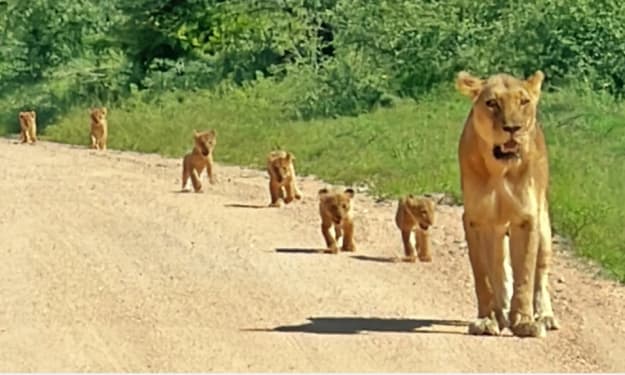
Tiny Lion Cubs Struggle To Keep Up With Mom
In the heart of the African savannah, life is a constant lesson for young animals. Few scenes are as endearing — or as heartwarming — as tiny lion cubs trying to keep pace with their mother. These little bundles of fur face a world full of challenges, from learning to hunt to avoiding dangers, all while depending on the guidance and protection of their experienced mom. Watching cubs wobble and tumble as they attempt to keep up with their mother reminds us that growing up, even in the wild, is a journey full of struggle, determination, and adorable missteps. The Early Days of Lion Cubs Lion cubs are born blind and helpless, usually in litters of two to six. For the first few weeks, they rely entirely on their mother for warmth, food, and safety. Even after opening their eyes and beginning to explore, the cubs are far from independent. The first months are crucial. Cubs learn social cues, hunting basics, and survival skills simply by watching their mother and the pride. But as anyone who has observed them knows, there’s often a huge gap between observation and action. Tiny cubs often struggle to match their mother’s pace, especially when she moves through long stretches of savannah or leads the family on patrols. A Mother’s Role in the Wild For a lioness, raising cubs is a full-time commitment. She hunts, defends her territory, and teaches her young, all while staying alert to predators such as hyenas, leopards, and even rival lions. The cubs, meanwhile, attempt to mimic her every move — often with clumsy yet charming results. A mother lion’s patience is remarkable; she frequently slows down, nudges them along, or stops to ensure no cub is left behind. These moments, while stressful for the tiny cubs, are vital learning opportunities. Struggling to Keep Up: Why It’s So Hard There are several reasons why tiny lion cubs have trouble keeping pace with their mother: Short Legs, Big Steps: Lion cubs’ legs are tiny and their coordination is limited, making it difficult to cover the same distance as an adult lioness. Curiosity: Cubs are naturally curious. A single butterfly or rustling bush can distract them, leaving mom to pause repeatedly. Energy Levels: Young lions tire quickly. Even with frequent naps, the cubs’ stamina is far lower than their mother’s. Learning Through Play: Play is not just fun; it teaches hunting, balance, and social skills. Running off to pounce on a sibling or chase an insect is all part of their education. Despite these challenges, the cubs’ determination to keep up demonstrates their resilience and growing understanding of the wild world. Lessons in Teamwork and Survival Every cub struggling to keep up is also learning crucial survival skills. The journey across the savannah is more than a test of speed — it’s a lesson in: Coordination: Cubs learn how to move efficiently across different terrains. Patience: They begin to understand the rhythms of adult life and the pace required for survival. Social Skills: Staying with the group teaches cubs how to interact with siblings and the pride, which is essential for their future roles. Observation: By following their mother, cubs study hunting techniques, territorial behavior, and predator awareness. Even the moments when cubs stumble or lag behind are essential for their development. These experiences prepare them for independence, which comes sooner than many might expect. The Cutest Moments in the Wild Anyone who has watched tiny lion cubs knows that their struggles are often irresistibly cute. Video clips from wildlife reserves frequently show cubs toddling along, tumbling over each other, or getting distracted mid-step. Observers often comment that these little stumbles reveal personality, determination, and playfulness, making them one of nature’s most heartwarming spectacles. While their mother is serious and focused, the cubs inject a sense of humor and lightness into life on the savannah. Why This Matters The struggles of lion cubs aren’t just adorable — they’re vital for understanding wildlife behavior. Conservationists and animal behaviorists use these moments to study growth patterns, social structures, and survival strategies in lion populations. These observations also highlight the importance of preserving natural habitats. Cubs must learn in a safe environment to survive; habitat loss, poaching, and climate change make these early struggles even more dangerous. Protecting the African savannah ensures that future generations of lions can experience the same lessons and playful tumbles. The Road to Independence Within a year, these tiny cubs will be more agile, faster, and more confident. By the time they reach two to three years old, males may begin to leave the pride, while females often stay and become caretakers themselves. Every misstep, tumble, and lagging moment is part of the journey toward strength, coordination, and independence. Watching them now gives us a glimpse of the challenges they will overcome, and the survival skills they will carry for life. A Celebration of Motherhood Ultimately, these scenes remind us of the incredible bond between mother and cubs. Her patience, vigilance, and teaching are the foundations of their future. The cubs’ struggles highlight the trials of growing up, while their determination showcases the resilience and beauty of wildlife. For those observing, it’s a powerful lesson in care, guidance, and perseverance, not just in lions but in the natural world as a whole. Final Thoughts Watching tiny lion cubs try to keep up with their mother is both entertaining and enlightening. It’s a story of growth, struggle, and resilience — a reminder that even the fiercest creatures start small, learning step by step. These little lions capture hearts while teaching life lessons: patience, determination, teamwork, and the importance of guidance. As they tumble and waddle across the savannah, they show us that growth is a process, one adorable misstep at a time. For wildlife enthusiasts, animal lovers, and anyone enchanted by nature, these tiny cubs are proof that even in the wild, love, care, and persistence are universal truths.
By Aarif Lashariabout 14 hours ago in Earth
Microbiota, microbiome or microflora: how to speak correctly and why it is for health.
You've probably heard the phrase, "We are what we eat." But modern science says more precisely: we are also those who live in us. Until 2016, it was believed that there are many times more bacteria in our body than our own cells. The latest calculations by mathematicians show that we divide the body with our microorganisms by about 50/50: about 30 trillion of our cells versus 38 trillion bacterial ones.
By Yaroslav Gorohov4 days ago in Earth



Comments
There are no comments for this story
Be the first to respond and start the conversation.