
What is space-time? Understanding the fabric of the universe.
Space-time is the concept that unifies the three dimensions of space and the fourth dimension of time into a single entity.

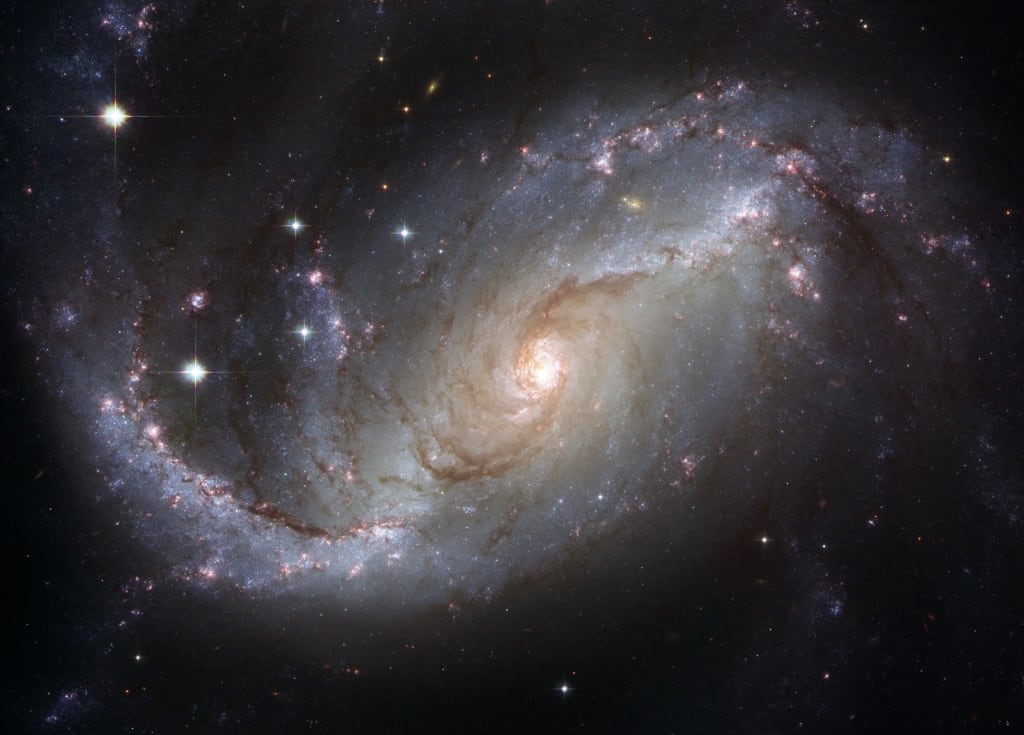
Space-time is the concept that unifies the three dimensions of space and the fourth dimension of time into a single entity. It is the fabric of the universe, a concept that is central to our understanding of the cosmos.
In classical physics, space and time were considered separate and independent entities. Space was thought to be the arena in which matter and energy interacted, while time was seen as the medium in which events unfolded. However, in the early 20th century, Albert Einstein's theory of relativity showed that space and time were actually intertwined and that they could not be understood independently of one another.
Einstein's theory of relativity postulates that space and time are not separate, independent entities but are instead part of a unified four-dimensional entity known as space-time. According to this theory, the laws of physics must be the same for all observers, regardless of their relative motion. This means that the concept of space and time being separate and independent from one another is not applicable in situations where objects are moving at high speeds or are in the presence of strong gravitational fields.
The idea of space-time can be difficult to visualize, but it can be helpful to think of it as a sort of fabric that can be stretched and warped by the presence of matter and energy. This means that the geometry of space-time is not fixed but can be altered by the presence of massive objects. The more massive an object is, the more it will warp the fabric of space-time around it, causing other objects to follow curved paths around it.
One of the key implications of Einstein's theory of relativity is that the flow of time is not constant throughout the universe. This means that time passes more slowly in regions where the fabric of space-time is warped by the presence of massive objects. For example, time passes more slowly closer to the surface of the Earth than it does at higher altitudes, due to the warping effect of the Earth's mass on the fabric of space-time.
The concept of space-time has revolutionized our understanding of the universe, and it has played a central role in many of the most significant discoveries in physics over the past century. For example, the theory of general relativity has been used to explain the behavior of black holes, which are regions of space-time where the gravitational field is so strong that nothing can escape from it, not even light. It has also been used to explain the behavior of gravitational waves, which are ripples in the fabric of space-time caused by the acceleration of massive objects.
Another key concept in our understanding of space-time is the idea of causality. Causality is the principle that events can only be caused by events that happened before them. In a universe where the flow of time is not constant, causality becomes a much more complex concept. It is possible for events to occur in one region of space-time that are causally disconnected from events in another region of space-time. This has led to much speculation about the possibility of time travel and the existence of parallel universes.
Despite the enormous strides that have been made in our understanding of space-time over the past century, there is still much that we do not know about this fundamental concept. For example, scientists have yet to reconcile the theory of relativity with the theory of quantum mechanics, which describes the behavior of matter and energy at the smallest scales. This has led to much speculation about the possibility of a "theory of everything" that would unite these two theories and provide a complete description of the universe.
In conclusion, space-time is the fabric of the universe, a concept that unifies the three dimensions of space and the fourth dimension of time into a single entity. It is a fundamental concept in modern physics, and it has played a central role in many of the most significant discoveries in the field.
About the Creator
Hanaff Jr
Just Writer...
Why Hunters Make the Best Entrepreneurs: The Survival Mindset That Builds Powerful Businesses
Entrepreneurship often requires a distinct mindset. Starting a business means entering uncertain territory. Many people search for traits that define successful founders. Interestingly, the mindset of a hunter shares many similarities with the mindset of an entrepreneur. Hunters must survive in unpredictable environments. They observe, plan their actions, and stay focused on their goal. These same qualities help business leaders build strong companies. This is why many experts believe hunters make the best entrepreneurs. A hunter does not depend on luck alone. Instead, they rely on preparation, awareness, and patience. Entrepreneurs face similar conditions in competitive markets. They must search for opportunities while avoiding risks. They study the environment and act when the moment is right. Both hunters and entrepreneurs must think clearly under pressure. They must trust their instincts but also rely on strategy. These shared skills help explain why the hunter mindset often leads to success in business.
By Darrell Hulsey3 days ago in Earth


Comments
There are no comments for this story
Be the first to respond and start the conversation.