

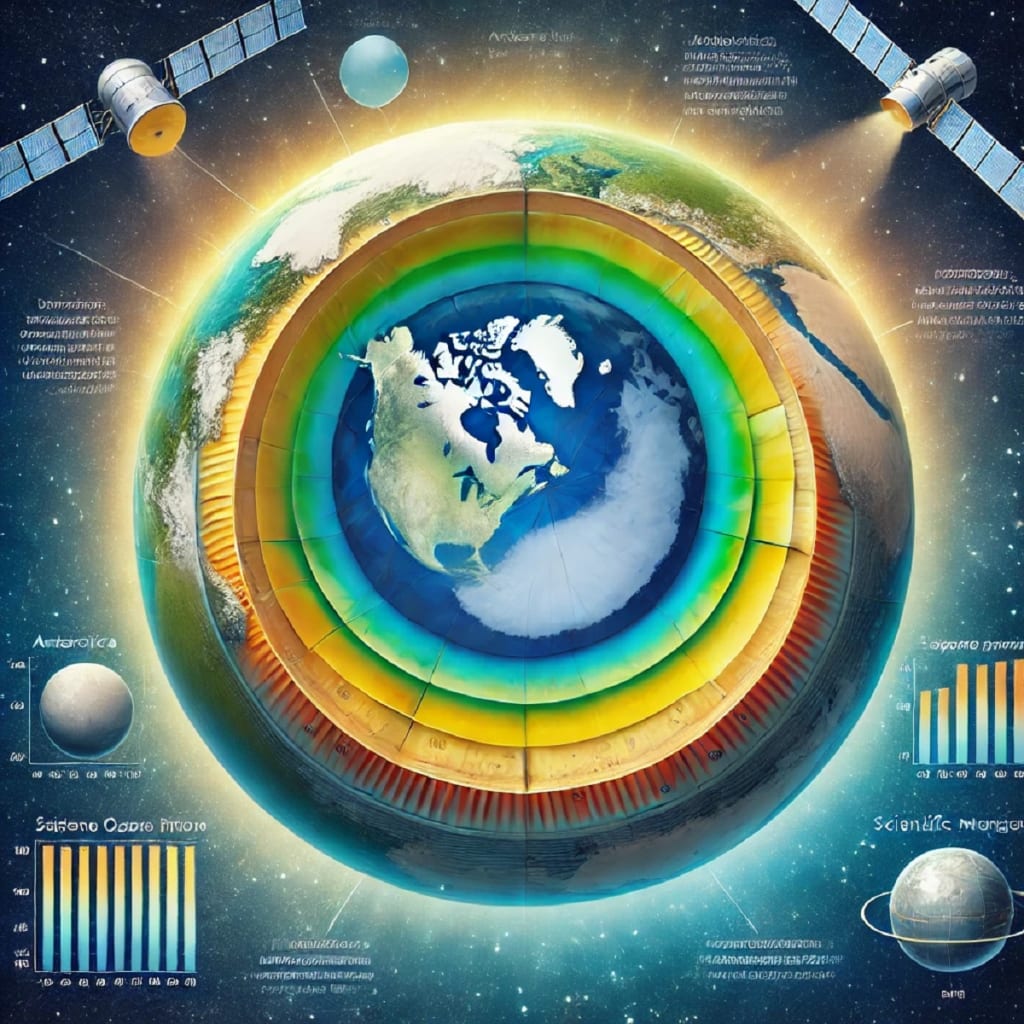
In October 1982, a significant discovery was made at a research station in Antarctica. Scientist Joseph Farman was measuring the levels of ozone in the atmosphere when his old machine showed a shocking 40% decrease in ozone. Initially skeptical, he thought it must be a malfunction. Surely, if there were such a drastic drop, NASA satellites would have detected it. However, upon returning with a new machine in 1983, he found even lower levels of ozone. After further measurements in 1984 at a different location, it became clear: something was seriously wrong. Farman took his findings to NASA, leading to global awareness of the ozone hole over Antarctica, a phenomenon that had been overlooked by scientists until then.
Understanding the Ozone Layer
Before diving deeper, let’s clarify what the ozone layer is. Ozone, a gas with the chemical formula O3, is composed of three oxygen atoms. This protective layer is situated about 15-35 km above Earth’s surface and absorbs the majority of the sun's harmful ultraviolet (UV) radiation. The ozone layer formed approximately 600 million years ago, and its concentration peaks at about 32 km above the Earth's surface.
The Chemistry Behind Ozone Formation
Ozone is created when UV radiation splits oxygen molecules (O2) into individual oxygen atoms, which then combine with other oxygen molecules to form ozone (O3). This process is part of the Chapman cycle, named after scientist Sydney Chapman, who first explained it in 1929. The ozone layer is crucial for life on Earth, as it shields us from harmful UV rays that can lead to serious health issues like skin cancer and cataracts.
The Ozone Hole: A Man-Made Crisis
The ozone hole is a drastic thinning of the ozone layer, primarily caused by human-made chemicals known as chlorofluorocarbons (CFCs). CFCs were widely used in products like aerosols, refrigerants, and solvents. When they are released into the atmosphere, they can remain stable for decades. However, when they reach the stratosphere, they are broken down by UV radiation, releasing chlorine atoms that destroy ozone molecules. This led to alarming predictions that by 2050, the ozone layer could be completely depleted.
The Impact of the Ozone Hole
The implications of a depleted ozone layer are severe. Increased UV radiation reaching the Earth's surface can lead to higher rates of skin cancer, eye cataracts, and weakened immune systems, not to mention devastating effects on ecosystems and wildlife. The ozone depletion crisis became a wake-up call for scientists and policymakers alike.
The Response: The Montreal Protocol
Recognizing the gravity of the situation, international action was needed. In 1987, the Montreal Protocol was established, marking a significant global commitment to phasing out CFCs and other ozone-depleting substances. This treaty was unique in that it received unanimous support from all participating countries, making it one of the most successful environmental agreements in history.
Results of the Montreal Protocol
By the 1990s, the use of CFCs had significantly declined. The collective efforts of nations led to a dramatic reduction in ozone-depleting substances. Despite the challenges, the Montreal Protocol's success has shown that global cooperation can lead to positive environmental change.
The Current State of the Ozone Layer
Fast forward to today, and we are beginning to see the positive effects of the Montreal Protocol. According to a United Nations report from January 2023, the ozone layer is on track to recover to its pre-1980 levels by around 2040. The ozone hole is already showing signs of shrinking, and further recovery is expected by 2066 over Antarctica.
Lessons Learned
The story of the ozone hole teaches us that collective action against environmental threats is not only possible but essential. The rapid response to the ozone crisis demonstrates how nations can come together for a common cause. Today, as we face the pressing challenge of climate change, the ozone layer's recovery serves as a hopeful reminder that we can indeed make a difference.
What’s Next?
While the ozone layer is recovering, we must remain vigilant. The replacement of CFCs with hydrofluorocarbons (HFCs) has presented new challenges, as these substances are potent greenhouse gases. The fight is not over, and continued global cooperation is needed to address both ozone depletion and climate change.
As individuals, we can contribute by making eco-friendly choices, advocating for policies that protect our environment, and staying informed about the issues at hand. The ozone layer's recovery is a testament to what we can achieve when we work together. Let’s carry this momentum forward to tackle the next big environmental challenge: climate change.
About the Creator
Ellen Sammy
Writer and Blogger
Keep reading
More stories from Ellen Sammy and writers in Earth and other communities.
The Extraordinary Birth of Planet Earth A 4.6 Billion Year Journey
Can you envision our Earth, a vibrant home to countless species, originating as a molten ball of lava around 4 billion years ago? This transformation from lifeless lava to the lush planet we inhabit today is a captivating story. Join me as we explore the intricate details of Earth's birth, the formation of our Moon, and the origins of water that made life possible.
By Ellen Sammy12 months ago in Earth
📢 Raise Your Voice Thread: 03/05/2026
Our “Raise Your Voice Threads” are hosted most alternating Thursdays at 12PM ET to offer creators more avenues to uncover exceptional stories on Vocal. As we are continuously searching for fresh creators and inspiring stories, this thread provides an opportunity to exchange and discuss the stories that have moved and motivated us on Vocal.
By Raise Your Voice by Vocal3 days ago in Resources



Comments
There are no comments for this story
Be the first to respond and start the conversation.