
What are HCHO and TVOC? There is a way to understand the hazardous substances after renovation and live with peace of mind
There are ways to live with peace of mind after renovation

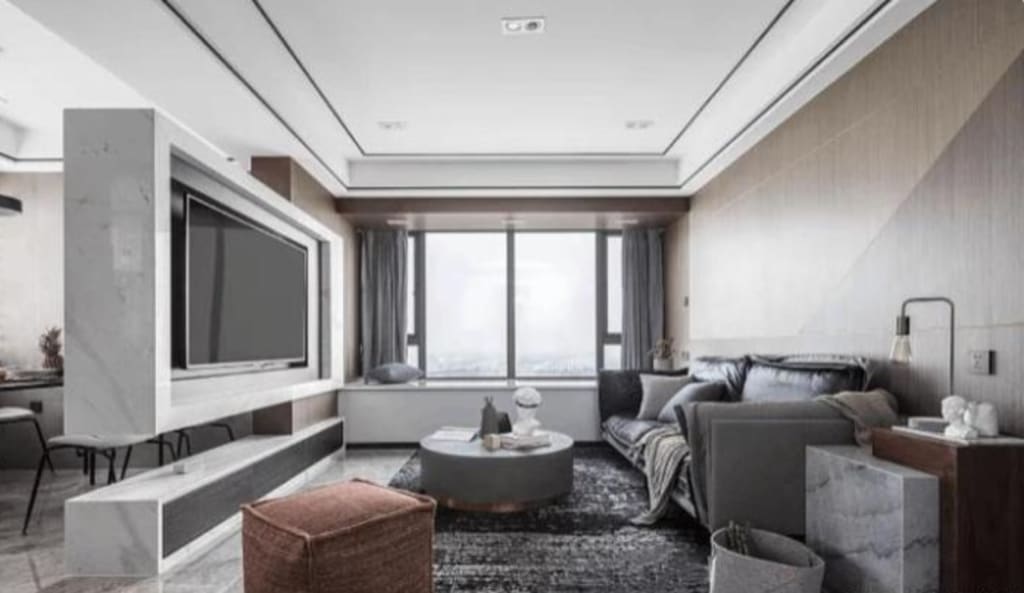
It is well known that one issue that must be taken into account in the renovation of new houses is the removal of formaldehyde. But most people only know that it is in addition to formaldehyde, the specific situation is not clear. Generally, just give money on the line. Recently a friend bought a house and started renovating it. I am very concerned about this matter. Come talk to me about it and hopefully make yourself feel more at ease in your new house.
Whenever we talk about air treatment for a new house, we always talk about removing formaldehyde. But it's not just about removing formaldehyde. Formaldehyde is only the most significant toxic and harmful pollution, TVOC, ammonia, and radon are also included. Next, let us introduce and understand them one by one!
Let's start with formaldehyde, the most common one. In formaldehyde, the chemical formula is HCHO or CH2O. although there is H2O in CH2O, there is a big difference between formaldehyde and water. We should never leave the water and we should never leave formaldehyde. Both are substances in different states. Formaldehyde is a colorless and irritating gas that can irritate the eyes and nose. You may have heard of an aqueous solution of formaldehyde, 37% formaldehyde in water, commonly known as formalin. Yes, it is a preservative used in medicine to soak S bodies to prevent decay.
On 27 October 2017, formaldehyde was added to the list of Class I carcinogens in the list of carcinogens published by the World Health Organization's International Agency for Research on Cancer. This shows how harmful formaldehyde is to the human body. But even so, we cannot avoid encountering formaldehyde in our lives. Formaldehyde is a chemical raw material used in the manufacture of adhesives, engineering plastics, herbicides, insecticides, etc., and is also used in clothes to resist wrinkles and wrinkles. It is also used in clothing to resist wrinkling, shrinkage, flame retardant, or maintain the durability of printing and dyeing, or improve the feel of the hand. Cotton textiles are the most commonly used printing and dyeing auxiliaries because they are prone to wrinkling and the use of printing and dyeing auxiliaries containing formaldehyde can improve the stiffness of cotton fabrics.
When decorating many items require adhesives, such as various panels, paints and coatings, furniture, and so on for walls and floors. Even fabrics such as curtains can contain them. Formaldehyde will be released after use. The greater the amount used, the higher the formaldehyde content. This is why formaldehyde has become the biggest hazard in decoration.
TVOC is called Total Volatile Organic Compounds, meaning Total Volatile Organic Compounds. Any carbon-containing compound involved in photochemical reactions in the atmosphere, except carbon monoxide, carbon dioxide, carbonic acid, metal carbides, carbonates, and ammonium carbonate. This includes benzene, alkanes, aromatic hydrocarbons, olefins, halogenated hydrocarbons, esters, aldehydes, ketones, etc. So formaldehyde is actually a TVOC, but formaldehyde is the most harmful gas, so it is presented separately.
Organics are integral to the manufacture of various items in our lives, so it is not surprising that they are emitted. In the case of the adhesives mentioned earlier, there are many other organic substances besides formaldehyde. Formaldehyde may account for a higher proportion, but the sum of the other organics is quite large compared to formaldehyde. We don't need to distinguish exactly which substances are which because most organic substances are toxic.
Ammonia is an irritating gas, and the "spicy" smell that we often smell in toilets is ammonia. But the main source of ammonia in renovation is concrete. In winter, especially in the north, concrete is made with antifreeze and early strength agents to protect it from low temperatures. This antifreeze often contains urea, which breaks down into ammonia gas. In certain panels and adhesives, ammonia gas is also released.
Radon is an inert gas that has no biological interaction with the human body but contains radioactivity. When inhaled by humans, the alpha particles decayed by radon will cause radiation damage to the human respiratory system, thus causing lung cancer. During the renovation, the main sources of radon are granite, brick sand, cement, and plaster, especially natural stone containing radioactive elements, which are most likely to release radon.
The introduction of the four harmful substances is finished. As we can see, these harmful substances can be said to be inevitable. The sources of release of these harmful substances are necessary for our renovation. Although environmentally friendly decoration exists and is advocated nowadays, it does not mean that we can completely avoid the production of harmful substances. It can be said that even if it is not the renovation period, we are still exposed to harmful substances in our daily life, but they are used in large quantities during the renovation, so the harm is more significant.
Since we can't avoid it, we have to find ways to get rid of it. The good thing is that many professional interior management companies can remove harmful substances from the room for us. At the same time, it is best to pay more attention when choosing decoration materials and not to be greedy for cheap and buy some substandard and poor quality products. Finally, allow as much time as possible for the new room to be ventilated so that potentially dangerous substances in the new room are carried away by air.
Finally, I would suggest that you follow through with the renovation if possible. Rather than giving the money to someone else and being carefree yourself. After all, it's a place you're going to live in for the long term, and you'll feel most comfortable keeping a good eye on quality yourself!
About the Creator
Aliser
be happy every day
Trump’s Message to Norway: A Controversial Diplomatic Signa
**Trump’s Message to Norway: A Controversial Diplomatic Signal** In January 2026, a written message sent by former U.S. President Donald Trump to Norway’s Prime Minister Jonas Gahr Støre sparked widespread political debate and media attention. The message quickly became a topic of discussion across the United States and Europe, not because it announced a formal policy change, but because of its tone and implications. It reflected Trump’s personal view of international recognition, his frustration over the Nobel Peace Prize, and his broader vision for American power and security in a changing world.
By America today about 14 hours ago in Earth
Pretty Privilege vs. Pretty Punishment
In today’s image-driven world, beauty is often described as a superpower. Attractive people are believed to get more opportunities, more attention, and more advantages in life. This phenomenon is commonly called pretty privilege. But there is another side of this story that is discussed far less often — pretty punishment.
By Aarif Lashariabout 19 hours ago in Earth




Comments
There are no comments for this story
Be the first to respond and start the conversation.