
"Warming Earth, Waning Time"
"Unveiling the Science and Consequences of a Changing Climate"
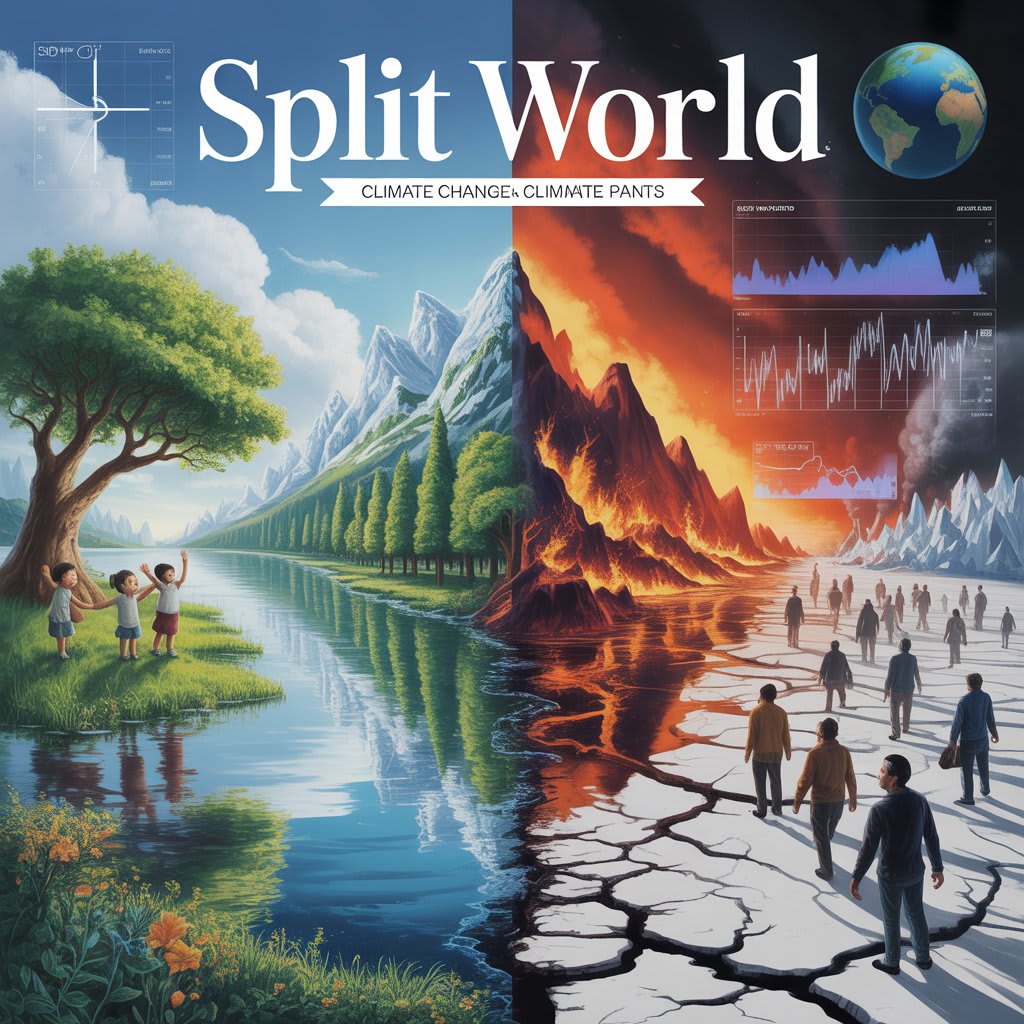
Warming Earth, Waning Time: Unveiling the Science and Consequences of a Changing Climate
A hush settled over the planet an unsettling calm, like a world holding its breath. Beneath this silence, however, Earth’s systems were in turmoil. Science has made it clear: our planet is warming faster than ever, and the window to act is rapidly closing.
According to the latest studies, the remaining carbon budget to limit warming to 1.5 °C is down to approximately 130 billion tones of CO₂ a threshold likely to be crossed within just three years if emissions stay high. That budget had already shrunk dramatically in just a few years: from about 250 GtCO₂ in 2022 to nearly half that by 2025 . Each emission—each fuel-burning, each cleared forest pushes us closer to a reality beyond our control.
In 2024, the planet surpassed 1.5 °C above pre-industrial temperatures for the first time in recorded history, a signal not just in measurements but in impacts. Earth is now heating nearly 0.27 °C per decade, an acceleration with real consequences: Arctic ice retreat, record-breaking heat, and oceans absorbing an increasingly dangerous volume of heat.
This warming acts through self-reinforcing feedback loops. Shrinking ice reduces the albedo effect less sunlight is reflected, and more is absorbed, compounding warming. Melting permafrost releases methane, a potent greenhouse gas that further intensifies the heat . The oceans, which soak up over 90% of excess heat, grow warmer and more acidic, disturbing marine food webs and contributing to rapid sea-level rise .
With these changes come harsh consequences:
1. Extreme Weather on the Rise
Heatwaves have surged in frequency and intensity. Europe’s recent "deadly early summer" tracked soaring temperatures beyond 35–40 °C, sparking wildfires in Spain and Greece . In India, urban heat island effects now compound warming, making cities up to twice as hot as rural areas. Meanwhile in Texas, once-in-a-century floods are becoming routine, fueled by supercharged moisture in a warming atmosphere .
2. Oceans, Ice, and Rising Seas
Glacial melt from Greenland and Antarctica has accelerated—losing some 720 billion tones of ice annually feeding sea-level rise and threatening coastal zones . Already, around 230 million people live within 1 m of sea level, with up to 1 billion in the 1–10 m range . Even modest rises 20 cm by 2050 could cost coastal cities $1 trillion annually .
3. Human Health and Security
The IPCC notes “very high confidence” that climate change is intensifying heatwaves, floods, droughts, and infectious disease threats Mental health tolls are rising through trauma from disasters, displacement, and resource loss . Floods, crop failures, and erosion are already displacing millions, with projections of 150–200 million climate migrants by 2050
4. Economic and Biodiversity Impacts
Global economic output may shrink by an average 19% by 2050 in a high-emissions scenario. Agricultural impacts loom large: farm yields drop 4–14% by century’s end, putting up to 1.3 billion people at new risk of hunger . Meanwhile, ecosystems fray: coral reefs bleach in marine heatwaves, forests ignite in megafires, and species begin to vanish .
5. Tipping Points and Cascading Risks
Scientists warn we’re approaching dangerous thresholds. Melting ice may alter volcanic stability recent studies link glacier retreat in Chile to volcanic activity, hinting at potential CO₂ and methane releases from volcanic eruptions . Forests, peatlands, and ocean systems that once absorbed CO₂ are now turning into carbon sources, accelerating warming .
________________________________________
A Race Against Time
The science is stark: our carbon clock is ticking, and time is slipping. To avoid breaching 1.5 °C, global emissions must peak before 2025 and fall by over 40% by 2030. Yet emissions surged to a record 41.6 billion tones CO₂ in 2024, with no sign of slowing.
The consequences are no longer theoretical they’re unfolding. But this moment remains a crossroads: aggressive mitigation, swift energy transitions, nature restoration, and resilient social structures could still bend the curve. Geoengineering, adaptation investments, sustainable urban planning, and global solidarity are now essential.
________________________________________
Conclusion
Warming Earth, Waning Time is more than a metaphor it is an urgent beacon. Each fractional degree we fight for matters. The window to act decisively is shrinking fast.
With the carbon budget nearly spent and Earth’s systems showing signs of stress, the challenge has shifted from “will we act?” to “how well and how soon?” The next decades will define the legacy of humanity’s time on our warming Earth.
About the Creator
Keep reading
More stories from Khurram Munir and writers in Earth and other communities.
"Heating the Earth: A Global Temperature Shift"
Opening Warmth The morning sun felt different now denser, relentless, almost tangible. Across continents, thermometers shattered records; the planet's pulse quickened with each rising fraction of a degree. By 2025, every extra slice of warmth had become a global alarm.
By Khurram Munir 7 months ago in Earth
Tributes Pour In for Beloved Actress Catherine O’Hara
Tributes are pouring in from fans, fellow actors, and filmmakers celebrating the career and influence of Catherine O’Hara, one of the most beloved figures in film and television comedy. Known for her unforgettable roles, sharp wit, and emotional range, O’Hara has built a legacy that spans decades and generations of audiences.
By Aarif Lashari7 days ago in Earth


Comments
There are no comments for this story
Be the first to respond and start the conversation.