
"Heating the Earth: A Global Temperature Shift"
"Tracking the Rising Temperatures and Their Global Impact"
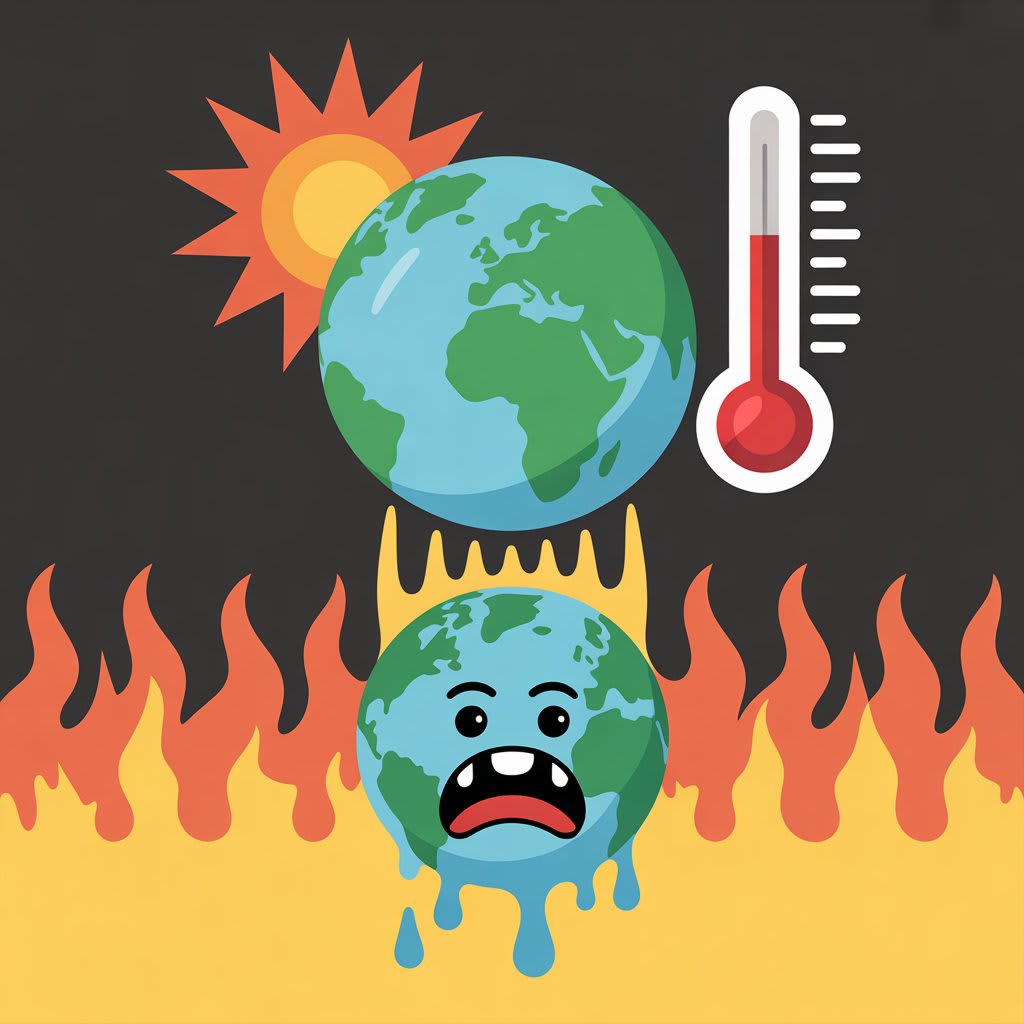
Opening Warmth
The morning sun felt different now denser, relentless, almost tangible. Across continents, thermometers shattered records; the planet's pulse quickened with each rising fraction of a degree. By 2025, every extra slice of warmth had become a global alarm.
1. The Numbers Speak
In 2024, Earth endured its hottest year ever recorded, averaging 1.60 °C above pre-industrial levels a milestone that marked the first annual breach of the Paris Agreement’s crucial 1.5 °C limit. And projections suggest it won't be short-lived: the WMO warns there's an 80 % chance that one of the next five years will be even warmer, with an 86 % likelihood another year will exceed 1.5 °C. Canada’s climate models predict 2025 will still hover between 1.35 °C and 1.55 °C above pre-industrial norms .
2. Degrees Mean Disasters
Each additional 0.1 °C isn’t just a number it’s a multiplier. In Brazil from 1991 to 2023, every 0.1 °C rise spawning 360 new climate disasters, adding nearly $1 billion USD in losses. Meanwhile, rising oceans shatter coral reefs, erode coasts, and acidify waters prehistoric ecosystems vanish as global seas rise 20 cm over the past century, threatening coastal life .
3. Heat That Melts & Burns
Europe’s 2025 summer came early and violent: countries like Spain, Greece, and Portugal baked through 46 °C heatwaves, spurring deadly wildfires and water shortages . In South Asia, India and Pakistan endured an unprecedented 48 °C heatwave in June 2025, claiming hundreds of lives and placing millions at risk under brutal sun. Meanwhile, Texas wept beneath floodwaters intensified by warmer air holding more moisture killing dozens in flash floods that climate scientists link to warming trends .
4. Seas Are on the Rise
Warming oceans absorb 90 % of excess heat, expanding and acidifying in the process. Last decade, ocean surface temperatures soared, fueling the worst coral bleaching event ever impacting 84 % of reefs worldwide since 2023. Melting Arctic and Antarctic ice contributes to roughly 4.7 mm per year sea-level rise, the highest pace in millennia. Coastal communities bear the brunt flooding, saltwater intrusion, and infrastructure challenges.
5. Agriculture, Ecosystems, and Human Health
With heat surging, drought becomes deadly. A 1 °C rise can cut crop yields by up to 10 %, threatening food security across Africa, South Asia, and the Mediterranean. The result: rising malnutrition, mass migrations, and conflict over water and fertile land. Meanwhile, warming air extends the range of dengue, malaria, and tick-borne diseases. Mental health deteriorates too heat stress and climate trauma fuel anxiety, PTSD, and distress .
6. Every Degree Counts
NASA research reminds us how critical each half degree is: at +1.5 °C, reef losses are already 70–90 %; at 2 °C, ocean life collapses, human heat deaths surge, and droughts flatten crops . IPCC data reinforce how extreme weather, food shortages, and health risks leap with each additional degree .
7. Humanity’s Crossroads
We’re caught in a fight against time. Greenhouse gas emissions hit 57 billion tone s in 2023, climbing swiftly. Yet solutions exist: transitioning to zero-carbon energy, protecting forests, enhancing early warning systems, and designing climate-resilient cities. Urban planning that cools heat islands, improved water defenses, and heat readiness can save lives and jobs. The European Union’s proposal to cut emissions 90 % by 2040 is a start but global cooperation and urgency are essential.
8. Conclusion Heat and Hope
“Heating the Earth” isn’t just an environmental shift; it’s a global seismic event with ripple effects in every ecosystem and community. But we're not powerless. Each fraction of a degree staved off, each climate adaptation implemented, reclaims precious time and resilience.
The message is clear: every tenth of a degree matters. Its imprint shows in scorched forests, flooded streets, failing harvests, and human suffering but also in adaptive ingenuity, sustainable design, and collective resolve. If we act decisively now, the heat can still be tempered. But if we delay, each degree threatens to turn a temperature shift into a persistent disaster.
About the Creator
Keep reading
More stories from Khurram Munir and writers in Earth and other communities.
"Degrees of Disaster"
Degrees of Disaster: Every Degree Warms the Danger In a quiet coastal village, the tide once kissed the sea wall at dawn and retreated by midday. But now, each sunrise brings apprehension. Fishermen return to shrinking harbors; wetlands are vanishing under unrelenting waves. The villagers started calling it the “degree that changed everything.” For every fraction of a degree the Earth warms, danger expands not gradually, but exponentially.
By Khurram Munir 7 months ago in Earth
Muslim Countries Condemn Israel’s Gaza Strikes, Allege ‘Repeated Violations’ of Ceasefire
Several Muslim-majority countries have condemned recent Israeli strikes in Gaza, alleging that the attacks represent repeated violations of ceasefire agreements. The statements, issued through official government channels and regional organizations, reflect growing diplomatic tensions and renewed concern about stability in the Middle East.
By Aarif Lashari5 days ago in Earth




Comments
There are no comments for this story
Be the first to respond and start the conversation.