
WANT TO KNOW A LITTLE BIT MORE ABOUT GARDENING?
so here you can know

Gardening is the practice of growing and cultivating plants as part of horticulture. It’s also use a hobby from some people for decorating their house, for the people who like greenery. But not everyone take have the expertise’ in it. So if you want an expertise just keep scrolling
6 tip that can make your gardening better
1. Choose the correct location for the particular plant
Not every plant has the same nature some plant need 6 hours of light called Sun loving plants. Many of them need limited light or sun shade. So depending on the nature of plant you must know the correct location of it
For example. Perennial plant, if you have a lot of sunlight in your space. If you have a shady areas so can consider ferns hostas and hydrangeas
You can either divide your place i.e. one area has sun-loving plants while others are shade-loving. That’s how you can grow many varieties of plants and if you don’t have shady areas, you can install sunroofs.
2. Start with great soil
A garden is only as good as its soil! Many first-time gardeners assume that you can just plop a p lant into any old soil, and it’ll grow beautifully—and that might be the case if you’re lucky enough to have nice, fertile soil. But most of us have to amend our soils for both nutrients (adding in the goodies our plants want to “eat”) and condition (the way the soil feels—heavy, clay, sandy, loamy, etc.)
3. Adding fertilizer
When starting a garden, one of the top pieces of advice is to invest in soil that is nutrient-rich and well-drained. There are two type of fertilizer 1. Organic fertilizer 2.artificial fertilizer. Nature fertilizer you can make it in home with nature things such as banana peel soil and some other things too you can watch simply videos how to make fertilizer in home. If you want to choose artificial so they just simply give the plant nutrition which helps in plant growth. Your soil should have the nutrients most important are nitrogen, potassium, and phosphorus you should not add artificial fertilizers in a frequent amount without any knowledge. Because an unlimited amount can affect your plant growth so you add according to the need of that plant.
4. Testing your soil
You should test your soil pH and its nutrient level. Your soil pH should be between 6.5 to 7.5. While most soils have pH values between 3.5 and 10. In higher rainfall areas the natural pH of soils ranges from 5 to 7, while in drier areas the range is 6.5 to 9.
. While other nutrients are calcium, magnesium, and Sulphur. Send that soil sample to your near nursery so that you can analyze your soil. Then you will understand either to improve the soil or which plants to grow in that soil.
Using hard soil will be difficult for plants to grow using fresh and soft soil can help its root to grow fast. Using a composted manure can increase the nutrient level in your soil.
5. Adding Mulch
Weed is like rust on a metal that eats metal that is how weed work for the plant. So to stop its growth we need to add 2–3 inches of mulch around the base of each plant. By reducing weed you can reduce water loss. There are 2 times in a year that you can add mulch;
1. Spring
2. Fall
6. Watering
Adding water should be part of your routine. Plants need plenty of water because they will germinate. You have to ensure once in a while that soil is moist and not dry. Adding water also increases the nutrients in your soil.so can place your plant beside the water source because you have easy access to the water source. You must watered the plants from top to end means from leave to roots. You should give water once a week or in some cases twice a week.
Gardening is the practice of growing and cultivating plants as part of horticulture. It’s also use a hobby from some people for decorating their house, for the people who like greenery. But not everyone take have the expertise’ in it. So if you want an expertise just keep scrolling
6 tip that can make your gardening better
1. Choose the correct location for the particular plant
Not every plant has the same nature some plant need 6 hours of light called Sun loving plants. Many of them need limited light or sun shade. So depending on the nature of plant you must know the correct location of it
For example. Perennial plant, if you have a lot of sunlight in your space. If you have a shady areas so can consider ferns hostas and hydrangeas
You can either divide your place i.e. one area has sun-loving plants while others are shade-loving. That’s how you can grow many varieties of plants and if you don’t have shady areas, you can install sunroofs.
2. Start with great soil
A garden is only as good as its soil! Many first-time gardeners assume that you can just plop a p lant into any old soil, and it’ll grow beautifully—and that might be the case if you’re lucky enough to have nice, fertile soil. But most of us have to amend our soils for both nutrients (adding in the goodies our plants want to “eat”) and condition (the way the soil feels—heavy, clay, sandy, loamy, etc.)
3. Adding fertilizer
When starting a garden, one of the top pieces of advice is to invest in soil that is nutrient-rich and well-drained. There are two type of fertilizer 1. Organic fertilizer 2.artificial fertilizer. Nature fertilizer you can make it in home with nature things such as banana peel soil and some other things too you can watch simply videos how to make fertilizer in home. If you want to choose artificial so they just simply give the plant nutrition which helps in plant growth. Your soil should have the nutrients most important are nitrogen, potassium, and phosphorus you should not add artificial fertilizers in a frequent amount without any knowledge. Because an unlimited amount can affect your plant growth so you add according to the need of that plant.
4. Testing your soil
You should test your soil pH and its nutrient level. Your soil pH should be between 6.5 to 7.5. While most soils have pH values between 3.5 and 10. In higher rainfall areas the natural pH of soils ranges from 5 to 7, while in drier areas the range is 6.5 to 9.
. While other nutrients are calcium, magnesium, and Sulphur. Send that soil sample to your near nursery so that you can analyze your soil. Then you will understand either to improve the soil or which plants to grow in that soil.
Using hard soil will be difficult for plants to grow using fresh and soft soil can help its root to grow fast. Using a composted manure can increase the nutrient level in your soil.
5. Adding Mulch
Weed is like rust on a metal that eats metal that is how weed work for the plant. So to stop its growth we need to add 2–3 inches of mulch around the base of each plant. By reducing weed you can reduce water loss. There are 2 times in a year that you can add mulch;
1. Spring
2. Fall
6. Watering
Adding water should be part of your routine. Plants need plenty of water because they will germinate. You have to ensure once in a while that soil is moist and not dry. Adding water also increases the nutrients in your soil.so can place your plant beside the water source because you have easy access to the water source. You must watered the plants from top to end means from leave to roots. You should give water once a week or in some cases twice a week.
About the Creator
Keep reading
More stories from writers in Earth and other communities.
What Went Right This Week: The Good News That Matters
In a world often dominated by breaking news alerts, crises, and uncertainty, it can be easy to overlook the positive developments quietly shaping our lives. Yet every week brings stories of progress, resilience, and human ingenuity that deserve attention. From breakthroughs in health and science to acts of kindness and environmental wins, good news still happens—and it matters.
By Aarif Lashari5 days ago in Earth
US weather forecast
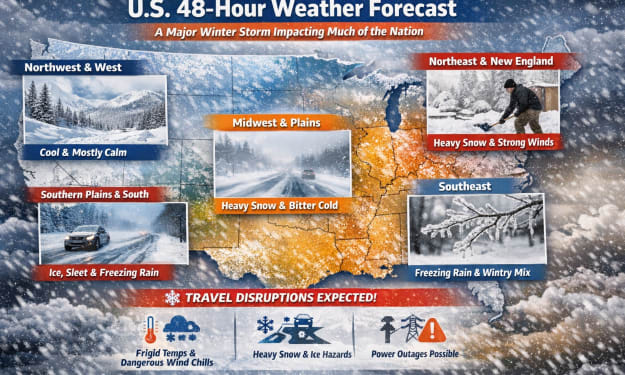
General Nationwide Pattern (Next 48 Hours) 1. Widespread Winter Storm Across Much of the U.S. A powerful winter storm is forecast to affect large swaths of the country through the next two days. It is expected to bring heavy snow, ice, freezing rain, and dangerously cold temperatures from the Southern Plains into the Midwest, East Coast, and parts of the Southeast.
By USA daily update 5 days ago in Earth
🅼🅸🅳🅽🅸🅶🅷🆃 🆂🅽🅰🅲🅺🆂
"It's 10 in Tuscon! We all know what that means... It's Time for Midnight Snacks with your man, Gerald Gee! Ready to spend the night together? Me too! I'm full of snacks and can't wait to regurgitate them all back into your hungry ears. Crack a brew! Pop some corn! Anything to get ready for one hell of a show where the talk maybe cheap but the words cut deep...
By Lamar Wiggins7 days ago in Fiction



Comments
There are no comments for this story
Be the first to respond and start the conversation.