
US Backs Pakistan’s ‘Right to Defend Itself’ Against Taliban After Strikes on Afghanistan
Rising cross-border tensions test regional stability as Washington voices support
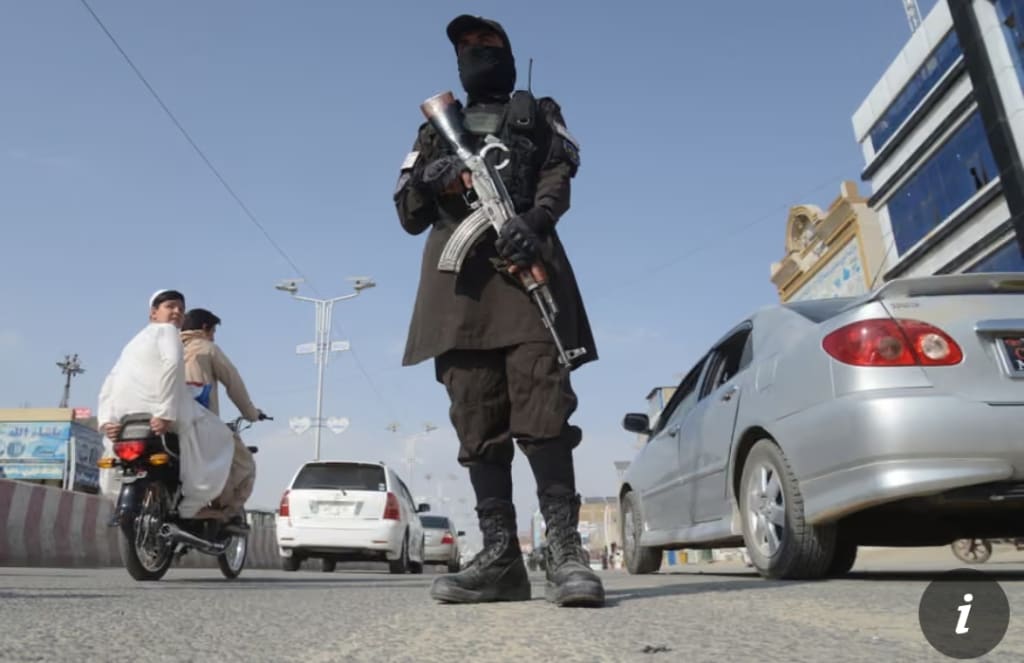
The United States has voiced support for Pakistan’s “right to defend itself” following reported cross-border strikes targeting Taliban-linked militants inside Afghanistan. The statement comes amid escalating tensions between Islamabad and Kabul, raising concerns about regional security, sovereignty, and the fragile balance along one of the world’s most volatile borders.
While details of the strikes remain contested, the diplomatic response signals Washington’s continued strategic interest in South Asia — even after the withdrawal of US troops from Afghanistan in 2021.
The Context Behind the Strikes
Pakistan has long accused militant groups operating from Afghan territory of carrying out attacks inside its borders. Chief among these is the Tehrik-i-Taliban Pakistan (TTP), often referred to as the Pakistani Taliban, which Islamabad considers a major national security threat.
Pakistani officials claim that militants have used Afghan soil as a safe haven to plan and launch assaults on Pakistani military installations and civilian targets.
Following a series of deadly attacks in recent months, Pakistan reportedly conducted air or artillery strikes across the border, targeting what it described as terrorist hideouts.
Afghan authorities have disputed aspects of Pakistan’s account and have raised concerns over civilian safety and sovereignty violations.
Washington’s Position
In response to the developments, US officials reiterated that Pakistan has the right to protect its citizens from terrorism.
The US statement emphasized the importance of counterterrorism efforts while also calling for restraint and dialogue to prevent further escalation.
This position reflects a delicate balancing act. While supporting Pakistan’s security concerns, Washington must also navigate diplomatic sensitivities with Afghanistan’s current leadership.
The US has not formally recognized the Taliban government but maintains channels for humanitarian and security discussions.
A Complicated Relationship
The relationship between Pakistan and the Afghan Taliban has grown increasingly strained.
Despite Pakistan’s historic ties with Afghan factions, Islamabad has expressed frustration over the Afghan Taliban’s failure to curb TTP activities.
The Afghan Taliban leadership, meanwhile, denies providing sanctuary to militants and has urged Pakistan to resolve internal security issues domestically.
Cross-border skirmishes and diplomatic protests have periodically flared, underscoring the fragile trust between the two neighbors.
Regional Security Implications
The situation holds broader implications for South Asia’s security architecture.
An escalation could destabilize border regions already grappling with economic hardship and displacement.
Analysts warn that sustained cross-border strikes risk fueling further militancy, potentially creating a cycle of retaliation.
Neighboring countries — including China and Iran — are closely monitoring developments, given their own security interests in the region.
Counterterrorism in a Post-US Afghanistan
Since the US withdrawal from Afghanistan, regional powers have assumed greater responsibility for counterterrorism coordination.
Washington continues to conduct limited “over-the-horizon” operations when necessary, but direct military presence in the region has significantly diminished.
In this context, Pakistan’s actions highlight the ongoing challenge of containing militant networks that operate across porous borders.
Experts note that geography and historical tribal ties complicate enforcement along the rugged frontier.
Sovereignty and International Law
Cross-border military operations raise questions about sovereignty and international legal norms.
Under international law, a country may claim self-defense if it faces an imminent threat from non-state actors operating beyond its borders.
However, such actions often require careful justification and transparency to avoid diplomatic fallout.
Afghanistan’s authorities have urged respect for territorial integrity, arguing that unilateral strikes undermine bilateral relations.
The Human Dimension
Beyond geopolitical strategy, civilians living near the border face immediate consequences.
Past clashes have led to displacement, infrastructure damage, and heightened insecurity.
Humanitarian organizations stress the importance of protecting non-combatants and maintaining access to essential services.
Any prolonged escalation could strain already limited resources in affected communities.
Diplomatic Pathways
Observers suggest that renewed dialogue between Islamabad and Kabul is essential.
Confidence-building measures, intelligence-sharing mechanisms, and border coordination could reduce misunderstandings.
Regional forums may also play a role in facilitating communication.
While tensions are high, both governments have previously expressed interest in avoiding sustained confrontation.
The US Role Going Forward
The US statement of support reflects ongoing security cooperation with Pakistan, a long-standing — though sometimes complicated — partner.
Washington has historically relied on Pakistan for logistical routes and intelligence collaboration during its Afghanistan operations.
At the same time, US policymakers remain cautious about becoming directly entangled in regional disputes.
Future engagement is likely to focus on diplomatic messaging and counterterrorism intelligence rather than military involvement.
A Delicate Balance
The unfolding situation underscores the complex interplay between counterterrorism priorities and diplomatic stability.
Pakistan argues that inaction would embolden militant groups responsible for deadly attacks.
Afghanistan insists that sovereignty must be respected.
The US seeks to support counterterrorism efforts without exacerbating regional tensions.
Balancing these objectives will require careful diplomacy.
Conclusion
The United States’ backing of Pakistan’s “right to defend itself” following strikes inside Afghanistan highlights the enduring volatility of the region.
As cross-border tensions simmer, the need for coordinated counterterrorism efforts remains urgent.
At the same time, diplomatic engagement will be essential to prevent escalation and protect civilian lives.
In a region shaped by decades of conflict, each development carries weight far beyond the immediate incident. The coming weeks will test whether dialogue can prevail over confrontation.
About the Creator
Keep reading
More stories from Aarif Lashari and writers in Earth and other communities.
A Planetary Alignment Will Coincide With Mercury Retrograde
Skywatchers are preparing for a striking celestial event as a planetary alignment is set to coincide with Mercury retrograde — a pairing that has generated buzz across both scientific and astrological communities. While planetary alignments are not uncommon on cosmic timescales, the overlap with Mercury’s apparent backward motion adds a layer of intrigue that has captured global attention.
By Aarif Lashariabout 17 hours ago in Earth
The Oldest, Largest, and Deepest Lake in the World
Exploring Earth’s Most Ancient and Massive Freshwater Giant Lake Baikal is often described as a freshwater sea because of its immense size and volume. Stretching over 600 kilometers in length and plunging to depths of more than 1,600 meters, it surpasses every other lake in age and depth. Unlike most lakes that form and disappear within thousands of years, Baikal has endured for millions, created by a continental rift that continues to widen today. This slow geological movement has allowed the lake to grow deeper over time. Its scale is so vast that it contains more water than all the Great Lakes of North America combined. Scientists regard it as one of the most important natural laboratories on Earth, preserving ancient life forms and climate records within its sediments. The surrounding mountains and forests enhance its isolation, helping protect its pristine condition.
By Muhammah Hanzalah6 days ago in Earth


Comments
There are no comments for this story
Be the first to respond and start the conversation.