
Up in the Clouds
Exploring the Wonders of the Atmosphere

I. Introduction
Many people take the air we breathe for granted, but did you know that the air we inhale is actually made up of a complex mix of gases?
Thesis: The composition of the atmosphere plays a crucial role in supporting life on Earth, and understanding the different gases that make up the air we breathe can help us appreciate the importance of clean air and the role it plays in our daily lives.
II. The Composition of the Atmosphere
• The atmosphere is made up of a mixture of gases, including nitrogen, oxygen, and trace gases like carbon dioxide, water vapor, and ozone.
• The percentage of each gas in the atmosphere can vary depending on location and altitude. For example, the percentage of oxygen in the atmosphere is generally higher at sea level compared to higher altitudes.
• The atmosphere is divided into several layers, each with its own unique characteristics. These layers include the troposphere, stratosphere, mesosphere, thermosphere, and exosphere.
• The troposphere is the lowest layer of the atmosphere and is where we live and experience weather. It extends from the Earth's surface up to about 8-15 kilometers (5-9 miles) and contains the highest concentration of water vapor and other gases.
• The stratosphere, which extends from the top of the troposphere to about 50 kilometers (31 miles), is known for its role in protecting the Earth from the sun's harmful ultraviolet (UV) radiation.
• The mesosphere, which extends from the top of the stratosphere to about 85 kilometers (53 miles), is a very cold and thin layer of the atmosphere where meteors burn up upon entering the Earth's atmosphere.
• The thermosphere, which extends from the top of the mesosphere to about 600 kilometers (373 miles), is home to the Northern and Southern Lights (auroras) and is where the Earth's magnetic field interacts with charged particles from the sun.
• The exosphere, which extends from the top of the thermosphere to the edge of space, is a very thin and diffuse layer of the atmosphere where satellites orbit the Earth.
III. The Weather and Climate of the Atmosphere
• The atmosphere plays a crucial role in creating the weather we experience on Earth.
• Weather is the short-term state of the atmosphere, including temperature, humidity, wind, and precipitation. It is caused by the movement and interaction of different air masses with different temperatures and humidity levels.
• Climate is the long-term average of the weather in a specific region. It is determined by the average temperature, humidity, wind, and precipitation over a period of at least 30 years.
• The Earth's atmosphere is constantly in motion, with warm air rising and cool air sinking. This movement of air masses helps to create the different types of weather we experience.
• The Earth's atmosphere is also home to a wide variety of clouds, which are formed when water vapor condenses into visible water droplets or ice crystals. The different types of clouds can give us clues about the weather that is likely to occur. For example, cumulus clouds are often associated with fair weather, while nimbus clouds are a sign of rain or snow.
• Human activity can also have an impact on the climate of the atmosphere. The burning of fossil fuels releases greenhouse gases like carbon dioxide into the atmosphere, which can trap heat and contribute to global warming. The Earth's climate has been changing for millions of years, but the rate of change has accelerated in recent decades due to human activity.
IV. The Wonders of the Atmosphere
• The atmosphere is full of wonders and mysteries that are just waiting to be explored. Here are a few examples:
• The Northern and Southern Lights (auroras) are stunning displays of light in the sky that occur near the Earth's poles. These lights are caused by the interaction of the Earth's magnetic field with charged particles from the sun, which are funneled towards the poles by the Earth's magnetic field. The auroras can take on a wide range of colors, including red, green, blue, and purple.
• The ozone layer is a region of the Earth's atmosphere that protects life on the planet from the sun's harmful ultraviolet (UV) radiation. Ozone is created when UV light breaks down oxygen molecules, and it absorbs most of the UV radiation that reaches the Earth's surface. The ozone layer is found in the stratosphere and is essential for life on Earth, but it is also vulnerable to damage from certain pollutants.
• The quest for space has inspired humans for centuries, and the atmosphere has played a crucial role in our exploration of the cosmos. From the earliest hot air balloons to modern-day rockets, humans have used the Earth's atmosphere as a stepping stone to reach the stars. Today, scientists continue to study the atmosphere from space using satellites and other spacecraft, providing us with valuable insights into the Earth's weather and climate.
V. Conclusion
• The atmosphere is an essential part of our lives, providing us with the air we breathe and protecting us from the sun's harmful radiation. It is a complex and fascinating realm, full of wonders and mysteries that are just waiting to be explored.
• Understanding the composition of the atmosphere, the role it plays in creating the weather and climate we experience on Earth, and the wonders it holds can help us appreciate the importance of clean air and the role it plays in our daily lives.
• Whether we are looking up at the clouds on a clear day or marveling at the auroras in the night sky, the atmosphere is a constant presence in our lives and an endless source of fascination and wonder.
About the Creator
Keep reading
More stories from shree nagesh and writers in Earth and other communities.
Title: "The Quest for the Cure: A Tale of Bravery and Hope"
Once upon a time, in a faraway land, there lived a small town filled with friendly people. They lived their daily lives in peace, never suspecting that there was anything frightening or dangerous lurking in their midst.
By shree nagesh3 years ago in Fiction
China’s Ambitious Satellite Plan: 200,000 Satellites and Counting
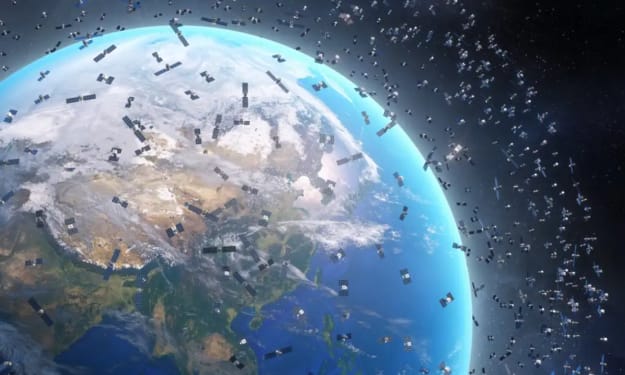
China has submitted an astonishing application to the International Telecommunication Union (ITU) to launch 200,000 satellites over the coming years. To put this into perspective, the entire world currently operates far fewer than this number. Even SpaceX’s Starlink project, one of the largest satellite networks globally, has plans for around 42,000 satellites. China’s proposal signals an unprecedented escalation in space activity and raises important questions: what are these satellites for, and what implications do they hold for global technology, security, and the environment? The Purpose Behind the Numbers At first glance, launching 200,000 satellites may seem excessive, but China’s goals are strategic and multifaceted. Experts suggest that these satellites could serve several purposes: 1. Global Internet Coverage China is aiming to build a massive low-Earth orbit (LEO) satellite network, similar to Starlink and OneWeb. By positioning thousands of satellites closer to Earth, they can provide high-speed internet to remote regions, rural areas, and even ships or aircraft in the oceans. This could help China expand its digital influence globally, offering connectivity in areas where traditional internet infrastructure is weak or non-existent. 2. Enhanced Military and Surveillance Capabilities A satellite network of this scale is also a game-changer for defense and surveillance. Satellites can monitor troop movements, track ships, and provide early warning systems. China’s military has been investing heavily in space-based technology, and these satellites could be a crucial part of modernizing its intelligence, surveillance, and reconnaissance (ISR) capabilities. 3. Scientific Research and Earth Observation Some of these satellites may be dedicated to Earth observation, collecting data on climate, agriculture, natural disasters, and urban development. With thousands of satellites constantly orbiting the planet, China could achieve near real-time monitoring of environmental changes and resource management, giving scientists and policymakers an unprecedented level of insight. 4. Competition in the Commercial Space Sector China’s plan is not purely for government use. The commercial potential of satellite networks is massive, from providing satellite internet services to supporting the burgeoning space economy. Companies under Chinese state and private ownership could leverage this infrastructure to offer services domestically and internationally, challenging Western tech giants in global space markets. The Scale of the Ambition Launching 200,000 satellites is not just ambitious; it’s historic. If approved and executed, China would operate more satellites than all other countries combined, fundamentally reshaping how space is utilized. However, there are serious logistical challenges. Manufacturing, launching, and maintaining hundreds of thousands of satellites requires enormous resources, advanced technology, and careful orbital planning to avoid collisions. China has made major progress in its space launch capacity, with frequent missions through the Long March rocket family and ongoing developments at the Wenchang and Jiuquan Spaceports. Yet, sustaining such a colossal fleet will test even the most advanced space programs. Global Implications The potential consequences of China’s satellite plan are profound, both technologically and geopolitically. 1. Space Traffic Management A network of 200,000 satellites could drastically increase the risk of collisions in orbit. Space debris is already a growing concern, and introducing tens of thousands of new satellites may exacerbate this problem. International cooperation and sophisticated traffic management systems will be essential to prevent catastrophic accidents in space. 2. Geopolitical Tensions China’s space ambitions may intensify global rivalry in space technology, particularly with the United States, Europe, and other spacefaring nations. Control over satellite networks can translate into strategic advantages, from military surveillance to dominance in global communications infrastructure. This may lead to a new phase of space competition reminiscent of the Cold War’s space race. 3. Impact on Astronomy Astronomers have already expressed concern over satellite mega-constellations interfering with observations. Thousands of bright satellites moving across the night sky can distort telescope images and hinder research into deep space phenomena. If China proceeds with 200,000 satellites, the challenge to professional and amateur astronomers will be enormous. 4. Global Connectivity Revolution On the positive side, if managed responsibly, China’s satellite network could revolutionize global connectivity, bringing internet access to millions of people who currently have none. It could accelerate digital development in underserved regions, support education, and foster global commerce in unprecedented ways. Regulatory Hurdles The ITU regulates global satellite usage, including frequency allocation and orbital slots. For China to launch 200,000 satellites, it must secure approval from the ITU, which evaluates whether such an immense network could interfere with other countries’ satellites or violate international agreements. This is not a mere formality—approval for a project of this scale could take years and may require negotiations with multiple nations. Conclusion: A Bold Step Toward the Future China’s application to launch 200,000 satellites is a bold statement about the future of space and global technology. It reflects the country’s ambition to dominate in digital infrastructure, military capability, and commercial space enterprise. While challenges abound—from space debris and regulatory hurdles to geopolitical tensions—the potential benefits are significant, particularly for connectivity and scientific advancement. As the world watches China’s next steps, one thing is clear: the age of satellite mega-constellations is here. How humanity navigates the risks and rewards of this new frontier will shape the future of communication, security, and our presence in space for decades to come.
By Muhammad Hassan2 days ago in Earth



Comments
There are no comments for this story
Be the first to respond and start the conversation.